Search
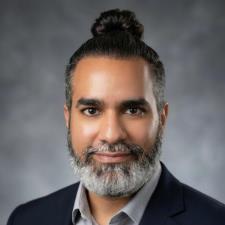
Reza A.'s Photo

Ph.D. Lecturer - Calculus, Statistics, Algebra & Geometry Made Simple
Reza A.

Your first lesson is backed by our Good Fit Guarantee

Hourly Rate: $49

About Reza


Bio

I hold a Ph.D. in engineering from Colorado State University and completed advanced training at Harvard University — credentials built on deep expertise in mathematics, calculus, and statistics. I've spent several years as a university lecturer, teaching undergraduate and graduate students in STEM. Across hundreds of students in classrooms, office hours, and one-on-one settings, I learned the same lesson over and over: students rarely struggle because the material is too hard. They struggle...

I hold a Ph.D. in engineering from Colorado State University and completed advanced training at Harvard University — credentials built on deep expertise in mathematics, calculus, and statistics. I've spent several years as a university lecturer, teaching undergraduate and graduate students in STEM. Across hundreds of students in classrooms, office hours, and one-on-one settings, I learned the same lesson over and over: students rarely struggle because the material is too hard. They struggle because someone taught them steps to memorize instead of the logic underneath. Fixing that is what I do best.

My approach is straightforward. In our first session, I find the exact point where your understanding breaks down, which is almost never where you think it is, and we rebuild from there. For every topic, I teach the cleanest, most intuitive method that works every time, even under exam pressure, rather than clever tricks you will forget in a week. My goal is that within a few sessions, every difficult problem you face looks like a variation of something you already own.

I tutor students across the full mathematics ladder — from prealgebra, algebra, and geometry through calculus, statistics, and differential equations, up through college courses like linear algebra, discrete math, and probability. I also coach SAT and ACT Math and the GRE and GMAT quantitative sections, where strategy and pacing matter as much as content. Whether you are a middle schooler building foundations, a college student facing a calculus final, or a professional preparing for the GMAT, I will meet you where you are.

I am new to Wyzant but not to teaching. Bring me your toughest problem in our first session, and let's make it simple. Feel free to message me with any questions or to schedule a lesson.

Education

Colorado State University
PhD
Harvard University
Other

Policies


Schedule

Loading...

Sun

Mon

Tue

Wed

Thu

Fri

Sat

Reza hasn’t set a schedule.

We’re having trouble loading this schedule right now. Please try again later.


Approved Subjects

ACT Math

ACT Math

The ACT Math section is 60 questions in 60 minutes, so success is as much about pacing and pattern recognition as it is about math — and with a Ph.D. in engineering and years as a university lecturer, I teach both. I show students how the test recycles the same core algebra, geometry, and trigonometry concepts beneath new wording, and how to spot the trap answers the ACT plants for the most common mistakes. My diagnostic approach finds exactly which question types are costing you points, then we build the simplest, fastest method for each one — including when to skip, guess, and move. I work with high school students who want a real score strategy, not just more practice tests.
Algebra 1

Algebra 1

Algebra is the foundation of everything I teach — calculus, statistics, and engineering math all stand on it — and I have worked with students from middle school through college throughout my years as a university lecturer. My approach is to make the rules of algebra make sense rather than be memorized: once a student understands why the steps work, equations, factoring, and functions stop being a list of tricks and become one connected system. I diagnose exactly where the foundation cracked, which is often years earlier than the current class, and we rebuild from there. I work with middle school, high school, and college students who want lasting understanding, not just this week's homework answers.
Algebra 2

Algebra 2

Algebra 2 is the gateway to everything that follows — precalculus, calculus, and statistics all depend on it — and with a Ph.D. in engineering and years as a university lecturer, this is material I have taught and used daily. Students usually struggle here not because the topics are harder, but because an Algebra 1 gap finally catches up with them; I find that gap first, then build functions, systems, logarithms, and polynomials on solid ground. My method is always the simplest one that works every time, so students can handle unfamiliar problems on their own. I work with high school and college students who want real understanding heading into precalculus, not just a passing grade.
AMC (Competition math)

AMC (Competition math)

Competition mathematics rewards a different skill than school math: not procedures, but creative problem-solving under time pressure — and that is precisely how I teach. With a Ph.D. in engineering and years as a university lecturer, I train students in the four pillars of the AMC — algebra, geometry, combinatorics, and number theory — focusing on the recurring patterns and strategies that turn "impossible" problems into recognizable types. My diagnostic approach identifies whether a student is losing points to content gaps, missing strategy, or time management, and we target that directly. I work with middle and high school students preparing for the AMC 8, 10, and 12, from first-time competitors to those chasing AIME qualification.
Calculus

Calculus

I hold a Ph.D. in engineering and spent several years as a university lecturer, teaching STEM students in classrooms, office hours, and one-on-one settings. Calculus is my core specialty: I break limits, derivatives, and integrals down to the logic underneath and teach the cleanest method that works every time, including under exam pressure. I work with high school (AP AB/BC) and college students at all levels. My goal is always the same — you leave able to solve new problems on your own, not just repeat the ones we practiced.
Differential Equations

Differential Equations

Differential equations are the mathematical backbone of engineering, which makes this subject home turf for me: I hold a Ph.D. in engineering and spent several years as a university lecturer teaching STEM students. I teach ODEs and PDEs as pattern recognition, not memorization — separable, linear, second-order, Laplace transforms, and power series for ODEs, separation of variables and Fourier series for PDEs. I show you how to spot which pattern a problem is asking for within seconds. My diagnostic approach finds exactly where your setup or technique selection breaks down, so exams stop feeling like guesswork. I work with college students in engineering, math, and physics who want to understand the logic, not just survive the course.
Discrete Math

Discrete Math

Discrete math is where computer science students meet real mathematical maturity — logic, proofs, induction, combinatorics, graph theory, and recurrence relations — and it is the course where I see smart students struggle most, usually because nobody taught them how a proof is actually built. With a Ph.D. in engineering and years as a university lecturer, I teach proof-writing as a learnable structure rather than a mystery: direct, contradiction, and induction each have a skeleton you can learn once and reuse forever. My diagnostic approach finds whether you are stuck on the logic, the notation, or the proof strategy, and we target that directly. I work with college students in CS, math, and engineering who want to understand the material deeply enough to write their own proofs, not just follow the textbook's.
Finite Math

Finite Math

Finite math is the course most business and social science majors are required to survive — linear programming, matrices, probability, counting, and the mathematics of finance, all in one semester — and it moves too fast for students who have not touched math in years. With a Ph.D. in engineering and years as a university lecturer, I teach it as a practical toolkit rather than abstract theory: every topic gets one clear method, one real example, and enough understanding to handle the variations your professor will throw at you. My diagnostic approach quickly finds whether the gap is the algebra underneath or the new concept itself, and we fix the right one. I work with college students who need to get through this requirement confidently and efficiently, often on a tight deadline.
Geometry

Geometry

Geometry is the first course where math becomes logical argument instead of procedure, and that shift is exactly where most students get stuck — they try to memorize theorems instead of learning to see why they are true. With a Ph.D. in engineering and years as a university lecturer, I teach geometry as visual reasoning: congruence, similarity, circles, and proofs all become one connected way of thinking rather than a list of rules. My diagnostic approach finds whether you are struggling with the visual picture, the vocabulary, or the proof structure, and we fix that specific gap. I work with middle and high school students who want geometry to finally make sense, not just survive the next quiz.
GMAT

GMAT

I hold a Ph.D. in engineering and spent several years as a university lecturer teaching quantitative subjects to undergraduate and graduate students. For the GMAT, I focus on quantitative strategy: I identify the specific question patterns costing you points and teach the simplest, most reliable method for solving each one under time pressure. My diagnostic approach finds where your reasoning breaks down, so we fix the root cause instead of drilling tricks you will forget on test day. I work best with motivated professionals who want an efficient, targeted plan to a competitive score.
GRE

GRE

I hold a Ph.D. in engineering and spent several years as a university lecturer teaching quantitative subjects at the university level. For the GRE, I teach quantitative strategy the way it should be taught: diagnose exactly where your reasoning breaks down, then build the simplest, most reliable solution method for every question type you'll face. My students don't memorize tricks that collapse under time pressure — they learn the underlying logic, so unfamiliar problems on test day still look solvable. I work with college graduates and professionals targeting competitive scores for graduate admissions.
Linear Algebra

Linear Algebra

Linear algebra is the language of modern engineering, computer science, and data science — and it is where I spent my entire research career working daily, backed by a Ph.D. in engineering and several years as a university lecturer. Most students get lost because they are taught matrix arithmetic without the structure underneath; I teach it the other way around, so row reduction, subspaces, and eigenvalues become one connected story instead of disconnected procedures. My diagnostic approach finds exactly where the abstraction stops making sense for you, and we rebuild from there with concrete examples. I work with college students in math, engineering, and CS who want to actually understand the material, not just survive the problem sets.
Prealgebra

Prealgebra

Prealgebra is where a student's entire relationship with math is decided — negative numbers, fractions, order of operations, and first variables are the foundations every future course stands on. With a Ph.D. in engineering and years of teaching experience, I know that students who "hate math" almost always just hit one concept that was never explained in a way that made sense to them. My approach is patient and diagnostic: I find that exact crack in the foundation, fix it with the simplest explanation that works, and rebuild confidence along with skill. I work with middle school students preparing for Algebra 1, and with parents who want math to stop being a nightly battle.
Precalculus

Precalculus

Precalculus is the bridge to calculus, and it is where students discover whether their algebra foundation was real or memorized — functions, transformations, trigonometry, exponentials, and logarithms all arrive at once. With a Ph.D. in engineering and years as a university lecturer, I teach precalculus as one connected story rather than four separate units, because every topic in it is really the same idea — functions — wearing different clothes. My diagnostic approach finds the specific algebra or trig gap holding you back, fixes it, and then the rest of the course starts falling into place. I work with high school juniors and seniors preparing for calculus, and college students who want to enter Calc 1 ahead instead of behind.
Probability

Probability

Probability is the course where students who were good at math suddenly feel lost, because the hard part is not the calculation — it is setting the problem up correctly: what to count, what is given, and which rule applies. With a Ph.D. in engineering and years as a university lecturer, I teach probability intuition-first: once counting, conditional probability, Bayes' rule, and random variables click conceptually, the formulas stop being things you memorize and start being things you can derive. My diagnostic approach finds whether you are stuck on the setup, the counting, or the algebra, and we fix that specific link. I work with college students in math, engineering, CS, and business, from first probability courses through exam prep.
SAT Math

SAT Math

The digital SAT Math section is short and adaptive, which means every question carries more weight and every trap answer costs more — so strategy matters as much as content. With a Ph.D. in engineering and years as a university lecturer, I teach students how the SAT recycles the same core algebra, advanced math, problem-solving, and geometry concepts under new wording, and how to use the built-in Desmos calculator as a weapon instead of a crutch. My diagnostic approach identifies exactly which question types are costing you points, then builds the fastest, simplest method for each — including the mental math habits that save minutes. I work with high school students aiming for meaningful score gains on a real deadline.
Statistics

Statistics

I hold a Ph.D. in engineering and taught quantitative subjects at the university level for several years, so statistics is material I have used and taught daily throughout my career. I make probability, hypothesis testing, confidence intervals, and regression intuitive by teaching the reasoning first and the formulas second. I work with AP Statistics and college students who are tired of memorizing procedures they don't understand. Once you grasp the logic, every statistics problem becomes a variation of something you already know.
Trigonometry

Trigonometry

Trigonometry is the course where memorization finally collapses — there are too many identities, too many formulas, and too many special angles to cram, so students who got by on memory hit a wall. With a Ph.D. in engineering and years as a university lecturer, I teach trigonometry from the unit circle outward: once you truly own that one picture, the graphs, the identities, and the equations stop being separate topics and start being different views of the same thing. My diagnostic approach finds whether you are struggling with the circle itself, the algebra underneath, or the proof-style identity problems, and we fix that specific layer. I work with high school and college students, especially those heading into precalculus, calculus, or physics, where trigonometry has to be automatic.

Examples of Expertise


Reza has provided examples of their subject expertise by answering 1 question submitted by students on Wyzant’s Ask an Expert.

Reza A.'s Photo

Questions? Contact Reza before you book.

Still have questions?

Hourly Rate: $49
Contact Reza