Many people think that being good at mathematics means calculating quickly and memorizing formulas. For a while, I thought the same. I could solve many assigned exercises, so I assumed I truly understood the subject. But when I faced more challenging problems, I would sometimes stay stuck for hours without finding a clear path forward. Those moments made me doubt myself and question my abilities, until I realized an important truth: mathematics, and science in general, is not about how many...
Many people think that being good at mathematics means calculating quickly and memorizing formulas. For a while, I thought the same. I could solve many assigned exercises, so I assumed I truly understood the subject. But when I faced more challenging problems, I would sometimes stay stuck for hours without finding a clear path forward. Those moments made me doubt myself and question my abilities, until I realized an important truth: mathematics, and science in general, is not about how many formulas you know or how fast you can solve a problem. It is about understanding the why, the how, and the when behind each concept.
A student can memorize a formula for a Calculus II exam and still forget how to use it a week later. That happens when the focus is only on the form, not the meaning. My perspective changed when I met a professor who taught mathematics and physics with rare clarity, deep passion, and real expertise. He explained not only how ideas worked, but why they mattered and how they could be applied.
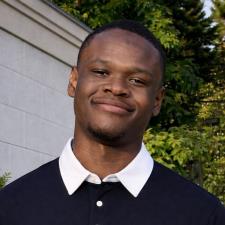
I am Lamine Socgfack, a computer science and mathematics major with a robotics minor at the University of Maryland, College Park. My own experience has motivated me to share my love for mathematics and science by tutoring high school and college students. My approach is patient and concept-focused: I identify where the student is struggling, break the topic into clear steps, and guide them through practice until they can explain the reasoning themselves. My goal is to strengthen students’ grades while building lasting confidence, independence, and problem-solving skills.