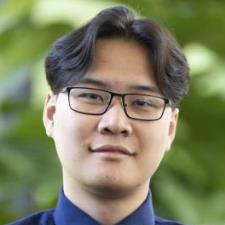
I’m William, a senior at the University of Virginia pursuing a double major in Electrical and Computer Engineering. My graduation date is May 2026 and have taken various rigorous courses in applied mathematics such as Calculus I-III, Differential Equations, Probability, Circuits, and multiple programming-based classes using Python, C/C++, Java, and MATLAB. I am also a Jack Kent Cooke Scholar, a competitive national award that recognizes academic excellence, perseverance, and a commitment to...
I’m William, a senior at the University of Virginia pursuing a double major in Electrical and Computer Engineering. My graduation date is May 2026 and have taken various rigorous courses in applied mathematics such as Calculus I-III, Differential Equations, Probability, Circuits, and multiple programming-based classes using Python, C/C++, Java, and MATLAB. I am also a Jack Kent Cooke Scholar, a competitive national award that recognizes academic excellence, perseverance, and a commitment to helping others succeed academically. UVA’s engineering program places strong emphasis on problem solving and conceptual understanding, which gave me a deep foundation in explaining topics clearly and logically. I am especially comfortable in tutoring Algebra, Calculus, Probability, and beginner programming.
While I have not held a formal “tutor” title for many years, I have extensive experience teaching and explaining technical material in a one-on-one and small group setting. Throughout college, I regularly helped classmates understand homework and core concepts. I have also worked closely with peers on long term projects and capstone work, where explaining ideas step-by-step and adapting explanations to different learning styles was essential. These experiences taught me how to break down problems into manageable steps and identify where students usually get stuck. I find it rewarding when I am able to help a classmate reach a point of clarity and confidence after working through a challenging concept together.
My tutoring approach is patience and structure. Having once struggled in many of my core STEM courses, I understand how overwhelming math and technical subjects can feel when foundational concepts are unclear, and because of this, I focus on understanding how a student thinks before jumping into solutions. I then guide them through the reasoning process step by step, emphasizing why each step works rather than relying on memorization.