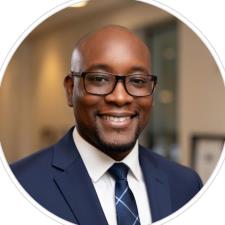
I am a college philosophy instructor with over twelve years of teaching experience, specializing in logic, critical thinking, and argument analysis. I currently teach Introduction to Philosophy, Ethics, and Philosophy of Religion at Dallas College, and I am a PhD candidate at the University of North Texas, where my doctoral research focuses on reasoning and artificial intelligence. I hold a Master of Philosophy from the University of Dallas and a bachelor's degree in philosophy from the...
I am a college philosophy instructor with over twelve years of teaching experience, specializing in logic, critical thinking, and argument analysis. I currently teach Introduction to Philosophy, Ethics, and Philosophy of Religion at Dallas College, and I am a PhD candidate at the University of North Texas, where my doctoral research focuses on reasoning and artificial intelligence. I hold a Master of Philosophy from the University of Dallas and a bachelor's degree in philosophy from the University of Texas at Arlington. My entire academic life has been built around one question: what makes reasoning valid, clear, and persuasive, and how can students learn to do it well.
My teaching experience spans both high school and college. For several years I taught in Texas public schools, working with teenagers on academic success and structured thinking, before moving into college instruction where I now work with adult learners of varying skill levels. This range matters, because it has taught me to meet students where they are. A nervous first-year student who has never written a logical proof needs a different approach than a motivated adult preparing for the LSAT, and I adjust my methods accordingly.
My approach is patient and concrete. Logic intimidates many students because it is taught abstractly, so I anchor every concept in plain examples before introducing formal structure. I break arguments into their parts, show students how to spot hidden assumptions and invalid inferences, and build their confidence one step at a time. For students preparing for the LSAT or similar reasoning-heavy exams, I focus on the underlying logical patterns the test rewards rather than rote memorization. My goal in every session is not just a correct answer, but a student who understands why it is correct and can do it again on their own.