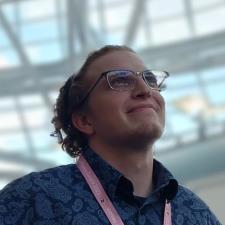
I hold a Ph.D. and an M.Sc. in Physics from the University of Texas at Dallas and a double B.Sc. in Physics and Mathematics from Texas State University, where I graduated Summa Cum Laude. I have taught and tutored mathematics and physics for ten years. I began in my university's open tutoring lab and in the Mathematics Department's tutoring center, working one-on-one with students across all areas of mathematics, and I was promoted to Lead Physics Tutor, where I created content reviews and...
I hold a Ph.D. and an M.Sc. in Physics from the University of Texas at Dallas and a double B.Sc. in Physics and Mathematics from Texas State University, where I graduated Summa Cum Laude. I have taught and tutored mathematics and physics for ten years. I began in my university's open tutoring lab and in the Mathematics Department's tutoring center, working one-on-one with students across all areas of mathematics, and I was promoted to Lead Physics Tutor, where I created content reviews and formula sheets still in use. Since then I have taught at universities in the United States, the United Kingdom, and Canada, and most recently AP Physics 1 and its laboratories at an independent high school in Houston.
I tutor geometry, algebra, precalculus, trigonometry, and calculus, along with introductory and upper-level physics. My students have ranged from high school through the doctoral level, mostly high school students and undergraduates. I taught undergraduate physics laboratories for six semesters and was a Lead Learning Assistant in mechanics, electricity and magnetism, waves and thermodynamics, and quantum mechanics, co-instructing with faculty. Alongside this I have mentored individual students one-on-one, both in person and online over Zoom.
I teach to ensure every student feels capable, supported, and intellectually challenged. I ask a student to work a problem aloud before I explain anything. Students who disengage are often stuck on one specific concept and hesitant to ask for help, and locating that concept is the first thing I do. In geometry it is usually someone who can recite a theorem but cannot see where it applies. I scaffold complex concepts and calculations, pair them with worked examples they can revisit, and use frequent low-stakes checks to catch a misunderstanding during the session rather than on the next exam. My role is to facilitate curiosity, critical thinking, and resilience, helping students develop the skills and confidence to succeed in mathematics and physics.