Search
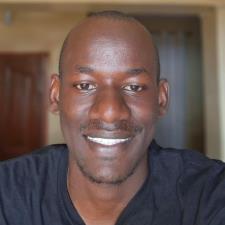
Robert T.'s Photo

8+ Yrs of Post-Grad Stats Tutoring and Data Analysis
Robert T.

Your first lesson is backed by our Good Fit Guarantee

Hourly Rate: $40

About Robert


Bio

Hello, my qualifications as a tutor are grounded in a rigorous academic background spanning three degrees in statistics and quantitative methods. I earned a Bachelor of Science in Statistics and a Master of Science in Applied Statistics and Data Science from the University of California, followed by a doctorate in Mathematical Science with a concentration in Applied Statistics from Claremont Graduate University. This progression through increasingly advanced quantitative training gave me both...

Hello, my qualifications as a tutor are grounded in a rigorous academic background spanning three degrees in statistics and quantitative methods. I earned a Bachelor of Science in Statistics and a Master of Science in Applied Statistics and Data Science from the University of California, followed by a doctorate in Mathematical Science with a concentration in Applied Statistics from Claremont Graduate University. This progression through increasingly advanced quantitative training gave me both the technical depth and the conceptual breadth needed to support students at every academic level, from introductory coursework through doctoral-level research.

Professionally, my experience extends beyond academia into financial analysis and consulting on state-level and federal research initiatives, where I applied advanced statistical and analytical methods in high-stakes real-world contexts. This industry exposure allows me to connect classroom concepts to practical applications in ways that make material more meaningful and accessible to students, particularly those in business, economics, public policy, and the social sciences.

My tutoring experience has been built one-on-one with undergraduate and graduate students over several years, working across statistics, quantitative methods, data analysis, and research design. I take a diagnostic approach to every engagement, identifying precisely where a student's understanding breaks down before rebuilding from that point through worked examples, guided problem-solving, and conceptual explanation. My goal is never simply to help a student understand fundamental concepts, but to ensure they leave each session with a deeper, more durable understanding of the material and the confidence to apply it independently post-session.


Education

University of California
B.S Statistics
University of California
Masters
Claremount Graduate University
PhD
  • Licensed teacher

Policies


Schedule

Loading...

Sun

Mon

Tue

Wed

Thu

Fri

Sat

Robert hasn’t set a schedule.

We’re having trouble loading this schedule right now. Please try again later.


Approved Subjects

Business

Business

My professional foundation in business was built during my career as a financial analyst, where I designed and implemented quantitative models to evaluate investment performance, assess financial risk, and support strategic decision-making in high-stakes organizational contexts. This work required fluency in the full analytical cycle, from structuring a business problem and sourcing relevant data to building reproducible models and translating outputs into recommendations that non-technical stakeholders could act on. That experience gave me an insider's understanding of how businesses actually use quantitative thinking, which is quite different from how it is often presented in a classroom. Alongside my industry work, I consulted on state-level and federal research initiatives where the business and policy implications of data analysis were direct and consequential. These engagements spanned budgeting analysis, program evaluation, and performance measurement, areas where rigorous methodology and clear communication were equally important. My doctoral training in Applied Statistics from Claremont Graduate University ensured that every analytical decision I made in these professional contexts was grounded in sound statistical reasoning, from model selection and assumption validation through interpretation and reporting. In tutoring, I work with undergraduate and graduate business students across a range of coursework including business statistics, financial modeling, quantitative methods, and data-driven decision-making. I focus on helping students develop the kind of analytical confidence that carries beyond a single course, the ability to frame a business question quantitatively, choose the right tools, and communicate findings clearly. Students who work with me leave sessions with a deeper understanding of both the mechanics and the strategic logic behind the methods they are learning.
Data Analysis

Data Analysis

Data analysis is not a peripheral skill in my background but the central thread running through every academic and professional role I have held. My three degrees in statistics and quantitative methods, culminating in a doctorate in Applied Statistics from Claremont Graduate University, were built around the theory and practice of extracting meaning from data. This included rigorous training in exploratory data analysis, probability modeling, inferential reasoning, regression and multivariate methods, and the design of studies that produce data worth analyzing in the first place. That theoretical grounding is what separates competent data analysis from analysis that is technically executed but analytically shallow. Professionally, I applied this training as a financial analyst and as a consultant on state-level and federal research initiatives, where data analysis drove decisions with real organizational and policy consequences. These engagements required working across the full analytical pipeline, cleaning and structuring raw datasets, selecting and applying appropriate statistical methods, validating assumptions, and communicating findings to audiences with varying levels of quantitative literacy. Working in these environments taught me that the hardest part of data analysis is rarely the computation; it is asking the right questions, recognizing the limits of the data, and knowing when a result is meaningful versus misleading. In my tutoring practice, I work with undergraduate and graduate students who need to develop data analysis skills for coursework, research projects, capstone work, or professional preparation. Sessions are tailored to the tools and methods each student is working with (whether that is R, Stata, SPSS, Excel, or Python) and focus on building a coherent analytical workflow rather than isolated technical steps. My goal is to help students think like analysts, approaching data with the right combination of curiosity, rigor, and skepticism that produces insights that are both accurate and mea
Essay Writing

Essay Writing

My ability to support students with essay writing is grounded in the extensive academic writing demands of three graduate degrees, culminating in a doctorate from Claremont Graduate University. Progressing through undergraduate, master's, and doctoral programs in statistics and quantitative methods required not only technical mastery but the ability to communicate complex analytical concepts clearly and persuasively in writing. From research papers and literature reviews to dissertation chapters and policy-facing consulting reports, I have consistently written for audiences ranging from academic committees to government stakeholders, adapting tone, structure, and level of technical detail accordingly. This experience on the writing side of research and consulting gives me a practical understanding of what strong academic writing actually requires; a clear thesis, logical argumentation, precise language, and evidence that is interpreted rather than simply presented. These are skills I developed not through writing courses alone but through years of producing work that was reviewed, criticized, and revised under rigorous academic and professional standards. In tutoring, I work with students across disciplines who need help at any stage of the writing process, from developing and narrowing a thesis to organizing an argument, strengthening paragraph structure, improving clarity and concision, and polishing a final draft. I am particularly effective with students in quantitative fields who struggle to translate their analytical thinking into well-constructed prose, as well as graduate students working on research papers, literature reviews, and thesis writing where both argumentation and precision matter enormously.
Microsoft Excel

Microsoft Excel

My proficiency in Microsoft Excel developed through years of financial analysis and consulting work where Excel served as a primary tool for data organization, modeling, and reporting. In professional settings, I used Excel extensively to build financial models, construct pivot tables, design dynamic dashboards, and perform quantitative analysis on datasets drawn from state-level and federal research initiatives. These engagements required not only comfort with Excel's core functionality but fluency with advanced features including array formulas, VLOOKUP and INDEX-MATCH logic, conditional formatting, and data validation. My statistical background, grounded in three degrees including a doctorate in Applied Statistics from Claremont Graduate University, informs how I use Excel analytically rather than just operationally. I approach spreadsheet work with the same rigor I apply to formal statistical analysis, ensuring that models are structured correctly, assumptions are transparent, and outputs are interpretable and reproducible. In tutoring, I work with students who need Excel skills for business coursework, research projects, data analysis assignments, and professional preparation. Sessions typically address formula construction, data cleaning and transformation, statistical functions, chart and visualization design, and the logic behind building well-organized workbooks. I focus on helping students understand not just what each feature does, but how to think through a problem systematically so they can apply Excel independently across a range of tasks.
Microsoft Word

Microsoft Word

My proficiency in Microsoft Word developed through years of academic research and professional consulting work that required producing polished, technically complex documents to exacting standards. Completing three graduate degrees, including a doctorate from Claremont Graduate University, meant consistently producing lengthy research papers, technical reports, and dissertation-level documents where precise formatting, structured navigation, and professional presentation were essential. This included working extensively with styles and heading hierarchies, automatic tables of contents, cross-references, footnotes, section breaks, and page layout controls that are critical for long-form academic and professional writing. In my consulting work on state-level and federal research initiatives, I prepared formal reports and deliverables for institutional and government audiences where document formatting and clarity directly affected how findings were received and acted upon. This professional context sharpened my ability to produce documents that are not only well-written but structurally sound and visually professional. In tutoring, I work with students who need Word skills for academic writing, thesis and dissertation formatting, professional document preparation, and research reporting. Sessions typically address formatting consistency, use of styles and templates, managing large documents with multiple sections, inserting and formatting tables and figures, citation and bibliography integration, and preparing documents that meet institutional or publication submission requirements. My focus is on helping students work efficiently and produce documents that reflect the quality of their ideas.
Proofreading

Proofreading

My proofreading skills were forged through the demanding writing standards of three graduate degree programs and years of professional consulting work where the accuracy and clarity of written deliverables carried real consequences. Producing dissertation chapters, research reports, and policy documents for academic committees and government stakeholders meant developing an exacting eye for grammatical errors, inconsistent terminology, structural weaknesses, and lapses in logical flow. At the doctoral level, where every claim must be precisely worded and every argument airtight, proofreading becomes inseparable from critical thinking rather than a mechanical final step. My consulting work on state-level and federal research initiatives further sharpened this skill set, as reports prepared for institutional audiences required not only technical accuracy but polished, professional prose free of ambiguity. Reviewing and refining documents in high-stakes professional contexts trained me to read critically at multiple levels simultaneously, attending to surface errors while also evaluating whether the writing communicates its intended meaning with precision and clarity. In tutoring, I work with undergraduate and graduate students who need a careful, experienced reader to review their academic papers, research reports, theses, and dissertations. I go beyond correcting grammar and spelling to address sentence-level clarity, word choice, transitions, consistency of tone and terminology, and the overall coherence of the argument. My goal is to help students submit work that reflects the full quality of their thinking, presented as clearly and professionally as possible.
R

R

My experience with R developed progressively through graduate-level statistical training and applied research work, where it became my primary programming environment for data analysis, modeling, and visualization. During my Master of Science in Applied Statistics and Data Science at the University of California, R was the central computational tool for coursework spanning regression analysis, probability modeling, simulation, and statistical computing. My doctoral work at Claremont Graduate University extended this further into advanced modeling techniques, where R's flexibility and depth as a programming language made it indispensable for research involving complex datasets and custom analytical workflows. Beyond the base R environment, I have extensive experience working with the tidyverse ecosystem for data manipulation and visualization, ggplot2 for publication-quality graphics, and packages supporting regression modeling, time series analysis, and multivariate methods. My statistical background allows me to move fluidly between writing R code and understanding the mathematical foundations of the procedures being implemented, which is a distinction that matters when results need to be interpreted correctly and assumptions need to be verified. In my tutoring practice, I work with undergraduate and graduate students who are learning R for the first time as well as those working through advanced coursework or independent research projects. Sessions typically cover R syntax and data structures, data cleaning and transformation, exploratory analysis, statistical modeling, and visualization. I place particular emphasis on helping students develop good programming habits and a clear understanding of what their code is actually doing statistically, so they can work independently and troubleshoot effectively on their own.
SPSS

SPSS

My experience with SPSS spans graduate-level statistical training and applied research work, where it served as a core tool for data analysis across a range of quantitative methods. During my Master of Science in Applied Statistics and Data Science at the University of California, SPSS was central to coursework involving descriptive statistics, inferential testing, regression modeling, and multivariate analysis. Its structured output format and accessible interface made it particularly valuable for applied research contexts where results needed to be interpreted and reported clearly. My doctoral training in Applied Statistics at Claremont Graduate University deepened my understanding of the statistical procedures SPSS implements, giving me the theoretical grounding to not only run analyses correctly but to critically evaluate assumptions, diagnose problems, and interpret output with precision. This combination of software fluency and statistical depth is what I bring into tutoring sessions with students who are learning SPSS for the first time or working through more advanced coursework. In my tutoring practice, I work with undergraduate and graduate students in fields such as psychology, education, public health, social science, and business who rely on SPSS for their research and coursework. Sessions typically cover data entry and cleaning, variable transformation, hypothesis testing, correlation and regression analysis, ANOVA, and the interpretation of SPSS output tables. My focus is always on ensuring students understand the statistical reasoning behind each procedure, not just the mechanical steps required to produce output.
STATA

STATA

My experience with Stata spans graduate-level coursework, academic research, and professional consulting work conducted over more than eight years. I first used Stata extensively during my Master of Science in Applied Statistics and Data Science at the University of California, where it served as a primary tool for data management, regression modeling, and statistical inference. My doctoral work at Claremont Graduate University further deepened this proficiency, particularly in applying Stata to complex research designs involving large datasets, hypothesis testing, and multivariate analysis. Beyond academia, I have used Stata in financial analysis and on state-level and federal research projects, where accurate data handling and reproducible results were essential. These consulting engagements required not only technical fluency in Stata's syntax and programming environment but also the ability to translate output into actionable findings for non-technical stakeholders. In my tutoring practice, I regularly help undergraduate and graduate students work through Stata-based assignments covering topics such as descriptive statistics, OLS and logistic regression, panel data models, and data visualization. I focus on helping students understand both the mechanics of the software and the statistical reasoning behind each procedure, so they can apply Stata confidently and independently in their own coursework and research.
Statistics

Statistics

Statistics is the foundation of my entire academic and professional career, spanning three graduate degrees and more than eight years of applied work. I earned a Bachelor of Science in Statistics before completing a Master of Science in Applied Statistics and Data Science at the University of California, and ultimately a doctorate in Mathematical Science with a concentration in Applied Statistics from Claremont Graduate University. This progression gave me command of the subject from its theoretical underpinnings through its most advanced applications in research and industry. Professionally, I have applied statistical methods in financial analysis and as a consultant on state-level and federal research projects, where the accuracy and integrity of quantitative findings had real policy and financial consequences. This experience sharpened my ability to select appropriate methods, validate assumptions, and communicate results clearly, skills I bring directly into every tutoring session. Over more than eight years of one-on-one tutoring, I have worked with undergraduate and graduate students on the full spectrum of statistics coursework, including probability theory, descriptive and inferential statistics, regression analysis, hypothesis testing, ANOVA, nonparametric methods, and research design. I take a diagnostic approach with each student, identifying exactly where their understanding breaks down and rebuilding from that point through worked examples and guided problem-solving, with the goal of developing both competence and lasting confidence in the subject.
Tableau

Tableau

My experience with Tableau developed through the intersection of academic research and professional data analysis work, where communicating complex statistical findings to diverse audiences became a consistent requirement. During my consulting work on state-level and federal research initiatives, I used Tableau to build interactive dashboards and data visualizations that translated large-scale quantitative results into accessible, decision-ready formats for stakeholders without statistical backgrounds. My doctoral training in Applied Statistics at Claremont Graduate University reinforced the importance of visualization as an analytical tool, not merely a presentation layer, and Tableau became central to how I explored distributions, trends, and relationships within datasets before and after formal modeling. This analytical approach to visualization, grounded in statistical theory, is something I bring directly into my tutoring work. When working with students on Tableau, I focus on helping them connect visualization choices to the underlying data structure and analytical goals of their project. I work with undergraduate and graduate students across business, public policy, economics, and social science disciplines who need to present data findings clearly and professionally. Sessions typically cover data source connections, calculated fields, filter logic, dashboard design, and best practices for visual communication of statistical results.
Microsoft PowerPoint
Python
SQL
Writing
Robert T.'s Photo

Questions? Contact Robert before you book.

Still have questions?

Ratings and Reviews

Hourly Rate: $40
Contact Robert