Search
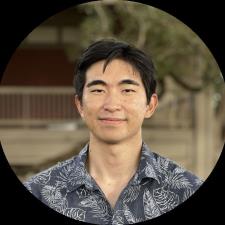
Cody T.'s Photo

M.S. Quant Economist | SAT Math, Calculus & Econometrics Tutor
Cody T.

47 hours tutoring

Your first lesson is backed by our Good Fit Guarantee

Hourly Rate: $100
Response time: 8 minutes

About Cody


Bio

If your student is working hard but still feels lost in math, the problem usually isn't effort. It's a gap in the foundation, and finding it is what I do best. I tutor high school students in SAT Math, AP Calculus, Precalculus, IB Math, and AP Statistics, both online and in person, and my goal is for your student to understand the material well enough to handle it independently.

I hold an M.S. in Quantitative Economics (with Distinction) from Cal Poly, SLO, and a B.S. in Economics with a...

If your student is working hard but still feels lost in math, the problem usually isn't effort. It's a gap in the foundation, and finding it is what I do best. I tutor high school students in SAT Math, AP Calculus, Precalculus, IB Math, and AP Statistics, both online and in person, and my goal is for your student to understand the material well enough to handle it independently.

I hold an M.S. in Quantitative Economics (with Distinction) from Cal Poly, SLO, and a B.S. in Economics with a Mathematics concentration from Oregon State. I've spent nearly five years teaching, starting at a Kumon Math and Reading Center, where I worked one-on-one with more than 130 students from elementary through high school in arithmetic, algebra, geometry, and early calculus. In graduate school, I taught statistical regression to undergraduates as an Instructional Student Assistant. I've also used this math professionally, co-authoring World Bank research, so I can show students where it leads.

In our first session, I'll find out where your student is in class and what's really causing the struggle. From there, I use the Feynman Technique: breaking hard ideas into small pieces and rebuilding them until your student can explain the concept back to me in their own words. I'm patient, and I never make students feel judged for not knowing something, because a student who's afraid of looking wrong stops asking the questions that matter most. For the SAT and AP exams, I also teach test strategy, including how to use Desmos efficiently, so your student can show what they know under pressure.

Send me a message about your student's class or goal, and let's set up a first session.

Education

Oregon State University
Economics
California Polytechnic State University, San Luis Obispo
Masters

Policies

  • Hourly Rate: $100
  • Rate details: First Session (20-minute Diagnostic): Free!
  • Lesson cancellation: 8 hours notice required
  • Background check passed on 8/1/2026

  • Your first lesson is backed by our Good Fit Guarantee

Schedule

Loading...

Sun

Mon

Tue

Wed

Thu

Fri

Sat

Cody hasn’t set a schedule.

We’re having trouble loading this schedule right now. Please try again later.


Approved Subjects

ACT Math

ACT Math

I hold an M.S. in Quantitative Economics (with Distinction) from Cal Poly, SLO, and a B.S. in Economics with a concentration in Mathematics from Oregon State. Both degrees built on the full content range the ACT Math section tests, including pre-algebra, elementary and intermediate algebra, coordinate and plane geometry, trigonometry, and basic statistics. Over nearly five years of tutoring, I have worked one-on-one with 130+ students at a Kumon Math and Reading Center across the algebra and geometry topics that make up the bulk of the 60-question section, so I can quickly identify which content areas are costing your student the most points. My preparation focuses equally on content and test-taking mechanics: the aggressive pacing the ACT demands (roughly 60 seconds per question), question-type recognition, elimination strategy, and knowing when to skip and return rather than sink time into a single problem. Whether the goal is breaking into the high 20s, crossing 30, or closing a specific score gap before an application deadline, I build a plan around the mistakes driving the gap rather than a generic curriculum.
Algebra 1

Algebra 1

Algebra I sets the trajectory for every math course that follows, which makes it one of the most important years to get right. I hold an M.S. in Quantitative Economics (with Distinction) from Cal Poly, SLO, and a B.S. in Economics with a concentration in Mathematics from Oregon State - degrees built on the same linear equations, functions, and systems your student is learning now. Across nearly five years of one-on-one tutoring with 130+ students of every age, I have learned to look past the wrong answer to the real cause, whether that is a lingering gap with fractions and negative numbers or simply a lack of confidence working with variables. Every lesson and problem set I create is tailored to your child’s strengths and needs, and it evolves as they grow, so no time is spent on material they have already mastered. Whether your student needs support keeping pace, is preparing for an end-of-course exam, or is ready to move ahead, I will build the path that gets them there and make sure they can explain every step on their own.
Algebra 2

Algebra 2

Algebra II is where many capable students hit their first real wall. The pace accelerates, the material becomes more abstract, and any shaky Algebra I skills suddenly matter. I hold an M.S. in Quantitative Economics (with Distinction) from Cal Poly, SLO, and a B.S. in Economics with a concentration in Mathematics from Oregon State. The heart of this course - exponential growth, logarithms, and polynomial functions - consists of everyday tools in the econometric research I have conducted, including work with the World Bank. In nearly five years of one-on-one tutoring with 130+ students, from elementary school through the university level, I have learned to pinpoint exactly where a student is losing ground, most often in solving equations, exponent rules, or factoring. From there, I design a plan around your student specifically: reinforcing what they do well, rebuilding what they don’t, and connecting abstract topics to real-world applications so the material finally clicks. Whether your student is recovering from a difficult semester, excelling in an honors section, or preparing for Pre-Calculus and the SAT, they will finish the year with skills that hold up.
Calculus

Calculus

Calculus is where years of mathematics come together, and where small gaps from earlier courses can make the whole subject feel out of reach. I hold an M.S. in Quantitative Economics (with Distinction) from Cal Poly, SLO, and a B.S. in Economics with a concentration in Mathematics from Oregon State, and I relied on single- and multivariable calculus throughout my graduate training, from optimization problems to econometric modeling. My nearly five years of one-on-one tutoring span 130+ students, from elementary school through university econometrics, which gives me a clear view of the entire path to calculus and the ability to repair weaknesses in algebra and pre-calculus quickly. Each student receives a plan built around their specific needs: limits, derivatives, integrals, and applications broken into clear, plain-language steps, then reinforced through custom problem sets until they can explain the reasoning on their own. Whether your student is catching up in a first calculus course, preparing for the AP Calculus AB exam, or working ahead, I will meet them exactly where they are and take them further.
Econometrics

Econometrics

I hold an M.S. in Quantitative Economics (with Distinction) from Cal Poly, SLO, where my coursework and thesis work centered on applied econometric methods including OLS and GLS regression, fixed and random effects panel models, instrumental variables, and spatial econometrics. As an Instructional Student Assistant for the department's econometrics sequence, I held regular office hours helping undergraduate business and economics students work through problem sets, interpret regression output, and prepare for exams. I have also co-authored applied econometric research using fixed effects, instrumental variables, and double machine learning to study education and welfare outcomes. Whether you are learning your first regression or troubleshooting a Python or R output for a capstone project, I can meet you where you are.
Prealgebra

Prealgebra

Pre-Algebra is often where a child’s relationship with math is decided. The confidence a student builds here carries straight into Algebra I, and so do any gaps left unaddressed. I hold an M.S. in Quantitative Economics (with Distinction) from Cal Poly, SLO, and a B.S. in Economics with a concentration in Mathematics from Oregon State, and over nearly five years I have tutored 130+ students one-on-one, from young learners in elementary school to university students. That experience has taught me to recognize the quiet weaknesses - fraction operations, negative numbers, multiplication fluency - that make later math feel harder than it should. I don’t use a pre-packaged program. Each session is designed around how your child learns, what they already do well, and exactly where they need support, with patient, plain-language explanations that make math feel approachable rather than intimidating. The result is a student who works accurately, explains their thinking with confidence, and walks into Algebra I ready to succeed.
Precalculus

Precalculus

Pre-Calculus is the bridge to calculus, and it tends to expose every crack in the foundation beneath it. I hold an M.S. in Quantitative Economics (with Distinction) from Cal Poly, SLO, and a B.S. in Economics with a concentration in Mathematics from Oregon State; both degrees required daily fluency with the functions, trigonometry, and analytic geometry at the core of this course. Through nearly five years of one-on-one tutoring with 130+ students of all ages, I have found that most Pre-Calc difficulties trace back to specific Algebra II gaps - factoring, rational expressions, function notation - and that repairing those gaps unlocks everything else. I begin by mapping your student’s strengths and weaknesses, then build a customized plan that strengthens the foundation while keeping pace with their class. Whether your student is recovering from a rough Algebra II year, keeping up in an honors section, or getting a head start, they will arrive at Calculus prepared and confident.
Python

Python

I hold an M.S. in Quantitative Economics (with Distinction) from Cal Poly, SLO, and use Python daily as a working data analyst, writing production automation scripts, building data extraction pipelines against enterprise APIs, cleaning and reshaping messy real-world datasets with pandas, and running statistical and econometric analysis with NumPy, SciPy, and statsmodels. This applied experience means I teach Python the way it is actually used: as a tool for solving concrete problems, not as a syntax exercise disconnected from real work. Over nearly five years of tutoring math and quantitative subjects, I have developed an approach that breaks programming concepts - variables, control flow, functions, data structures, object-oriented design - into plain-language pieces and reinforces them through hands-on projects the student cares about, whether that is a class assignment, a personal dataset, or a script that automates something tedious. Whether your student is starting from zero in an intro programming class, learning pandas and data analysis for a college course or career pivot, or building automation and scripting projects, I can meet them where they are and build toward what they actually want to do with the language.
SAT Math

SAT Math

A higher SAT Math score rarely comes from more practice alone. It comes from identifying the specific errors that cost a student points and eliminating them one by one. I hold an M.S. in Quantitative Economics (with Distinction) from Cal Poly, SLO, and a B.S. in Economics with a concentration in Mathematics from Oregon State, both built on the exact content the SAT tests: linear equations, functions, ratios, geometry, and data analysis. Over nearly five years, I have tutored 130+ students one-on-one, from elementary school through the university level, across the algebra and geometry topics that make up the majority of the section. Every student begins with a diagnostic exam I designed myself, in which each wrong answer is mapped to the specific mistake behind it, so I know precisely which content gaps and habits are holding your student back. From there, I build a plan that sharpens both content and test strategy: pacing, question-type recognition, elimination on tricky multiple-choice, and composure under time pressure. Whether the goal is breaking into the 600s, reaching 700+, or closing a specific gap before an application deadline, every session is built around your student’s results.
SAT Reading

SAT Reading

As a former World Bank research consultant who co-authored a paper on climate shocks and educational outcomes, and a graduate of Cal Poly's M.S. in Quantitative Economics (with Distinction), I read and write dense, evidence-based texts professionally, which are the same skills the Digital SAT Reading and Writing section tests. I teach students to pinpoint a passage's central claim, judge how well evidence supports it, and eliminate wrong answers with clear, repeatable strategies instead of guesswork. I've worked with more than 130 students at Kumon and served as an Instructional Assistant at Cal Poly, and because I also tutor SAT Math, I know the digital test's format, pacing, and adaptive structure firsthand. Each student's sessions are built around their diagnostic results, with targeted practice on the question types costing them the most points.
SAT Writing

SAT Writing

Writing is one of my core professional strengths: I co-authored a research paper as a World Bank consultant and earned my M.S. in Quantitative Economics (with Distinction) from Cal Poly. The Digital SATs writing in two ways: grammar and punctuation rules, and editing for clarity, logic, and flow. I teach both as a small set of learnable rules rather than relying on what "sounds right." Students learn to spot the patterns the test repeats most often, such as comma splices, subject-verb agreement, and transition logic, so that they can answer quickly and confidently. I've worked with more than 130 students at Kumon and served as an Instructional Assistant at Cal Poly, and I tailor every session to each student's diagnostic results.
Trigonometry

Trigonometry

Trigonometry rewards understanding and punishes memorization. Students who memorize a wall of formulas tend to struggle, while students who understand where those formulas come from move through the course with confidence. I hold an M.S. in Quantitative Economics (with Distinction) from Cal Poly, SLO, and a B.S. in Economics with a concentration in Mathematics from Oregon State, where trigonometry ran through the entire calculus sequence - identities, inverse functions, and trigonometric substitution. Having tutored 130+ students one-on-one over nearly five years, ranging from elementary schoolers to university students, I can quickly trace a student’s difficulty back to its source, whether that is similar triangles, the Pythagorean theorem, or function transformations. I teach trig from the ground up, building from right triangles and the unit circle so your student can derive values and identities instead of memorizing them, with every lesson tailored to what they already understand and where they need the most support. Whether your student is taking a standalone Trigonometry course, working through the trig unit of Pre-Calculus, or preparing for AP Calculus, they will leave with an understanding that lasts.

Examples of Expertise


Cody has provided examples of their subject expertise by answering 1 question submitted by students on Wyzant’s Ask an Expert.

Cody T.'s Photo

Questions? Contact Cody before you book.

Still have questions?

Contact Cody
Response time: 8 minutes

Ratings and Reviews


Rating

5.0 (1 ratings)
5 star
(1)
4 star
(0)
3 star
(0)
2 star
(0)
1 star
(0)
Hourly Rate: $100
Response time: 8 minutes
Contact Cody