Search
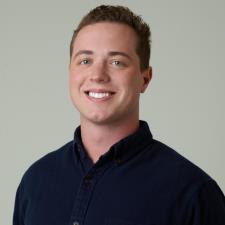
Peyton D.'s Photo

High School and College Tutor Specializing in Engineering
Peyton D.

Your first lesson is backed by our Good Fit Guarantee

Hourly Rate: $100
Response time: 24 minutes

About Peyton


Bio

I’m a materials engineer with a degree from the Colorado School of Mines and a love for all things science—especially when it involves chemistry, physics, and figuring out why batteries work (or don’t). These days, I work in electrochemistry and potassium-ion battery tech, which basically means I solve nerdy problems so you don’t have to.

I started tutoring in college after realizing I enjoyed explaining tough STEM topics almost as much as I enjoyed passing the classes myself. Whether it’s...

I’m a materials engineer with a degree from the Colorado School of Mines and a love for all things science—especially when it involves chemistry, physics, and figuring out why batteries work (or don’t). These days, I work in electrochemistry and potassium-ion battery tech, which basically means I solve nerdy problems so you don’t have to.

I started tutoring in college after realizing I enjoyed explaining tough STEM topics almost as much as I enjoyed passing the classes myself. Whether it’s calculus, chem, or materials science, I like breaking things down in a way that actually makes sense—and yes, bad science puns are part of the package.

If you’re looking for help with STEM classes or just need someone to make physics slightly less painful, I’ve got your back.

Education

Colorado School of Mines
Materials Engineer

Policies


Schedule

Loading...

Sun

Mon

Tue

Wed

Thu

Fri

Sat

Peyton hasn’t set a schedule.

We’re having trouble loading this schedule right now. Please try again later.


Approved Subjects

Calculus

Calculus

I hold a B.S. in Metallurgical and Materials Engineering from the Colorado School of Mines, where calculus was the working language of nearly every course I took, from thermodynamics and reaction kinetics to mechanics of materials. I have spent the years since applying it professionally: modeling fuel cell systems with computational fluid dynamics in Python, designing precipitation reactions for battery cathode production, and building mass and energy balances for chemical process scale-up. That means I can answer the question most students actually have, which is not just how to take a derivative but why anyone would want one. My approach is to tie each concept to something physical you can picture, then drill the mechanics until the algebra stops being the hard part.
Chemical Engineering

Chemical Engineering

My degree is in Metallurgical and Materials Engineering from the Colorado School of Mines, where my coursework was chemical process engineering in practice: thermodynamics, transport phenomena, reaction kinetics, chemical processing of materials, and statistical process control. I have since run those fundamentals in industry, building mass and energy balances for production scale-up, designing precipitation reactions for battery cathode manufacturing, and working a mixed-hydroxide precipitation pilot plant through oxidation, neutralization, counter-current decantation, and filtration circuits. I have tutored math and science since high school and spent my time at Nucor Steel training new metallurgists, so I am used to walking someone through a unit operation they have never seen before. I am strongest on balances, thermodynamics, transport, kinetics, and separations, and I will tell you up front if a question falls outside what I can teach well.
Mechanical Engineering

Mechanical Engineering

I hold a B.S. in Metallurgical and Materials Engineering from the Colorado School of Mines, which shares its foundation with the mechanical engineering curriculum: statics, mechanics of materials, physics, calculus through differential equations, transport phenomena, and design in SolidWorks. My strength within mechanical engineering is the materials side, where I did both my degree work and my career: mechanical properties and testing (tensile, hardness, fatigue, fracture, creep), failure analysis, and materials selection. I worked as a metallurgist at Nucor Steel qualifying new steel grades for automotive manufacturers and running performance trials on high-strength steel, and I trained the incoming metallurgists there, so explaining why a part failed is something I have done for a paycheck. I tutor statics, mechanics of materials, materials science, and mechanical properties; for thermodynamic cycles, controls, or machine design I would point you to someone else.
Python

Python

I taught myself Python on the job as a process engineer, where I built an automation tool for SEM image analysis that cut the work in half and gave my team back five hours a week. Since then I have used it professionally for data pipelines, API integrations, and machine learning models on production process data, and I currently maintain a Python service running against live customer data at the SaaS company I co-founded. I scored 100% on Wyzant's Python assessment. I have tutored math and science since high school and trained new engineers at Nucor Steel, and I teach Python the way I learned it: start with something you actually want to build, then pick up the syntax the problem demands.
Solidworks

Solidworks

I have used SolidWorks since my engineering coursework at the Colorado School of Mines, including a Design II project where I modeled a gearing system for an automated composting bin and a senior design project synthesizing nanoparticles, which meant translating a working idea into parts that could actually be manufactured. My background is metallurgical and materials engineering, so I bring a materials perspective to CAD: why a part fails, which manufacturing process a design assumes, and how tolerance and material choice interact. I also weld, solder, and fabricate, so I can tell you when a model will be a problem to actually build. I tutor sketching, part modeling, assemblies, mates, and drawings, and I am happy to work through your own project rather than generic exercises.
ACT Math
ACT Science
Algebra 1
Peyton D.'s Photo

Questions? Contact Peyton before you book.

Still have questions?

Contact Peyton
Response time: 24 minutes
Hourly Rate: $100
Response time: 24 minutes
Contact Peyton