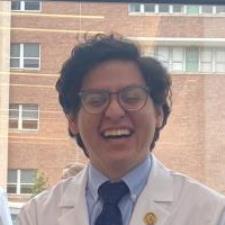
I am a current MD/PhD student at Vanderbilt University School of Medicine. I hold a Bachelor of Science in Chemistry from the University of Mississippi, where I focused on organic chemistry, physical chemistry, and related advanced topics such as graduate level thermodynamics and quantum mechanics. In addition, I completed minors in biology and mathematics. My academic research portfolio includes several first-author publications in the fields of computational chemistry and bioinformatics,...
I am a current MD/PhD student at Vanderbilt University School of Medicine. I hold a Bachelor of Science in Chemistry from the University of Mississippi, where I focused on organic chemistry, physical chemistry, and related advanced topics such as graduate level thermodynamics and quantum mechanics. In addition, I completed minors in biology and mathematics. My academic research portfolio includes several first-author publications in the fields of computational chemistry and bioinformatics, including one during my year at the National Institutes of Health. I have also led several review sessions for current first-year medical students at Vanderbilt on broad topics from anatomy to biochemistry.
During my undergraduate studies, I tutored organic chemistry and physics for two years. My tutoring sessions were primarily one-on-one targeting fellow undergraduates who needed extra support with their coursework. I tailored my teaching methods to each student’s learning style, often incorporating:
- Conceptual breakdowns to simplify complex theories.
- Practical examples to show real-world applications.
- Interactive problem-solving sessions to build confidence and mastery.
Ages of Students: Primarily college-aged undergraduates (18+).
Duration: Two years of direct tutoring experience in both organic chemistry and physics.
Teaching Setting: Combination of one-on-one sessions, small study groups, and larger classroom-style reviews.
Approach: My philosophy emphasizes active learning and regular feedback. I prefer to work through problems and teach via gaps in knowledge bases.