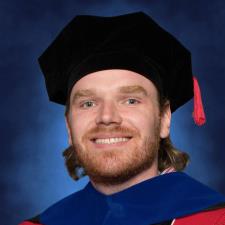
I hold a Ph.D. in Organic Chemistry from the University of Houston (2026), where my research focused on transition metal catalysis, including the development of palladium and nickel catalysts for cross-coupling and polymerization applications. My work has been published in peer-reviewed journals including Organometallics and the Journal of the American Chemical Society. During my Ph.D., I served as a teaching assistant for the undergraduate organic chemistry laboratory for two semesters,...
I hold a Ph.D. in Organic Chemistry from the University of Houston (2026), where my research focused on transition metal catalysis, including the development of palladium and nickel catalysts for cross-coupling and polymerization applications. My work has been published in peer-reviewed journals including Organometallics and the Journal of the American Chemical Society. During my Ph.D., I served as a teaching assistant for the undergraduate organic chemistry laboratory for two semesters, where I worked directly with students on lab technique, safety, and connecting hands-on experiments to the mechanisms and reactions they were learning in lecture. I also directly mentored a high school student researcher in the lab, guiding their development in laboratory techniques and scientific reasoning from the ground up. I co-authored a paper in the Journal of Chemical Education on redesigning chemistry course curricula to better serve modern learners, which reflects a genuine, ongoing interest in how chemistry is taught, not just how it's practiced in the lab. For four years, I also hosted a chemistry-focused podcast, where I interviewed researchers and translated complex, technical work into conversations accessible to a broad, non-specialist audience — a skill that translates directly into breaking down difficult concepts for students. My approach to tutoring centers on building a genuine understanding of reaction mechanisms rather than memorization of reactions as isolated facts; once a student can reason through why a reaction occurs the way it does, the rest of the course becomes far more manageable. I specialize in helping students work through mechanisms and spectroscopy (NMR, IR, and mass spectrometry), and I work with both AP Chemistry students and college students taking Organic Chemistry I and II, tailoring each session to the student's course level and specific gaps.