Search
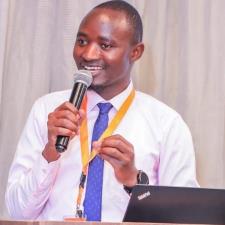
Anthony J.'s Photo

Stanford Statistician | Pro R, SPSS, Power BI, Tableau & Excel
Anthony J.

Your first lesson is backed by our Good Fit Guarantee

Hourly Rate: $45

About Anthony


Bio

Hi, I'm Anthony. I hold a PhD in Statistics from Stanford University and have spent years applying advanced statistical methods to real research and analytical problems, so I bring practical, hands-on grounding into every session, not just theory.
I tutor students at every level. For undergraduates, I build a solid foundation in core concepts like hypothesis testing, regression, ANOVA, and probability, making sure the "why" behind each method makes sense before diving into calculations. For...

Hi, I'm Anthony. I hold a PhD in Statistics from Stanford University and have spent years applying advanced statistical methods to real research and analytical problems, so I bring practical, hands-on grounding into every session, not just theory.
I tutor students at every level. For undergraduates, I build a solid foundation in core concepts like hypothesis testing, regression, ANOVA, and probability, making sure the "why" behind each method makes sense before diving into calculations. For graduate students and professionals, I provide advanced support in multivariate analysis, experimental design, and the software skills needed for thesis work, capstones, or job requirements — including R (data wrangling, visualization, reproducible reporting), SPSS (running and interpreting statistical procedures), Power BI and Tableau (dashboards and data storytelling), and Excel-based spreadsheet modeling (forecasting, optimization, financial and statistical modeling).
My approach meets each student where they are. Some need to rebuild foundational understanding from the ground up; others come to me the night before a deadline needing help troubleshooting a stuck project. Either way, I explain concepts in plain language first, then connect that understanding to the specific software, so students walk away truly understanding their analysis rather than just having followed steps. I'm patient, communicate clearly, and happy to answer follow-up questions between sessions for consistent support.
Whether you're taking your first statistics course or mastering a new tool for work, I'd love to help you build both the skills and confidence to succeed. I look forward to working with you.


Education

University of North Texas
Advanced Data Analyt
Texas A&M University
Masters
Stanford
PhD
  • Licensed teacher

Policies


Schedule

Loading...

Sun

Mon

Tue

Wed

Thu

Fri

Sat

Anthony hasn’t set a schedule.

We’re having trouble loading this schedule right now. Please try again later.


Approved Subjects

General Computer

General Computer

My work across data analytics, consulting, and academic research has required operating fluently across a wide range of computing environments and software ecosystems, including Windows and Mac operating systems, cloud-based platforms such as Google Workspace and Microsoft 365, file management and organization systems, and the kind of foundational computing literacy that underpins everything from basic document creation to more advanced analytical work, giving me a practical understanding of where general computer users most commonly run into confusion and how to address it efficiently. I have helped students and clients who were returning to computing after extended breaks, transitioning from one operating system to another, or simply trying to build enough digital confidence to function effectively in a workplace or academic setting that assumed a level of computer fluency they had not yet developed. On the instructional side, I have supported learners at the most foundational level, covering topics such as file and folder organization, cloud storage and syncing, keyboard shortcuts, printer and peripheral setup, browser navigation, email management, video conferencing tools, and the general troubleshooting mindset that allows someone to work through unfamiliar software independently rather than freezing every time something unexpected happens. My approach with general computing students is always to build transferable digital intuition rather than memorizing steps for specific tasks, because the computing landscape changes quickly and students who understand the underlying logic of how software and operating systems are organized can adapt to new tools far more confidently than those who learned by rote.
Macroeconomics

Macroeconomics

My graduate training in quantitative methods included substantial engagement with macroeconomic theory and modeling, covering the mathematical foundations of national income accounting, aggregate demand and supply dynamics, IS-LM and AD-AS frameworks, and the Solow growth model for analyzing long-run economic growth through capital accumulation, technological progress, and labor force dynamics, all of which require a level of algebraic and graphical fluency that distinguishes intermediate macroeconomics from the intuitive reasoning that introductory courses emphasize. My exposure to macroeconomic policy analysis extended into open economy macroeconomics including the Mundell-Fleming model for analyzing fiscal and monetary policy effectiveness under fixed and floating exchange rate regimes, balance of payments accounting, and the mechanisms through which interest rate differentials drive international capital flows and currency valuation. I have tutored students through macroeconomics coursework at the introductory and intermediate levels, helping them work through the conceptual and mathematical dimensions of topics including central bank policy transmission mechanisms, the quantity theory of money and inflation, Phillips curve tradeoffs between unemployment and inflation, and the competing theoretical perspectives of Keynesian, monetarist, and new classical economics that frame most policy debates students encounter in their coursework. A pattern I see consistently with macroeconomics students is difficulty connecting theoretical models to real-world economic events, and I focus sessions on building that bridge explicitly by grounding abstract frameworks in current and historical policy episodes that make the models feel relevant and interpretable rather than purely academic.
Microeconomics

Microeconomics

Microeconomics formed a core part of my quantitative graduate training, where the mathematical treatment of consumer theory, producer theory, and market equilibrium required facility with optimization techniques including Lagrangian methods for constrained utility and profit maximization, duality theory connecting cost and production functions, and general equilibrium analysis that extends partial equilibrium reasoning to interactions across multiple interconnected markets simultaneously. My exposure to microeconomic theory at the graduate level also included game theory covering Nash equilibrium, sequential games, mechanism design, and information asymmetry models such as adverse selection and moral hazard that underpin a significant portion of modern applied microeconomics in industrial organization, labor economics, and public policy analysis. I have tutored students through microeconomics coursework at both the introductory and intermediate levels, helping them navigate the transition from intuitive supply and demand reasoning to the more rigorous mathematical framework that intermediate microeconomics requires, including working through indifference curve analysis, isoquant and isocost diagrams, cost curve derivations, and the welfare analysis of market interventions such as price controls, taxes, and subsidies. A consistent challenge I see with microeconomics students is bridging the gap between graphical and algebraic representations of the same economic relationships, and developing fluency in moving between those two forms of reasoning is something I focus on deliberately because it is the skill that tends to determine how well students perform across the full range of problems an intermediate microeconomics course presents.
Microsoft Excel

Microsoft Excel

My formal academic training included graduate-level coursework in spreadsheet modeling specifically designed around Excel as an analytical and decision-support environment, covering financial functions including NPV, IRR, and PMT for capital budgeting problems, What-If Analysis tools including Goal Seek, Scenario Manager, and two-variable Data Tables for sensitivity analysis, and linear programming models built directly in Excel using Solver for resource allocation and optimization problems that are central to business analytics and operations management curricula. I have tutored students through Excel-intensive graduate analytics courses, including DESC 607: Analytics for Business Decisions, where assignments required building functional decision models from scratch rather than simply populating existing templates, and where the grading criteria emphasized both analytical correctness and workbook structure, documentation, and reproducibility. That course-specific experience gives me a precise understanding of the Excel competencies that graduate business and analytics programs actually assess, which allows me to focus tutoring sessions on exactly the skills that show up in assignments and exams rather than covering general Excel features that may not be relevant to what a student is being evaluated on.
Psychology

Psychology

My direct teaching experience at the undergraduate level was specifically in statistics for psychology, which required developing a deep familiarity with how psychological research is designed, conducted, and reported, including the ethical principles governing human subjects research, the logic of experimental and quasi-experimental designs, and the measurement frameworks underlying psychometric instruments used to assess cognitive, behavioral, and emotional constructs in ways that meet standards of reliability and validity that psychology as a discipline takes particularly seriously. That teaching context required engaging with primary psychological literature across multiple subfields, including cognitive, developmental, social, and clinical psychology, well beyond what a purely quantitative background would require. I have tutored psychology students through coursework covering the full breadth of a typical undergraduate and graduate psychology curriculum, including introductory psychology, abnormal psychology and psychopathology using DSM diagnostic frameworks, developmental psychology across the lifespan, social psychology covering attitude formation, conformity, and group behavior, and neuropsychology covering the biological bases of behavior and cognition. What distinguishes my support for psychology students from general academic tutoring is the ability to connect the conceptual and empirical sides of the discipline simultaneously, helping students understand not just what psychological theories claim but how those claims are tested, challenged, and revised through the research process that sits at the core of psychology as a scientific discipline.
R

R

My use of R in applied consulting and research settings has required working well beyond standard statistical procedures into areas such as text mining and sentiment analysis using the tidytext package, geospatial data visualization using sf and ggmap for mapping and spatial pattern analysis, and building automated reporting pipelines using Quarto that generate publication-ready documents combining narrative, code, and output in a format that updates automatically when the underlying data changes. I have also worked extensively with R's database connectivity tools, including DBI and odbc, to query and pull data directly from SQL databases into R analytical workflows, which is a practical skill that comes up constantly in professional and research environments where data lives in relational databases rather than flat files. On the instructional side, I have taught R specifically in the context of psychology and social science research methods courses, where the curriculum required students to move from raw survey data all the way through cleaning, analysis, and APA-formatted results reporting entirely within R, using packages like psych for reliability and factor analysis and apaTables for generating correctly formatted output tables directly from R objects. That course-specific instructional experience gives me a precise understanding of the R competencies that research methods programs actually assess, which allows me to target sessions around exactly what students need rather than covering general R programming concepts that may not be relevant to their immediate coursework.
SPSS

SPSS

My SPSS experience includes working specifically within program evaluation and applied social research contexts, where the software was used not only for standard inferential procedures but for more specialized analyses including cluster analysis for identifying subgroup patterns in population data, multidimensional scaling for mapping perceptual and attitudinal relationships among variables, and conjoint analysis for modeling how respondents weight competing attributes in decision-making studies, which are procedures that sit outside the standard introductory SPSS curriculum but that appear regularly in applied research and evaluation work. I have also worked extensively with SPSS's Complex Samples module for analyzing data collected through stratified or clustered sampling designs, where standard significance tests produce incorrect results because they assume simple random sampling, and with the Custom Tables module for generating publication-ready frequency and cross-tabulation summaries directly from SPSS output in formats that match what journals, government agencies, and evaluation reports typically require. On the tutoring side, I have worked with students and researchers designing and analyzing Likert-scale survey instruments in SPSS, covering item analysis, scale construction, internal consistency testing, and the exploratory and confirmatory factor analytic procedures used to validate measurement instruments before they are used in formal research contexts.
Anthony J.'s Photo

Questions? Contact Anthony before you book.

Still have questions?

Hourly Rate: $45
Contact Anthony