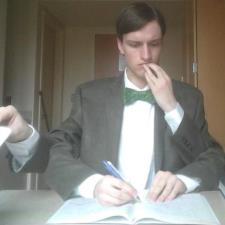
My teaching journey began as an undergrad at Oregon State University, when I was hired as a learning assistant for General Physics with Calculus. I would go between groups in a studio classroom, where students solved problems that further engaged them with the course content and pushed them to evaluate their understanding. There, I discovered the joy of helping students find that point where the material "clicked," that "Aha!" moment of the concepts falling into place.
After completing my...
My teaching journey began as an undergrad at Oregon State University, when I was hired as a learning assistant for General Physics with Calculus. I would go between groups in a studio classroom, where students solved problems that further engaged them with the course content and pushed them to evaluate their understanding. There, I discovered the joy of helping students find that point where the material "clicked," that "Aha!" moment of the concepts falling into place.
After completing my HBS in Physics and Mathematics, I stayed at OSU for graduate school. Over the next five years, I was a teaching assistant in much the same role as before, with the added responsibilities of leading studio sections of about 72 students each, and grading for entire multi-section courses of more than 500 students. While this gave me a great volume of teaching experience with a diverse array of different learners, it also pushed me into a wider perspective of the classroom, and I missed being more focused on individual students. My most rewarding teaching was on this smaller scale—mentoring first-year graduate students, giving feedback on drafts of senior theses, leading a 30-student summer course, helping undergrads get ready to make decisions about graduate school.
Now that I am finished with my MS in Physics and my MA in Mathematics (which was the same coursework as an MS in Math, plus second language coursework), I want to teach on my own terms, and that means centering your learning. We will be challenging each other—your questions will make me think critically about my own understanding so that I can communicate it, and even evolve it, and my questions will help you to pick apart your understanding and reassemble it on a more solid foundation, so that it may grow more steadily. I will also emphasize sensemaking, the ability to evaluate your own solutions without an answer key and have confidence in them. It's not just about passing a class; it's about knowing you can do what you set your mind to, and believing in it.