Search
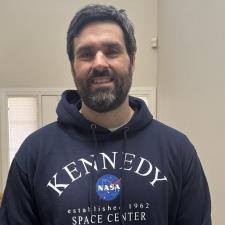
Jack K.'s Photo

PhD Chemical Engineer, PE, Award-Winning Teaching Assistant
Jack K.

Your first lesson is backed by our Good Fit Guarantee

Instant Book

Hourly rate: $135

Claim a session with Jack K. that fits your schedule

See more options

About Jack


Bio

I have a PhD in chemical engineering from Rensselaer Polytechnic Institute, I am a Professional Engineer in Oregon, and I have spent fifteen years actually using this material: first in research, then as a process engineer at Intel and Lam Research, and now as a data consultant and educator.

I also spent six years teaching it. In 2019 RPI gave me the Phillip A. Groll Teaching Assistant Award. Knowing a subject and being able to explain it are genuinely different skills, and I have been...

I have a PhD in chemical engineering from Rensselaer Polytechnic Institute, I am a Professional Engineer in Oregon, and I have spent fifteen years actually using this material: first in research, then as a process engineer at Intel and Lam Research, and now as a data consultant and educator.

I also spent six years teaching it. In 2019 RPI gave me the Phillip A. Groll Teaching Assistant Award. Knowing a subject and being able to explain it are genuinely different skills, and I have been evaluated on both.

What I teach: Calculus I through III, Differential Equations, Linear Algebra, Precalculus, AP Calculus. General Chemistry I and II, Organic Chemistry I and II, AP Chemistry. Physics I and II, AP Physics. Thermodynamics, Transport Phenomena, Fluid Mechanics, Heat Transfer, and the chemical and mechanical engineering core. Python, SQL, and machine learning.

How I teach: Formulas you memorize evaporate after the exam. Ideas you can picture stay. That takes longer at the start and it is the only part that still works six months later, in the next course that assumes you understood this one. Rather than drilling whatever topic is on this week's problem set, I look for the thing underneath that never got solid, because that is what keeps costing you points.

Sessions are online, one on one, with a shared whiteboard you can draw on too. Bring paper and a pencil.

Education

Rensselaer Polytechnic Institute
Chemical Engineering
Rensselaer Polytechnic Institute
Masters
Rensselaer Polytechnic Institute
PhD

Policies


Schedule

Loading...

Sun

Mon

Tue

Wed

Thu

Fri

Sat

Jack hasn’t set a schedule.

We’re having trouble loading this schedule right now. Please try again later.


Approved Subjects

Calculus

Calculus

I hold a PhD in chemical and biological engineering from Rensselaer Polytechnic Institute, where calculus was the working language of my doctoral research rather than a course I had once completed. Over six years I built MATLAB and COMSOL models of polymerization kinetics and Monte Carlo simulations, which meant setting up and interpreting integrals and derivatives as descriptions of real physical rates rather than as symbolic exercises. I received the 2019 Phillip A. Groll Teaching Assistant Award at RPI for classroom instruction with engineering students. When I tutor calculus I insist that a student can say out loud what a derivative or integral means in the problem before we compute anything, because students who can do that stop making sign and setup errors almost immediately.
Chemical Engineering

Chemical Engineering

I hold three degrees in chemical engineering from Rensselaer Polytechnic Institute, a BS in 2009, an MEng in 2015, and a PhD in 2020, and I am a licensed Professional Engineer in the State of Oregon. I have practiced the discipline for fifteen years, beginning as a production engineer at Momentive Performance Materials where I managed continuous processes involving reactors, distillation columns, and scrubbers, and later as a process engineer at Intel and Lam Research working on semiconductor etch. That span means I can teach unit operations, reaction engineering, mass and energy balances, and process control from having actually run and troubleshot them at industrial scale. I received the 2019 Phillip A. Groll Teaching Assistant Award at RPI, and I teach this subject by working from the process flow diagram outward, because students who can see where a unit sits in a plant understand why its governing equations take the form they do.
Chemistry

Chemistry

I earned a BS, MEng, and PhD in chemical engineering from Rensselaer Polytechnic Institute and hold a Professional Engineer license in Oregon. Early in my career I worked as a production engineer at Momentive Performance Materials running continuous chemical manufacturing processes involving reactors, distillation columns, scrubbers, and hazardous material systems, so stoichiometry, equilibrium, and reaction kinetics were daily operational concerns rather than abstractions. That experience shapes how I teach: I connect each concept to something physical the student can picture, because chemistry becomes far easier once it stops being a set of rules to memorize. I work through unit analysis relentlessly, since most errors I see at this level trace back to units rather than to chemistry.
Data Analysis

Data Analysis

As a Data Analyst IV at Astrana Health I led the migration of healthcare analytics workloads from SQL Server to Databricks and built automated variance detection and quality monitoring solutions for claims and eligibility datasets. Earlier, at Intel Corporation, I owned critical dimension statistical process control charts across a high-volume manufacturing line and built automated monitoring workflows that surfaced defect trends across more than fifty production chambers. Working across two very different industries taught me that the hard part of analysis is almost never the calculation but deciding what question the data can honestly answer. I teach that discipline explicitly, starting every problem by asking what decision the analysis is supposed to support before opening a single tool.
Data Science

Data Science

I served as founding data scientist at Acratica, where I architected cloud-scale data platforms using Databricks, Azure, Spark, Terraform, and Python to support production analytics and machine learning workflows. In that role I developed probabilistic and Bayesian modeling frameworks for Enterprise Master Patient Index systems, achieving high-precision identity matching across large healthcare datasets, and designed automated data quality pipelines supporting reproducible analysis. My PhD in chemical and biological engineering from RPI grounds this work in statistical modeling and simulation rather than in tooling alone. I teach data science as an engineering discipline, which means I spend as much time on validation, reproducibility, and knowing when a model is wrong as on fitting one in the first place.
Differential Equations

Differential Equations

My doctoral research at Rensselaer Polytechnic Institute centered on computational modeling of transport phenomena and polymerization kinetics, which required formulating and solving ordinary and partial differential equations in MATLAB and COMSOL. This work has been published in peer-reviewed journals and has accumulated more than 400 scholarly citations. Because I came to differential equations as a modeler rather than a mathematician, I teach them the way I had to learn them, starting from what the equation is claiming about a physical system before touching any solution method. Students who understand why a boundary condition exists rarely struggle to apply it, and that framing tends to make separation of variables and Laplace transforms feel like tools instead of rituals.
Linear Algebra

Linear Algebra

I use linear algebra professionally as a data scientist building machine learning systems, where matrix operations, eigenvalue decomposition, and dimensionality reduction underpin nearly everything from principal component analysis to neural network training. At Intel I applied multivariate statistical modeling to high-dimensional semiconductor process data, work that depended on understanding what a matrix transformation actually does to a dataset. My PhD in chemical and biological engineering from RPI involved numerical methods where linear systems were solved constantly as part of computational modeling. I teach linear algebra with a strong emphasis on geometric intuition first, because students who can visualize what a transformation does to space find determinants, eigenvectors, and rank far less arbitrary than students who only learn the procedures.
Machine Learning/ AI

Machine Learning/ AI

At Intel Corporation I developed machine learning models on optical emission spectroscopy data to predict inline defects and process instability, and my predictive excursion detection methodology was selected for the Intel Distinguished Invention Award, which I received twice. I work in TensorFlow, PyTorch, and Scikit-learn, and I maintain a public portfolio at github.com/intuitiveengineer including convolutional network work on CIFAR-10, semiconductor yield prediction on the SECOM dataset, and wafer map defect classification on WM-811K. I have also built and deployed an autonomous semiconductor fabrication agent, hosted at fab-agent.intuitiveengineer.io. I teach machine learning starting from the failure modes rather than the architectures, because students who understand overfitting, leakage, and class imbalance early write models that actually work outside a notebook.
Mechanical Engineering

Mechanical Engineering

My engineering coursework at Rensselaer Polytechnic Institute included statics, mechanics of materials, and thermal-fluid systems, and I am a licensed Professional Engineer in Oregon. Professionally I have owned mechanical equipment rather than only analyzed it, sustaining and troubleshooting more than twenty-five semiconductor process tools at Intel and managing rotating and pressure equipment including industrial refrigeration systems, reactors, and distillation columns at Momentive Performance Materials. I also led approximately 1.4 million dollars in capital improvement projects focused on equipment reliability. When I tutor mechanics I require a complete free body diagram before any equation is written, because in my experience nearly every incorrect answer in statics and mechanics of materials originates in an incomplete or mislabeled diagram.
Organic Chemistry

Organic Chemistry

My doctoral research at Rensselaer Polytechnic Institute focused on polymerization kinetics and membrane science, which meant working with reaction mechanisms, functional group behavior, and molecular structure as the substance of my daily work rather than as coursework. That research has been published in peer-reviewed journals and cited more than 400 times. I also spent three years at Momentive Performance Materials producing silicone and specialty chemical products, where organic reaction chemistry determined whether a batch met specification. I teach organic chemistry through mechanisms rather than memorization, because students who can push electrons correctly can derive most reactions they encounter, while students who memorize product tables tend to stall the moment a problem is unfamiliar.
Physics

Physics

I am a licensed Professional Engineer in Oregon with a PhD from Rensselaer Polytechnic Institute, and I spent several years at Intel Corporation owning plasma etch processes where the underlying physics of gas dynamics, electromagnetic fields, and optical emission were the daily subject matter. I developed machine learning models on optical emission spectroscopy data to detect process excursions, work that required understanding the spectroscopy itself and not merely the statistics applied to it. My earlier work at Momentive Performance Materials involved thermal and mechanical systems including industrial refrigeration and pressurized reactors. I teach physics by insisting on free body diagrams and energy accounting before equations, because nearly every wrong answer I see comes from an incomplete picture rather than from bad algebra.
Precalculus

Precalculus

Precalculus is the reason calculus came easily to me, and that experience shapes how I teach it. I built a genuinely solid command of functions, trigonometry, and algebraic manipulation before I ever saw a derivative, and arriving in calculus without gaps meant I could concentrate on the new ideas rather than repairing old ones on the fly. I went on to earn a PhD in chemical and biological engineering from Rensselaer Polytechnic Institute and received the 2019 Phillip A. Groll Class of 1921 Teaching Assistant Award there, where over six years of working with engineering students I saw the same pattern from the other side, since those who struggled in calculus were rarely defeated by calculus itself but by unresolved precalculus. I teach this subject for fluency rather than coverage, because comfort with functions is what makes everything after it feel manageable.
Probability

Probability

I developed probabilistic and Bayesian modeling frameworks for Enterprise Master Patient Index systems at Acratica, where the entire problem was estimating the likelihood that two records referred to the same person across large and imperfect healthcare datasets. My doctoral research at Rensselaer Polytechnic Institute used Monte Carlo simulation to model stochastic behavior in polymerization systems. In semiconductor manufacturing at Intel I applied probabilistic reasoning constantly, since deciding whether a process had genuinely shifted or had produced an unlikely but ordinary result is fundamentally a question about distributions. I teach probability by forcing the student to state the sample space explicitly before computing anything, because most errors at this level are errors of framing rather than of arithmetic.
Python

Python

I write Python professionally rather than academically, having built automated quality-event tracking and defect monitoring workflows at Intel Corporation, data validation frameworks during a cloud migration at Astrana Health, and Spark-based pipelines on Databricks as founding data scientist at Acratica. My public repositories at github.com/intuitiveengineer include machine learning projects on CIFAR-10, SECOM, and WM-811K, and I have deployed a working semiconductor fabrication agent at fab-agent.intuitiveengineer.io. I work regularly with NumPy, pandas, Scikit-learn, PyTorch, and TensorFlow in production contexts. I teach Python by having students build something that runs from the first session, because reading syntax explanations produces far less durable understanding than debugging your own broken code with someone experienced sitting beside you.
SQL

SQL

I built the SQL layer for an Enterprise Master Patient Index system at Acratica using Snowflake and dbt, work that involved complex joins, window functions, and incremental transformation models across large healthcare datasets where correctness directly determined whether patient records matched. At Astrana Health I led the migration of analytics workloads from SQL Server to Databricks and wrote SQL-based validation frameworks to guarantee reporting consistency through that transition. Earlier, at Intel, I used SQL against semiconductor manufacturing databases to investigate defect trends and process excursions. I teach SQL by starting with the shape of the result set and working backward, because students who can describe the table they want before writing a query stop guessing at joins.
Statistics

Statistics

I am Six Sigma Green Belt certified and have applied statistics in high-volume manufacturing for over a decade, owning critical dimension statistical process control charts at Intel Corporation and designing multiple designs of experiment to improve process robustness and reduce defects. At Momentive Performance Materials I executed a DMAIC improvement project using Gage R and R studies and control charting to diagnose intermittent sensor failures. This is statistics with consequences attached, where calling a shift that was only noise wastes a shift of production and missing a real one scraps wafers. I teach the subject around that distinction, spending most of my time on what a p-value and a confidence interval actually claim, because students who understand the logic of inference stop applying tests by recipe.
Thermodynamics

Thermodynamics

I hold a PhD in chemical and biological engineering from Rensselaer Polytechnic Institute and a Professional Engineer license in Oregon, and thermodynamics has been central to my fifteen years of practice. At Momentive Performance Materials I operated distillation columns, reactors, and industrial refrigeration systems, which meant energy balances, phase equilibrium, and entropy arguments were part of daily operational decisions rather than homework. I later worked on semiconductor etch processes at Intel and Lam Research where gas phase behavior and thermal management governed process stability. I teach thermodynamics by requiring the student to define the system boundary and state assumptions before writing a single equation, because most difficulty in this subject comes from not knowing which framework applies rather than from the algebra that follows.
Jack K.'s Photo

Questions? Contact Jack before you book.

Still have questions?