Music theory is often perceived as elitist, and many people believe they can make good music without any theory knowledge. While I absolutely agree with this notion, I do not believe music theory is designed to rationalize music. My philosophy is that music theory serves as a language to functionally explain why certain musical elements sound they way to; music is what we hear, not what we write. Through theory education, I aim to provide students a toolkit they can use to construct and...
Music theory is often perceived as elitist, and many people believe they can make good music without any theory knowledge. While I absolutely agree with this notion, I do not believe music theory is designed to rationalize music. My philosophy is that music theory serves as a language to functionally explain why certain musical elements sound they way to; music is what we hear, not what we write. Through theory education, I aim to provide students a toolkit they can use to construct and understand music they love. I believe this perspective serves both the student and artist better than a purely academic approach.
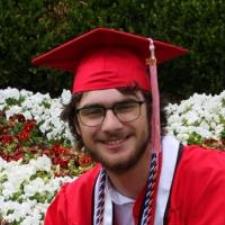
I just recently graduated from Miami University of Oxford, Ohio with my Bachelor's of Music in Composition. During my last two semesters I served as an Undergraduate Associate for Dr. David Heinsen's Music Theory I and IV courses. Dr. Heinsen was never satisfied with teaching theory out of a textbook, especially since textbooks often prioritize quantity of knowledge over quality. Thus, Dr. Heinsen and I spent our semesters together discussing how one can design a curriculum that primarily focuses on engagement and understanding of content rather than information cramming. I have taken the design philosophies we discussed in our meetings into consideration when designing my own theory curriculum.
As for my qualifications, I am currently attending Bowling Green State University for my Master of Music in Composition. My bachelor's degree from Miami University included four semesters of Music Theory, four semesters of Aural Skills, four semesters of Functional Piano, two semesters of Composition Seminar, six semesters of Composition Studio and Lessons, one semester of Music Technology, one semester of Electroacoustic Music, two semesters of Music History, one semester of Counterpoint, one semester of Advanced Analysis, two semesters of Advanced Aural Skills, and one semester of Orchestration. I currently work as a Graduate Assistant for Aural Skills at BGSU and a freelance marching arts designer.