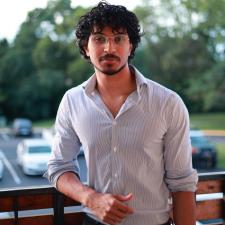
I graduated Summa Cum Laude from Cornell University with a 4.16 GPA and a Bachelor of Science in Electrical and Computer Engineering. I was the valedictorian of my high school, and I received a 1590 on the SAT, an 800 on SAT Math II, an 800 on SAT Physics, and 5s on 11 AP courses, including AP Calculus BC, AP Chemistry, AP Physics C: Mechanics, AP Physics C: E&M, and AP Computer Science A.
While at Cornell University, I served as an undergraduate TA for ECE 3150: Microelectronics. I was...
I graduated Summa Cum Laude from Cornell University with a 4.16 GPA and a Bachelor of Science in Electrical and Computer Engineering. I was the valedictorian of my high school, and I received a 1590 on the SAT, an 800 on SAT Math II, an 800 on SAT Physics, and 5s on 11 AP courses, including AP Calculus BC, AP Chemistry, AP Physics C: Mechanics, AP Physics C: E&M, and AP Computer Science A.
While at Cornell University, I served as an undergraduate TA for ECE 3150: Microelectronics. I was awarded the Chen Outstanding ECE Undergraduate Teaching Assistant Award for my performance as a TA.
As a tutor, I enjoy following Lev Vygotsky’s philosophy of the Zone of Proximal Development (ZPD). Vygotsky divides learning into three categories: (1) tasks a learner can accomplish without assistance, (2) tasks a learner can accomplish with assistance, and (3) tasks a learner cannot accomplish with assistance. Vygotsky asserts that the most learning occurs during category (2) tasks which he calls the ZPD. In practice, I start by asking students category (1) questions they are sure to know. If we are analyzing a complex, multi-part calculus problem, I may ask something like, “How do I take the derivative of a polynomial?” These simple questions build their confidence and get them comfortable tackling more challenging ones. Next, I enter students’ ZPD and build their intuition by asking questions like, “How can we break this complex derivative down into simple, mini-problems we already know how to complete?” This is the most rewarding part of my job. In these moments, I get to hear the oohs and aahs of my students as something clicks. These moments make me really glad to be a tutor.