Search
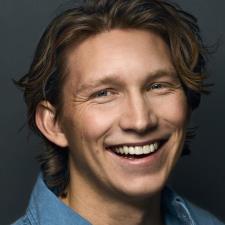
George W.'s Photo

UChicago & Choate alum: 5 years tutoring grades 5 through college
George W.

2 hours tutoring

Your first lesson is backed by our Good Fit Guarantee

Hourly Rate: $30

About George


Bio

I graduated from the University of Chicago with a bachelor's degree in Creative Writing. I arrived there as an applied mathematics major and spent my early coursework in math before moving toward writing, which is why I am comfortable tutoring on both sides of a divide most tutors fall on one side of. Before college I attended Choate Rosemary Hall, which gave me a close view of how demanding secondary curricula are structured and what the boarding and prep school admissions process actually...

I graduated from the University of Chicago with a bachelor's degree in Creative Writing. I arrived there as an applied mathematics major and spent my early coursework in math before moving toward writing, which is why I am comfortable tutoring on both sides of a divide most tutors fall on one side of. Before college I attended Choate Rosemary Hall, which gave me a close view of how demanding secondary curricula are structured and what the boarding and prep school admissions process actually asks of a family.

For the past five years I have tutored privately and one on one, working with students from fifth grade through college. I meet students in person around Brooklyn and also work online. I tutor writing and English, algebra and geometry, physics, and test preparation for the SAT, ACT, and SSAT, and I advise students applying to independent secondary schools, drawing on my own experience going through that process and attending one.

My approach comes out of something I noticed early on. Students rarely struggle because they cannot understand the material in front of them. Far more often there are small foundational gaps underneath it that went unnoticed a year or two earlier and have quietly compounded since. A student stuck on quadratics may really be shaky on fractions; a student whose essays will not come together may never have been taught how a paragraph carries an argument. The student usually cannot name the problem, only that things have stopped clicking, and their confidence erodes accordingly.

So my first job with a new student is diagnostic. I work backward from where they are stuck until I find the actual gap, and then we rebuild from there rather than drilling the surface problem. It is slower at the start and considerably faster after that. What I am aiming for is a student who trusts their own judgment again and needs me less over time, which I take to be the point of the work.

Education

University of Chicago
Creative Writing

Policies


Schedule

Loading...

Sun

Mon

Tue

Wed

Thu

Fri

Sat

George hasn’t set a schedule.

We’re having trouble loading this schedule right now. Please try again later.


Approved Subjects

ACT English

ACT English

I graduated from the University of Chicago with a bachelor's degree in Creative Writing, so the grammar, usage, and rhetorical questions that make up the ACT English section are the material I spent four years working in directly. I have tutored the section one on one for the past five years with high school students preparing for the test. What makes ACT English hard is not that the rules are obscure but that the section moves fast, roughly forty-five seconds a question, so a student who has to reason out every comma is going to run out of time no matter how well they understand the rule. Most of my work is on recognition and pacing, getting students to the point where the common patterns register instantly and their time goes to the handful of questions that actually require thought.
ACT Math

ACT Math

I entered the University of Chicago as an applied mathematics major and did my early coursework in the math sequence, and I have tutored ACT math one on one for the past five years. The ACT math section is a breadth test more than a depth test, about a minute a question drawn from everything through basic trigonometry, which means the students who struggle are usually not the ones missing advanced material but the ones losing time on the early questions. I start by looking at how long a student spends on the questions they get right, not just at the ones they miss, because on a timed test the points usually disappear on questions a student never reached, and the reason they never reached them is a few minutes spent grinding through something earlier that they eventually got correct. From there we work on the underlying gaps that cause the hesitation, because a student who is genuinely fluent in the fundamentals gains far more time than one who has memorized test tricks.
ACT Reading

ACT Reading

I graduated from the University of Chicago with a degree in Creative Writing and devoted much of my coursework to literature. I have tutored the ACT Reading section one on one for five years with high school students. Most students who struggle on it understand the passages perfectly well and simply run out of time. So most of my work on this section is pacing. We work through real passages under the clock and then review them together, looking at where the time went rather than only at what was missed, since those are usually different questions. I also teach students to find the line that proves an answer rather than picking the one that sounds right, which is a habit that gets faster with practice and stops a score drifting from test to test.
Algebra 1

Algebra 1

I entered the University of Chicago as an applied mathematics major and did my early coursework in the math sequence before graduating with a degree in Creative Writing, and I have tutored algebra one on one for the past five years with students from fifth grade through college. Algebra 1 is one of the courses I most like to teach, because it is where arithmetic stops being a set of procedures and starts being a language, and that transition is where students most often come unstuck. In my experience the trouble is usually not the algebra itself but something underneath it, whether shaky fractions, negative numbers, or order of operations, that went unnoticed a year or two earlier. So my first job with a new student is to work backward until I find the actual gap, and we rebuild from there rather than drilling the surface problem, which is slower at the start and considerably faster after that.
Algebra 2

Algebra 2

I entered the University of Chicago as an applied mathematics major and did my early coursework in the math sequence before graduating with a degree in Creative Writing, and I have tutored algebra one on one for the past five years with students from middle school through college. Algebra 2 is where unresolved gaps from Algebra 1 tend to surface, because the course assumes fluency with factoring, fractions, and negative numbers and then builds functions, logarithms, and complex numbers on top of that assumption. When a student is struggling here, my first step is to check whether the problem is the new material or the foundation underneath it, which in my experience it usually is. We repair that first and then move forward, which costs a few sessions early and saves many later.
Classics

Classics

I graduated from the University of Chicago with a degree in Creative Writing, and most of my coursework was in literature and the humanities, including several Core sequences and classes spanning Russian, German, English and American literature. Among the works I studied are the Odyssey, Greek tragedy, Plato, the Aeneid and Dante. I have tutored English and literature one on one for five years with students from middle school through college. What makes these texts hard for students is almost never the ideas and almost always the distance: the syntax, the assumed context, the unfamiliar names. I work on reading closely enough that the text stops feeling like a wall, and then on writing about it in a way that argues rather than retells.
Creative Writing

Creative Writing

I hold a bachelor's degree in Creative Writing from the University of Chicago, where the degree is built around workshop: writing your own work, submitting it to a room of readers, and revising it under close criticism. I am currently working as a playwright in New York, and I work with writers at every level, from elementary school students to adults. I have tutored writing one on one for five years. The useful work is almost never about rules. Most of it is asking why, and then asking again, and answering each time in more detail than seems necessary. That is where imagination actually comes from, and writers are usually surprised by how much they had. The rest is learning to trust themselves enough to write badly, because very little good gets written by someone trying to produce something good on the first attempt.
English

English

I graduated from the University of Chicago with a degree in Creative Writing and have tutored English one on one for five years, with students from fifth grade through college. English is first about learning how to think, and then about learning the rules that let you express that thinking. So I start with the thinking: reading actively, and asking good questions of a text rather than waiting to be told what it means. From there we work on structure, on how an argument gets built and held together. The grammar comes alongside that rather than ahead of it, since its purpose is to make a thought land and to prove it, and it is far easier to learn once a student can see what it is for. The advantage of working this way is that none of it stays confined to one assignment. The same habits carry into school essays, into reading comprehension, and onto the SAT and ACT, which are largely testing whether a student can follow an argument and see how it was made.
Essay Writing

Essay Writing

I hold a bachelor's degree in Creative Writing from the University of Chicago, where the coursework was built around workshopping and revising my own prose under close critique. For the past five years I have tutored essay writing one on one with students from fifth grade through college, covering analytical and literary essays for English classes, timed in-class and exam essays, and application essays for students applying to independent secondary schools. Most of the students I work with can already think clearly about their subject but have never been taught how an essay actually carries an argument, so we spend our time on structure first: what a thesis has to do, how a paragraph earns its place, and how evidence gets used rather than quoted. I edit alongside students rather than for them, so that by the end they can see the revisions they need to make on their own.
European History

European History

I completed European history coursework at the University of Chicago, built on primary sources and weekly argumentative essays, and graduated with a degree in Creative Writing. I have tutored one on one for five years with students from middle school through college. History at school level is usually taught as a set of things to remember, which is why a student who can recite the causes of a war often cannot write a paragraph arguing which of them mattered most. The work that helps is learning to use evidence to support a claim rather than to decorate one. That is where I am most useful, because it is as much a writing skill as a history skill.
Fiction Writing

Fiction Writing

I hold a bachelor's degree in Creative Writing from the University of Chicago, where the degree is built around workshop: writing your own pieces, submitting them to a room of readers, and revising under close criticism. I am currently a playwright in New York, and I have tutored writing one on one for five years, with students ranging from elementary school to adults. With fiction the work is mostly asking why, and then asking again. Why does he do that, why does she say it like that, why does any of it matter to the person it is happening to. Stories that are not working are rarely short on events, they are short on someone wanting something, and the questions are what surface it. The other half is persuading a writer to trust a bad first draft, because almost nothing good arrives on the first attempt.
Geometry

Geometry

I have tutored geometry one on one for the past five years with middle and high school students, covering proofs, triangle and circle relationships, transformations, trigonometric ratios, and coordinate geometry. I entered the University of Chicago as an applied mathematics major before graduating with a degree in Creative Writing. Geometry is the course where students who have been strong in math sometimes stall for the first time, because it asks for a different kind of thinking: justifying a claim in steps rather than executing a procedure. That is a writing skill as much as a math skill, and having spent my degree on how an argument is built, it is the part of the course I most enjoy teaching.
Grammar

Grammar

I graduated from the University of Chicago with a degree in Creative Writing and have tutored one on one for five years, with students from fifth grade through college. Grammar taught on its own tends not to stick, because a rule learned in isolation has nothing to attach itself to. I teach it inside a student's own writing, where a comma splice or a misplaced modifier is doing visible damage to a sentence they actually meant. Once a student can see that the rules exist to make a thought land and to prove it, the terminology stops being arbitrary and starts being useful. It also makes the standardized test questions easier, since those come back to the same handful of rules over and over.
Literature

Literature

I graduated from the University of Chicago with a degree in Creative Writing and devoted most of my coursework to literature, across Russian, German, English and American traditions, and I have tutored one on one for five years with students from fifth grade through college. Great books are genuinely difficult. The ideas are complicated, the symbolism is rarely tidy, and often a book is holding two things that contradict each other and refusing to resolve them, so a student who feels lost usually is lost. Some of that I can simply supply, whether historical context, what a convention is doing, or what a reader at the time would have assumed. The rest has to be found, and in a session that means taking a few pages and going through them slowly, asking why a writer made a particular choice there and what else they might have done instead. I pay close attention to a student's own reactions, since what unsettles or bores or moves them is usually the first evidence of what a book is doing. Then we test whether the reading holds, because a text will support some interpretations and not others, and learning to tell the difference is most of the skill.
Political Science

Political Science

I did extensive coursework in political science and international relations at the University of Chicago, including studying under John Mearsheimer. I have tutored one on one for five years, with students from middle school through college. Political science at school level is often taught as a set of institutions and dates, which leaves a student able to describe a system and unable to argue about it. The subject is really about competing explanations for why states and people behave as they do. So the work is learning a theory well enough to test it against a case, and seeing where it holds and where it does not.
SAT Math

SAT Math

I entered the University of Chicago as an applied mathematics major and did my early coursework in the math sequence, and I have tutored test preparation one on one for the past five years with high school students. The SAT rewards reasoning more than recall, and its math questions tend to be less about whether a student knows a formula than about whether they can recognize what a problem is really asking underneath the wording. Students who plateau on this section are usually solid on procedure and shaky on translation, so much of my work is on reading a question carefully and choosing an approach before touching the algebra. I also work on the foundational gaps that show up under time pressure, since those are what turn a question a student could answer into one they miss.
SAT Reading

SAT Reading

I graduated from the University of Chicago with a degree in Creative Writing and devoted much of my coursework to literature. I have tutored the SAT one on one for five years with high school students. Most students who struggle with this section understand what they read perfectly well and still miss questions, because they answer from impression rather than from the page. So most of the work is proving answers: finding the line that makes one choice right and the others wrong, which is slow at first and then quick. We also work on pacing, since students who run short of time are usually reading every line with equal weight rather than reading toward the question.
SAT Writing

SAT Writing

I graduated from the University of Chicago with a degree in Creative Writing and have tutored the SAT one on one for five years with high school students. This section tests a surprisingly small set of things: a handful of punctuation rules, agreement, modifier placement, transitions, and whether a sentence earns its place. Students who find it hard are usually relying on what sounds right, which works until the test writes a sentence designed to sound right and be wrong. The work is learning to name what a question is testing before answering it, which takes the guessing out and makes this one of the most improvable sections on the test.
SSAT

SSAT

I attended Choate Rosemary Hall and sat the SSAT myself. I have tutored one on one for five years, including SSAT preparation. Where a student needs to begin depends a great deal on the student, but it is often underneath the test rather than on it: roots and prefixes on the verbal side, and foundational concepts on the math side. Those are frequently what make a section feel unfamiliar, and fixing the foundation can make the whole test feel easier. From there we work outward toward strategy, and toward being comfortable sitting a long test, which for a younger student is a skill in itself. I can also advise families on the applications themselves, working with students and parents to highlight what is already great in a particular child.
Writing

Writing

I graduated from the University of Chicago with a degree in Creative Writing and have tutored writing one on one for five years, with students ranging from elementary school to adults. Most students are not short of things to say. They are stuck because nobody has shown them how to find out what they think, so they begin writing before they know what they are arguing and the piece never quite recovers. I spend most of the early work there, asking why and then asking again, and getting the answers down in more detail than seems necessary. Structure comes after that and the mechanics after that, since both are far easier to learn once there is something worth structuring.
George W.'s Photo

Questions? Contact George before you book.

Still have questions?

Ratings and Reviews


Rating

5.0 (2 ratings)
5 star
(2)
4 star
(0)
3 star
(0)
2 star
(0)
1 star
(0)
Hourly Rate: $30
Contact George