Teaching has been a consistent part of my life. In elementary school, I founded a peer tutoring club, and in high school, I helped design and lead summer camps through my robotics team, supervising students while teaching coding, robotics, and foundational mechanical engineering. I also trained as a competitive dancer for 15 years and worked as a physical instructor with children ages 5–12. These experiences strengthened my ability to communicate patiently, build confidence, and adapt...
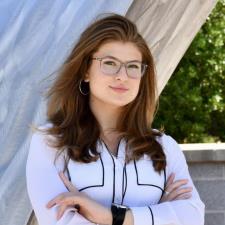
Teaching has been a consistent part of my life. In elementary school, I founded a peer tutoring club, and in high school, I helped design and lead summer camps through my robotics team, supervising students while teaching coding, robotics, and foundational mechanical engineering. I also trained as a competitive dancer for 15 years and worked as a physical instructor with children ages 5–12. These experiences strengthened my ability to communicate patiently, build confidence, and adapt instruction to younger learners.
I recently graduated from the University of North Carolina at Chapel Hill with a B.S. in Statistics and Analytics, a B.S. in Economics, and a minor in Data Science. During college, I worked in a School of Education research lab examining how students who spoke English as an additional language engaged with STEM learning materials and which media formats best supported comprehension. This work was personally meaningful because my parents are immigrants, and I grew up helping with translation, grammar, and communication.
I also spent approximately two and a half years at a statistical software company, where much of my role centered on education and technical support. I taught scientists and engineers through presentations, webinars, guided demonstrations, written resources, and real-time problem-solving. I also created and coded an animated educational series that used visual explanations to make advanced statistical concepts accessible to users without formal statistics training.
My teaching philosophy is that challenging material should be rigorous without feeling intimidating. I tailor explanations to each student, incorporate visual examples and practical applications, and emphasize both how a method works and why it works. My goal is to create a welcoming environment in which students feel comfortable asking questions, developing confidence, and becoming more independent learners.