Search
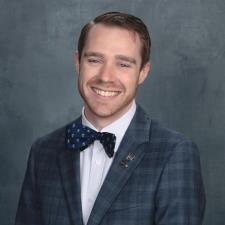
Samuel B.'s Photo

Physician-Scientist & Physicist | Tutoring & Career Development
Samuel B.

Your first lesson is backed by our Good Fit Guarantee

Hourly Rate: $70

About Samuel


Bio

As a dedicated science educator with a background spanning from physics to medicine, I provide students with a strong foundation in the sciences. I earned a Bachelor of Science in Physics and Mathematics with Highest Honours from the University of Maine, where I also worked as a learning assistant in calculus-based physics and introductory biology. Later, I received my Doctor of Medicine from Central Michigan University College of Medicine and trained in a combined Internal Medicine and...

As a dedicated science educator with a background spanning from physics to medicine, I provide students with a strong foundation in the sciences. I earned a Bachelor of Science in Physics and Mathematics with Highest Honours from the University of Maine, where I also worked as a learning assistant in calculus-based physics and introductory biology. Later, I received my Doctor of Medicine from Central Michigan University College of Medicine and trained in a combined Internal Medicine and Paediatrics residency at UTHealth Houston. This training covered human biology from newborns to older adults.

For more than ten years, I have taught in both formal and informal settings. In my role as a learning assistant, I helped students one-on-one and in small groups address challenging material. By encouraging students to explain their thinking first, I could better identify exactly where confusion existed. During medical school, my experiences included giving lectures to student groups on learning science and medical education as well as serving on curriculum committees that shaped course organisation and assessment.

Currently, I tutor high school and university students in physics, biology, chemistry, anatomy and physiology, and pre-medical science, focusing primarily on one-on-one sessions. With younger students, building a solid understanding of concepts comes first, followed by memorising steps. For those preparing for AP exams or the MCAT, I contribute both subject expertise and firsthand test experience. I always adjust my teaching style to match each student's pace and background, and I am dedicated to helping every student progress.

Education

University of Maine
Physics, Mathematics
Central Michigan University College of Medicine
MD

Policies


Schedule

Loading...

Sun

Mon

Tue

Wed

Thu

Fri

Sat

Samuel hasn’t set a schedule.

We’re having trouble loading this schedule right now. Please try again later.


Approved Subjects

Biostatistics

Biostatistics

My foundation in biostatistics was built during a Bachelor of Science in Physics, where statistical analysis, mathematical modelling, and data interpretation were central to both coursework and research. This grounding was extended through medical school and residency, where I applied biostatistical reasoning to interpreting clinical trial data, evaluating diagnostic test performance, and appraising evidence in published research. I also conducted original quantitative research in a neuroimaging laboratory, working directly with large datasets and computational analysis. I am well-positioned to help students at the high school and undergraduate level understand probability, study design, hypothesis testing, and the application of statistics to biological and medical questions.
Career Development

Career Development

My own career has spanned professional performance, military service, physics research, a US Senate policy fellowship, and medicine; transitions that required deliberate navigation of applications, interviews, professional identity, and institutional culture at each stage. During medical school I delivered invited lectures to student cohorts on maximising non-traditional career paths and served on national committees at the AAMC and AMA, where I regularly advised students on professional development and organised medicine. I have mentored pre-medical and medical students through application cycles, career pivots, and the challenge of translating unconventional experience into competitive professional profiles. I work particularly well with students navigating science and health careers, career transitions, or the gap between what they have done and how to present it.
Epidemiology

Epidemiology

Epidemiology formed a core component of my medical education and was applied throughout two years of residency training, where interpreting population-level data and understanding disease distribution were essential to clinical reasoning and evidence-based practice. My background in physics and computational research gave me an unusually strong quantitative foundation for understanding study design, confounding, risk estimation, and causal inference; concepts that many students find difficult to connect to real clinical or public health problems. I conducted original biomedical research, worked with large datasets in a neuroimaging laboratory, and engaged with public health policy directly through committee work at the state and national level. I am well-equipped to help students at the high school and undergraduate level navigate the conceptual and quantitative dimensions of epidemiology, from basic measures of disease frequency through the logic of observational and experimental study designs.
Genetics

Genetics

Genetics was central to my training across both undergraduate science and medical school, where I studied classical, molecular, and population genetics before applying that foundation clinically throughout two years of residency in internal medicine and paediatrics. My undergraduate research background included computational biology work in a neurobiology laboratory, where I worked directly with DNA extraction, synthesis, purification, and electrophoresis, giving me practical familiarity with the molecular techniques that underpin modern genetics. Medical genetics featured prominently in my clinical training, particularly in paediatrics, where recognising heritable conditions, interpreting genetic testing, and counselling families about inheritance patterns are routine responsibilities. I tutor genetics at the high school and undergraduate level, with particular strength in Mendelian inheritance, molecular mechanisms, genomics, and the clinical translation of genetic concepts that students often find abstract without a grounding in how they present in actual patients.
MCAT

MCAT

I sat the MCAT as part of a non-traditional application to medical school, having come from a background in physics and computational research rather than a conventional pre-medical track, which gave me a distinctive perspective on how to approach the examination's breadth and on how students from different scientific backgrounds need to adapt their preparation strategies. My subsequent medical education and two years of residency training in internal medicine and pediatrics have kept the underlying content in active clinical use rather than as knowledge held only for examination purposes. I have advised pre-medical students through national committee work at the AAMC, where I developed a practical understanding of what medical school admissions committees are looking for and how strong MCAT performance fits into a competitive application. I work with students across all four sections of the exam, with particular strength in the biological and biochemical foundations, the chemical and physical foundations, and the critical analysis section, and I tailor preparation to each student's diagnostic profile rather than following a one-size-fits-all curriculum.
Neuroscience

Neuroscience

My engagement with neuroscience spans both the laboratory and the clinic: I worked as a computational biologist in a neurobiology laboratory during my undergraduate training and subsequently as a research assistant in a dedicated stroke, stem cell, and neuroimaging laboratory at the University of Minnesota Department of Neurosurgery, where I applied image processing and large-scale data analysis to questions in brain structure and function. Medical school provided rigorous grounding in neuroanatomy, neurophysiology, and neuropathology, which I then applied clinically across two years of internal medicine and paediatrics residency, managing patients with a wide range of neurological presentations from acute stroke through neurodevelopmental conditions. This combination of bench research, computational methods, and direct clinical experience gives me an unusually integrated view of the subject; one that connects the cellular and molecular level to systems neuroscience and ultimately to how the brain fails in disease. I tutor neuroscience at the high school and undergraduate level, with particular strength in neuroanatomy, neural signalling, synaptic physiology, and the clinical relevance of core neuroscience concepts.
Personal Statements

Personal Statements

I have written successful personal statements for each stage of a competitive and non-linear academic career—undergraduate honours programmes, scientific research internships, a US Senate science policy fellowship, medical school, residency, and now graduate school in philosophy—and have developed a clear sense of what distinguishes a statement that is accurate from one that is genuinely compelling. During medical school and through national committee work at the AAMC and AMA, I regularly advised students on how to frame unconventional backgrounds, articulate intellectual trajectories, and present themselves credibly to admissions committees across a range of disciplines. I understand the specific conventions and expectations of medical school personal statements, residency applications, and graduate school statements of purpose, and I work with students to find the architecture of their own story rather than imposing a generic template. I tutor students at the high school through post-graduate level, with particular strength in applications for pre-medical, science, and research-oriented graduate programmes.
Pharmacology

Pharmacology

Pharmacology was a core discipline throughout my medical education, covering drug mechanisms, receptor physiology, pharmacokinetics, pharmacodynamics, and toxicology, and it remained central to clinical practice across two years of residency in internal medicine and paediatrics, where prescribing, adjusting, and reconciling complex medication regimens for patients from the neonatal period through late adulthood was a daily responsibility. My physics and computational background gave me a strong quantitative foundation for understanding dose-response relationships, drug metabolism, and the mathematical modelling that underlies pharmacokinetic principles; areas where many students struggle without a firm grounding in the underlying science. I am particularly well-positioned to connect abstract mechanisms to clinical reasoning, helping students understand not just how a drug works but why that mechanism matters for how it is used, when it fails, and what interactions to anticipate. I tutor pharmacology at the high school and undergraduate level, with particular strength in autonomic, cardiovascular, antimicrobial, and neurological agents, as well as the integrated application of pharmacological principles to clinical scenarios and examination preparation.
ACT Math
ACT Science
Algebra 1
Algebra 2
Anatomy
Biochemistry
Biology
Calculus
Chemistry
Elementary Math
Elementary Science
GED
Geometry
GRE
Microbiology
Physics
Physiology
Prealgebra
Precalculus
Trigonometry
Samuel B.'s Photo

Questions? Contact Samuel before you book.

Still have questions?

Hourly Rate: $70
Contact Samuel