Search
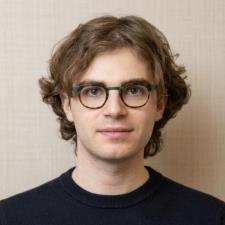
Sam R.'s Photo

Ivy League CS & Linguistics: AI Strategy, SAT/ACT & Admissions
Sam R.

1,885 hours tutoring

Your first lesson is backed by our Good Fit Guarantee

Hourly Rate: $251
Response time: 3 hours

About Sam


Bio

Thank you for visiting! I am a Columbia & Cornell Computer Science and Linguistics alum, now completing my PhD at Tufts researching how robots learn language. Over 9 years, I've helped 700+ students and professionals reach their goals, from college readiness to AI strategy! I take great joy in teaching and mentoring: filling in missing prereqs, clarifying concepts, and instilling confidence and academic curiosity!

High School & College Readiness
I help students meet their academic goals...

Thank you for visiting! I am a Columbia & Cornell Computer Science and Linguistics alum, now completing my PhD at Tufts researching how robots learn language. Over 9 years, I've helped 700+ students and professionals reach their goals, from college readiness to AI strategy! I take great joy in teaching and mentoring: filling in missing prereqs, clarifying concepts, and instilling confidence and academic curiosity!

High School & College Readiness
I help students meet their academic goals while progressing toward top colleges, across AP, IB, and A-level courses, the SAT/ACT, and competitions. Whether through linguistic methods for SAT/ACT English and college essay rhetoric, or computational logic that makes AP/IB math and science feel fun, like puzzles, my students leave sessions stronger and better equipped to apply their knowledge in and out of the classroom. My results:

• SAT average 1550 and ACT average 33; 5 of 7 PSAT students named National Merit Finalists
• AP averages: CS A 4.7, CS Principles 4.9, Precalculus 5.0, Calculus AB 4.8, Calculus BC 4.9; AP Physics all 4s and 5s
• IB average 6.7/7; A-level average A
• USACO 11/11 Gold or Platinum; NACLO 9/9 to the Invitational; USAAIO all to Round 2+!
• Admissions to MIT, Stanford, Yale, Brown, UPenn, Columbia, Carnegie Mellon, Oxford, Cambridge, Imperial, UCL, St Andrews, and Sciences Po. I also support international students (UK, EU, UAE, Qatar, and Saudi Arabia).

AI, University & Professionals
For founders and teams, I offer AI strategy and mentoring: how to choose the right models & tools, how to build with ChatGPT, Claude, and AI agents, and use AI ethically. For professionals, I run AI/programming bootcamps and mock interviews for software, ML, and LLM engineering roles. I also support university courses in CS, ML, math, physics, and linguistics, and guide graduate and AI grant applications.

Message me to arrange a free consultation. I respond promptly!


Education

Cornell University
Computer Science and Linguistics
Tufts University, Computer Science
PhD
Columbia University, Computer Science and Linguistics
Other
  • Licensed teacher

Additional Languages

Spanish

Policies

  • Hourly Rate: $251
  • Rate details: 15-min grace period for late arrivals; after that, lessons are canceled & billed in full. 24-hour notice required for all cancellations/rescheduling. Bundle rates & sliding scale available.
  • Lesson cancellation: 24 hours notice required
  • Background check passed on 4/26/2024

  • Your first lesson is backed by our Good Fit Guarantee

Schedule

Loading...

Sun

Mon

Tue

Wed

Thu

Fri

Sat

Sam hasn’t set a schedule.

We’re having trouble loading this schedule right now. Please try again later.


Approved Subjects

ACT Math

ACT Math

My approach to teaching ACT Math draws on my background in computer science and linguistics at Columbia and Cornell, and is further informed by my doctoral research at Tufts. I first identify and fill in any missing prerequisites, then use computational logic to instill deep reasoning: teaching students how to identify what each problem is actually testing and choose the most efficient method before calculating. I focus on the question types known for tripping students up (e.g. the ACT Math's hardest problems tend to come toward the end of the test), alongside strategic calculator training and pacing, so students have the time and the tools to solve them. I also take great joy in supporting students across the full ACT (English, Math, Reading, and Science), where my students average 33/36. Students can expect to complete 1-3 HW packets each session over about 4 weeks. I also offer college admissions strategy and essay writing support, which has helped my students gain admission to MIT, Stanford, Yale, Columbia, UPenn, Oxford, Cambridge, and Imperial, among others. Feel free to get in touch to arrange a free consultation!
ACT Reading

ACT Reading

My approach to teaching ACT Reading draws on my linguistics and computer science background from Columbia and Cornell, and is further informed by my doctoral research at Tufts. I draw on linguistic methods to teach students how to deconstruct passages: analyzing sentence structure, transitions, and how an author's argument is built, so they can locate evidence quickly and read with purpose under tight time constraints. I also teach formal logic (inference and deduction) techniques to eliminate wrong answers, and track which question types each student misses most to target those directly. I take great joy in preparing students for the full ACTm with support across English, Math, Reading, and Science, where my students average 33/36. I also offer college admissions strategy and essay writing support, which has helped my students gain admission to MIT, Stanford, Yale, Columbia, UPenn, Oxford, Cambridge, and Imperial, among others. Feel free to get in touch to arrange a free consultation.
ACT Science

ACT Science

My approach to teaching ACT Science draws on my background in computer science and linguistics at Columbia and Cornell, and is further informed by my doctoral research at Tufts. I appreciate that the ACT Science section is less a test of scientific knowledge than a test of data reasoning. Therefore, I enjoy teaching students how to read graphs, tables, and experimental setups the way a researcher does, identifying variables, trends, and conflicting viewpoints quickly (using some linguistic methods to speed up reading), and using logical deduction to eliminate wrong answers. I also track which question types each student misses most and target those directly, alongside pacing strategy for this fast-moving section. I take great joy in offering full ACT support across English, Math, Reading, and Science, where my students average 33/36! I also offer college admissions strategy and essay writing support, which has helped my students gain admission to MIT, Stanford, Yale, Columbia, UPenn, Oxford, Cambridge, and Imperial, among others. Feel free to get in touch to arrange a free consultation.
Algebra 2

Algebra 2

My approach to teaching Algebra 2 draws on my training in computer science at Columbia and Cornell, and is further informed by my doctoral research at Tufts. My teaching focuses on developing intuition and conceptual mastery of functions (linear, quadratic, polynomial, rational, radical, exponential, and logarithmic), systems of equations, complex numbers, and sequences, so that my students can solve unfamiliar problems with confidence rather than relying on memorized procedures. When working together, I first identify and fill in any missing prerequisites from Algebra 1 and Geometry. I offer support across: • Honors Algebra 2: For honors students, I go into the depth expected in trigonometry (functions and word problems) so they are prepared for AP Precalculus and AP Calculus. • Summer Bridge Programs: Since many students try to jump from Algebra 2 directly to AP Calculus AB and/or BC, I guide students through intensive summer programs to prepare for placement tests and fill in the material needed to be successful in AP Calculus. • SAT & Beyond: Since Algebra 2 covers many of the SAT's Algebra and Advanced Math questions, many students studying Algebra 2 with me supplement their sessions with targeted SAT sessions, where we look at how these concepts are used to solve some of the toughest SAT Math questions. This helps students average 780/800 on the SAT Math section! Feel free to get in touch to arrange a free consultation.
AMC (Competition math)

AMC (Competition math)

My approach to teaching competition math draws on my background in computer science at Columbia University and Cornell University, and is further informed by my doctoral research at Tufts University. I prepare students for AMC by teaching the needed prerequisites and core material first. I then work on problem solving by building the logical reasoning and proof-based intuition needed to tackle unfamiliar problems. I offer support for AMC 8, AMC 10, and AMC 12 across algebra, number theory, combinatorics and probability, and geometry. I focus on strategy and pacing (e.g., which problems to attempt, when to skip, and how to avoid careless errors under time pressure), and offer long-term training toward the AIME for advanced students. I provide targeted homework (e.g. problem sets). I also coach students for USACO, NACLO, and USAAIO, where my students have consistently excelled. Please feel free to get in touch to arrange a free consultation!
C++

C++

My approach to teaching C++ draws on my background in computer science from Columbia and Cornell, and is further informed by my doctoral research at Tufts. I enjoy teaching C++ to everyone from beginners learning syntax to advanced students building complex projects, emphasizing clean, efficient, and well-documented code, effective debugging, and a deep understanding of how programs use memory. I offer support across: core C++ (e.g., pointers, references, memory management, and object-oriented design), data structures & algorithms (deconstructing each concept visually, diagramming pointers, tree rotations, and recursive algorithms step by step, and justifying design decisions with complexity analysis), USACO & competitive programming (long-term and short-term USACO training; this year, all 11 of my students reached Gold or Platinum), and robotics & AI systems (C++ for robotics and performance-critical AI systems, including how software, sensors, control systems, and even ethics come together in robots). I also offer coding interview preparation in C++. Feel free to get in touch to arrange a free consultation!
Calculus

Calculus

My approach to teaching calculus draws on my training in computer science and linguistics at Columbia and Cornell, and is further informed by my doctoral research at Tufts. My practice is founded on the principle that calculus is about understanding change across different concepts and dimensions. As such, I help students bridge the gap between abstract theorems and intuitive understanding, ensuring they can solve complex, unseen problems under high-pressure exam conditions. When working together, I also ensure to first identify and fill in any missing prerequisites, particularly in algebra, functions, and trigonometry. I offer support across: • AP Calculus AB & BC: My students consistently achieve top scores (AB average: 4.8/5; BC average: 4.9/5). I use my background in data-driven instruction to design bespoke curricula based on available College Board data. I focus on teaching the specific College Board questions that are statistically proven to be the most challenging, ensuring my students master both the theory and the techniques required to ace the Multiple Choice and Free Response (FRQ) sections! • IB & A-level: IB Mathematics (AA/AI), SL & HL, and A-level Mathematics and Further Mathematics, including calculus-heavy exam papers and the IB internal assessment. • University-Level Calculus: I provide rigorous, advanced support for Calculus I, Calculus II, and Multivariable Calculus (Calc III), tailored to the pacing and difficulty of top-tier university STEM programs. This helps students improve from Ds and Cs to As! • Calculus for Artificial Intelligence, Machine Learning, and Data Science: Leveraging my doctoral research in AI, I design specialized crash courses in single-variable and multivariable calculus for professionals and students entering Machine Learning and NLP. I guide students in applying mathematical theory to computational optimization through the usage of industry-standard libraries like PyTorch, TensorFlow, Keras, NumPy, SciPy, SymPy, and Scikit-learn. Feel free to get in touch to arrang
College Counseling

College Counseling

Drawing on my studies at Columbia University, Cornell University and my doctoral research at Tufts, I take great joy in supporting students through the admissions process for both undergraduate and postgraduate studies. In the recent cycle alone, my students were accepted to MIT, Stanford, Yale, Brown, UPenn, Columbia, and Carnegie Mellon in the US, Oxford, Cambridge, Imperial, UCL, and St Andrews in the UK, and Sciences Po in France. I offer support across: essays (Common App, supplemental, UC PIQ, and MIT essays that balance rigorous intellectual merit with an authentic story), strategy (EA/ED optimization, major selection, and an overarching narrative to set students apart), portfolios (independent research, AI for Social Good projects, and competition profiles for USACO, NACLO, and USAAIO, often leading to published papers, most recently in the Journal of Research High School), testing (SAT and ACT preparation using linguistics and computational logic, with student averages of 1550/1600 and 33/36), UK & Oxbridge applications (UCAS personal statements, course selection, admissions tests such as the TMUA, MAT, and ESAT, and academic interviews), international applicants (students from the UK, UAE, Qatar, and Saudi Arabia navigating the US and UK systems), and postgraduate applications (AI, ML, and CS master's and PhD programs, including the statement of purpose, research direction, and choice of program and advisor). Feel free to message me about a free consultation!
Computer Engineering

Computer Engineering

My approach to teaching computer engineering and computer science stems from my education at Columbia and Cornell, and is further informed by my doctoral work at Tufts University, where I publish in top NLP/AI conference proceedings. My teaching style develops strong programming skills, drawing analogies to real-world problems to develop technical logic and intuition. I offer support across: robotics & systems (how software, sensors, and control systems come together in robots, programmed in Python and C++, drawing on my doctoral research in human-robot interaction), AP, IB & A-level (AP CS Principles and AP CS A, with student averages of 4.9 and 4.7, including the Create Performance Task, and IB and A-level Computer Science, including the internal assessment and NEA projects), college courses (Python, Java, C++, data structures, analysis of algorithms, theory of computation, object-oriented programming, machine learning, AI, and NLP), startups & AI coaching (mini bootcamps that help founders articulate their technical vision to investors and oversee software architecture, and guidance on choosing between off-the-shelf models, fine-tuning, and custom AI approaches), and interviews & competitions (technical and AI/ML interview preparation; USACO, where all 11 of my students reached Gold or Platinum this year; and USAAIO, where all advanced to Round 2 or beyond). Feel free to get in touch for a free consultation!
Computer Programming

Computer Programming

My approach to teaching computer programming draws on my background in computer science from Columbia and Cornell University, and is further informed by my doctoral research at Tufts. I enjoy teaching programming to everyone from beginners and non-technical professionals to advanced students building complex projects in AI, machine learning, and NLP, emphasizing clean, efficient, and well-documented code and effective debugging. I offer support across: core programming (Python, Java, C++, object-oriented programming, and data structures & algorithms), school and college courses (AP CS A and AP CS Principles, with student averages of 4.7/5 and 4.9/5, IB and A-level Computer Science, and university programming courses), AI & LLM programming (building + training neural networks and transformers, and building AI products with LLM APIs, retrieval-augmented generation (RAG) and AI agents), programming for non-technical individuals (automating daily tasks and coding with AI assistants), and interviews & competitions (technical and AI/ML interview preparation; USACO, where all 11 of my students reached Gold or Platinum this year, USAAIO, where all advanced to Round 2 or beyond, and NACLO, where 9/9 advanced to the Invitational). Feel free to get in touch to arrange a free consultation!
Computer Science

Computer Science

My approach to teaching computer science stems from my education at Columbia and Cornell, and is further informed by my doctoral work at Tufts University, where I publish in top NLP/AI conference proceedings. My teaching style develops strong programming skills, drawing analogies to real-world problems to develop technical logic and intuition. I offer support across: AP, IB & A-level (AP CS Principles and AP CS A, with student averages of 4.9 and 4.7, including the Create Performance Task, and IB and A-level Computer Science, including the internal assessment and NEA projects), college courses (Python, Java, C++, data structures, analysis of algorithms, theory of computation, object-oriented programming, machine learning, AI, and NLP), AI, LLMs & robotics (large language models (LLMs), transformers, AI agents, symbolic AI, human-robot interaction, and AI ethics, drawing on my doctoral research), startups & AI coaching (bootcamps that help founders articulate their technical vision to investors and oversee software architecture, and guidance on choosing between off-the-shelf models, fine-tuning, and custom AI approaches), and interviews & competitions (technical and AI/ML interview preparation; USACO, where all 11 of my students reached Gold or Platinum this year; USAAIO, where all advanced to Round 2 or beyond; and NACLO, where 9/9 advanced to the Invitational). Feel free to get in touch for a free consultation!
Data Analysis

Data Analysis

My approach to teaching data analysis draws on my training in computer science at Columbia and Cornell, and is further informed by my doctoral research at Tufts. I provide mentorship for students, professionals, founders, and families seeking either an introduction to the field or advanced expertise. I offer support across: data analysis toolkits (Python, NumPy, pandas, scikit-learn, and data visualization, from cleaning and exploring real datasets to building end-to-end analysis pipelines, grounded in statistics, probability, and linear algebra), college courses (machine learning, deep learning, reinforcement learning, and NLP, from theory for exams to implementing neural networks, transformers, LLMs, and AI agents in PyTorch and Hugging Face), linear algebra for ML, data science & AI (emphasis on gradients, matrix calculus, PCA, embeddings, and attention), AI coaching for founders and professionals (choosing between off-the-shelf models, fine-tuning, and custom approaches, getting the most out of ChatGPT, Claude, and research agents, and understanding what AI can and can't reliably do), interviews (mock interviews for data, ML, and LLM engineering roles, including PyTorch-based LLM architecture and LeetCode-style ML questions), and admissions & competitions (NACLO, USACO and USAAIO, AI for Social Good portfolios that often lead to published papers, and AI and ML master's and PhD applications). Feel free to get in touch to arrange a free consultation!
Data Science

Data Science

My approach to teaching data science draws on my training in computer science and linguistics at Columbia and Cornell, and is further informed by my doctoral research at Tufts. I provide mentorship for students, professionals, founders, and families seeking either an introduction to the field or advanced expertise. I offer support across: machine learning & AI (deep learning, reinforcement learning, NLP, neural networks, transformers, LLMs, classical AI, and AI agents in PyTorch and Hugging Face, from theory for exams to working projects, involving attention and transformer architectures), data science toolkits (Python, NumPy, pandas, scikit-learn, and data visualization, grounded in statistics, probability, and linear algebra), linear algebra for ML & AI (applications of gradients, matrix calculus, PCA, embeddings, and attention), AI coaching for founders and professionals (choosing between off-the-shelf models, fine-tuning, and custom approaches, evaluating model performance, getting the most out of ChatGPT, Claude, and research agents, and understanding what AI can and can't reliably do), interviews (mock interviews for ML and LLM engineering roles, including PyTorch-based LLM architecture and LeetCode-style ML questions), and admissions & competitions (NACLO, USACO and USAAIO, AI for Social Good portfolios that often lead to published papers, and AI and ML master's and PhD applications). Feel free to get in touch to arrange a free consultation.
Data Structures

Data Structures

My approach to teaching data structures and algorithms draws on my studies at Columbia and Cornell and my doctoral research at Tufts. Whether you are preparing for a university exam, a project, or a software engineering interview, I teach students to deconstruct complex concepts visually, diagramming pointers, tree rotations, and recursive algorithms step by step, and to justify every design decision with time and space complexity analysis. I offer support across: data structures (Big-O notation, arrays and linked lists, stacks, queues, hash tables, heaps and priority queues, trees such as BST, AVL, and Red-Black, and graphs, with a focus on when and why to choose each with Python, Java and C++ implementations), symbolic AI and modern day AI/LLMs and their algorithms, analysis of algorithms (recurrences and the Master Theorem, divide and conquer, greedy algorithms, dynamic programming, sorting and graph algorithms, amortized analysis, NP-completeness, and correctness proofs using induction and loop invariants), coding interviews & LeetCode (a study plan built around core problem patterns such as two pointers, sliding window, BFS/DFS, and backtracking, plus practice in clarifying questions, reasoning aloud, and optimizing from brute force to optimal time), and USACO (customized program of study for each division; this year, all 11 of my students reached Gold or Platinum). Feel free to get in touch to arrange a free consultation!
Discrete Math

Discrete Math

My approach to teaching discrete mathematics draws on my background in computer science at Columbia and Cornell University, and is further informed by my doctoral research at Tufts. I enjoy supporting students in developing their mathematical and computational maturity by teaching rigorous proof writing techniques across all areas of discrete mathematics. This includes: discrete mathematics for computer science foundations (predicate logic, number theory, formal graph theory, combinatorics, set theory) and proofs for theory of computation & algorithm analysis (finite and pushdown automata, formal languages and the pumping lemma, Turing machines, recurrences, and asymptotic analysis). I also take great joy in teaching the underpinning discrete math for USACO and NACLO, where 11/11 of my students reached Gold or Platinum (USACO) and 9/9 advanced to the Invitational (NACLO)! Feel free to get in touch to arrange a free consultation.
Essay Writing

Essay Writing

My approach to essay writing draws on my training in linguistics and computer science at Columbia and Cornell, and is further informed by my doctoral research at Tufts. As a linguist, I support students in forming their own writing styles and rhetoric, helping them develop unique narrative structures that hold a reader's attention and pose strong questions. I offer support across: college essays (Common App and supplemental essays, UC PIQs, MIT short answers, and the UCAS personal statement, balancing intellectual merit with a personal narrative; my students have gone on to Oxbridge, MIT, and Columbia, to name a few), postgraduate statements (statements of purpose for master's and PhD programs that articulate strong research questions and demonstrate program/advisor fit), grant writing (NSF GRFP personal statements, research proposals, and grant applications for CS and AI startup founders -- balancing technical science with a narrative that sells), and job applications (critique and revision of CVs, resumes, and cover letters, with word choice that helps applications pass applicant tracking systems (ATS) and reach a human recruiter). Overall, I take great joy in teaching high-level discursive and writing techniques that serve students long into the future. Feel free to get in touch to arrange a free consultation.
Geometry

Geometry

My approach to teaching geometry draws on my background at Columbia and Cornell, and is further informed by my doctoral research at Tufts. I teach geometry by building visual intuition first and working to build the rigor for proofs and problem solving. I offer support across: high school geometry (congruence and similarity, triangles, circles, area and volume, coordinate geometry, transformations, and two-column proofs, for standard and honors courses, helping students go from Ds and Cs to high As), trigonometry (right-triangle trigonometry, the unit circle, radians, and trigonometric identities), and SAT, PSAT & ACT geometry (I teach students to identify what each geometry and trigonometry question is really testing, choose the most efficient method, use the built-in Desmos calculator strategically, and eliminate wrong answers with formal logic). My students average 1550/1600 on the SAT, and 33/36 on the ACT, and 5 of my 7 PSAT students became National Merit Finalists last year from their PSAT qualifications. Feel free to get in touch to arrange a free consultation!
IELTS

IELTS

My approach to teaching for IELTS draws on my background in linguistics at Columbia and Cornell, and is further informed by my doctoral research at Tufts. As a linguist, I teach English for IELTS by giving students explicit rules, patterns and techniques to help them master all four sections of IELTS Academic and General Training: Reading & Listening, Writing and Speaking. Furthermore, since many universities now accept several English proficiency tests, I also prepare students for the Duolingo English Test and TOEFL, helping them choose the test that best suits their strengths and target schools. Considering that many of my students who come for IELTS prep come from abroad, particularly the UAE, Qatar, and Saudi Arabia, I offer full college admissions support for US and UK universities, including school selection, application strategy, and college admissions essays. I also use my linguistic background to support students with the SAT, where my students average 1550/1600. My students have been accepted to MIT, Stanford, Yale, Columbia, Oxford, Cambridge, and Imperial, among others. Feel free to get in touch to arrange a free consultation!
Interview Prep

Interview Prep

My approach to interview preparation draws on my training in computer science and linguistics at Columbia and Cornell, and is further informed by my doctoral research at Tufts. Having been through competitive admissions and doctoral interviews myself, and having presented research at international conferences, I appreciate what interviews demand and what the other side is looking for. My students have gone on to secure admission to top universities (Oxbridge, MIT, Columbia) and internships at companies such as Google. I offer support across: technical interviews (helping students articulate how they approach a problem, optimize from brute-force to efficient solutions, and discuss edge cases and system design trade-offs), AI & ML interviews (ML fundamentals, model evaluation, ML system design, and PyTorch-based LLM architecture questions), startup pitches (feedback on pitch decks and technical investor presentations from an engineering, research, design, and consumer perspective plus anticipating investor questions), university admissions interviews (Oxford and Cambridge academic interviews, reasoning aloud through unfamiliar conceptual questions, e.g. my recent student asked to describe a chair in his Oxford philosophy interview, plus US alumni interviews and how to ask targeted questions for a strong write-up), and CVs & cover letters (critique and revision, with word choice that helps applications pass applicant tracking systems (ATS) and reach a human recruiter). Feel free to get in touch to arrange a free consultation.
Java

Java

My approach to teaching Java draws on my training in computer science at Columbia University and Cornell University, and is further informed by my doctoral research at Tufts. I enjoy teaching Java to everyone from beginners learning syntax to advanced students building complex projects, emphasizing clean, efficient, and well-documented code, effective debugging, and strong object-oriented design. I offer support across: • AP CS A & AP CS Principles: After filling in any missing prerequisites and logical misunderstandings, I build each curriculum around my students' own results, tracking which College Board question types they miss most and targeting those directly across both the Multiple Choice and Free Response sections. My students average 4.7/5 on AP CS A and 4.9/5 on AP CS Principles, including the Create Performance Task. • Object-Oriented Programming: I help students understand why and how to write code for classes, objects, inheritance, polymorphism, interfaces, and abstraction. • Data Structures & Algorithms in Java: I offer more technical and theoretical support across Big-O notation, arrays and linked lists, stacks, queues, hash tables, heaps and priority queues, trees (BST, AVL, Red-Black), and graphs. I take great joy in teaching students to deconstruct each concept visually, diagramming pointers, tree rotations, and recursive algorithms step by step, and to justify design decisions with time and space complexity analysis before implementing them in Java. • Technical Interviews: I help students form a structured study plan built around core problem patterns rather than endless LeetCode grinding, practicing the full interview in Java: clarifying questions, reasoning aloud, and optimizing from a brute-force solution to an efficient one. • AI for Developers: Since many Java developers are moving into AI, I offer a structured curriculum from fundamentals (linear algebra, probability, Python) to building and training transformers in PyTorch, reading current research papers, and turning ideas into practic
Linear Algebra

Linear Algebra

My approach to teaching linear algebra draws on my training in computer science at Columbia and Cornell, and is further informed by my doctoral research at Tufts. I take great joy in supporting my students in navigating formal proof-based courses as well as teaching crash courses to complete Machine Learning pre-reqs. My linear algebra approach focuses on: • Visual intuition (visualizing transformations, spans, and projections in high-dimensional vector spaces). • Computational mastery (guidance in matrix operations, determinants, eigenvalues/eigenvectors, and various matrix decompositions (LU, QR, SVD)). • Algebraic rigor (building the mathematical maturity to write formal proofs regarding linear independence, basis, and subspace dimensions). I also offer accelerated Linear Algebra for Machine Learning, Data Science & AI tracks for professionals and students preparing for Machine Learning, focusing on the concepts that motivate the underlying algorithms. This includes a focus on understanding gradients and optimization, matrix calculus (and its application to neural networks), PCA, embeddings, word2vec, attention in transformers --- with support in NumPy and PyTorch. Feel free to get in touch to arrange a free consultation.
Linguistics

Linguistics

My linguistics background from Columbia and Cornell, and my doctoral research at Tufts, spans theoretical linguistics, computational linguistics, and natural language processing with AI, where I have published multiple papers in top NLP/AI conference proceedings. I take great joy in teaching students to see the structure underneath language and how to reason about it, offering support across: SAT Reading & Writing and ACT English & Reading (linguistic methods for grammar, words-in-context, inference, and reading comprehension; especially effective for international students from the UK, UAE, Qatar, and Saudi Arabia, with an average SAT gain of 190+ points and an average ACT score of 33/36), English proficiency tests (IELTS, TOEFL, Duolingo English Test), NACLO (long-term and short-term preparation in linguistic, computational, and logical reasoning; this year, 9/9 of my students advanced to the Invitational round), AI & large language models (how LLMs represent and process language, from tokenization, embeddings, and attention to where models still fail, what they can and can't reliably do, when to use prompting, retrieval, or fine-tuning, and the ethics of LLMs), and college coursework (phonetics, phonology, morphology, syntax, semantics, pragmatics, psycholinguistics, experimental linguistics, formal logic, formal semantics, computational linguistics, and NLP). Feel free to reach out for a free consultation!
Logic

Logic

My approach to teaching logic draws on my training in computer science and linguistics at Columbia and Cornell, and is further informed by my doctoral research at Tufts. I enjoy supporting students with topics in Propositional Logic, First-Order Logic, Modal Logic, Mathematical Logic, and with Symbolic and Classical AI applications of logic. I specialize in helping students break down complex formal proofs into manageable steps, and I also support students with both the Tarski's World and Fitch software from the Language, Proof and Logic textbook. I also have a background in teaching applied logic and formal (linguistic) semantics for both Philosophy and Linguistics departments, so I draw on both frameworks to build my students' intuition. Beyond the classroom, I apply the same logical techniques to support my students across the SAT, Oxbridge interviews, and competitions such as NACLO, USACO, and USAAIO. Feel free to get in touch to arrange a free consultation.
Machine Learning/ AI

Machine Learning/ AI

With a background in Computer Science and Linguistics from Columbia University and Cornell University, and doctoral work at Tufts, where I publish in top NLP and AI conference proceedings, I take great joy in mentoring students, professionals, founders, and families seeking either an introduction to AI and machine learning or advanced expertise. I offer support across: college courses in machine learning, deep learning, reinforcement learning, and natural language processing (NLP), from theory for exams to implementing neural networks, transformers, LLMs, classical AI, and AI agents in PyTorch and Hugging Face where I explain algorithms step by step; professional development from fundamentals (linear algebra, probability, Python) to building modern AI systems; mock interviews for ML and LLM engineering roles (including PyTorch-based LLM architecture and LeetCode-style ML questions); AI and ML master's and PhD applications; AI for Social Good portfolios for undergraduate admissions leading to published research papers (most recently in the Journal of Research High School)), as well as competition coaching for USAAIO (all of my students advanced to Round 2 or beyond), USACO (all 11 of my students reached Gold or Platinum this year), and NACLO (9/9 advanced to the Invitational round). For professionals, founders, and families, I also offer hands-on sessions on ChatGPT, Claude, prompting, research agents, and automating routine work, along with understanding what AI can and can't reliably do and the ethics of deploying it responsibly. Feel free to get in touch for a free consultation!
Personal Statements

Personal Statements

My approach to personal statements draws on my training in linguistics from Columbia and Cornell, and is further informed by my doctoral research at Tufts. As a linguist, I support students in forming their own writing styles and rhetoric, helping them develop unique narrative structures that hold a reader's attention and strike the balance between merit and narrative. I offer support across: US college applications (support and critique for the Common App personal statement, supplemental essays, UC PIQs, and MIT short answers; in the recent cycle, my students were accepted to MIT, Stanford, Yale, Brown, UPenn, Columbia, and Carnegie Mellon), UK & European applications (the UCAS personal statement in its new format; in the recent cycle, my students were accepted to Oxford, Cambridge, Imperial, UCL, St Andrews, and Sciences Po), AI for Social Good portfolios (independent projects that apply AI to real societal problems, giving students a compelling narrative for their personal statements, often leading to published research papers), postgraduate statements (statements of purpose specific enough for a prospective PI -- yet clear enough to pass the first round of the graduate/funding committee), grant writing (NSF GRFP personal statements and research proposals, and grant applications for AI and CS startup founders, balancing technical science with a narrative that sells), and cover letters (word choice and phrasing that help applications pass applicant tracking systems (ATS) and reach a human recruiter). Overall, my priority is teaching high-level discursive and writing techniques that serve students long into the future. Feel free to get in touch to arrange a free consultation.
Philosophy

Philosophy

My approach to teaching philosophy draws on my training in computer science and linguistics at Columbia University and Cornell University, and is further informed by my doctoral research at Tufts in AI and human-robot interaction. I offer support across: • AI & Ethics: I enjoy introducing both technical and non-technical students, as well as professionals and founders, to AI ethics, moral reasoning, and human-robot trust. I enjoy helping students consider what ethical demands new AI systems must meet and how to create algorithms and baselines to formalize and implement these standards within AI systems, including how AI can learn when to say no, delving in further to the ethics and mechanics of autonomous decision making. • Logic: I enjoy teaching propositional, first-order, and modal logic, including natural deduction and the Tarski's World and Fitch software from the Language, Proof and Logic textbook. I also love teaching computability theory, including recursion, Turing machines, decidability, and the limits of what algorithms can compute. • Philosophy of Language & Linguistic Semantics: I use my linguistics background to teach formal semantics, reference and meaning, truth conditions, pragmatics, and their computational applications in NLP. • Interview Prep: I take great joy in helping students learn how to form and structure philosophy essays (reconstructing arguments, anticipating objections, etc.) and how to prepare for Oxford and Cambridge philosophy interviews, where students must discursively and analytically reason aloud through unfamiliar conceptual questions. Feel free to get in touch for a free consultation!
Physics

Physics

My approach to teaching physics draws on my background from Columbia and Cornell, and is further informed by my doctoral research at Tufts. In my experience, the hardest part of physics isn't the applied math: it's the end-to-end thinking needed to construct the problem and see how each formula takes form within it. As such, my approach is construction-based (followed then by drills): once students learn to formulate the problem themselves, the algebra and calculus become far simpler (and I fill in any missing algebra and calculus prerequisites along the way). I offer support across: AP Physics 1 and AP Physics 2, AP Physics C (both Mechanics and Electricity & Magnetism), IB Physics (SL & HL), helping students go from common Ds and Cs to As, and physics for robotics & AI (the kinematics, dynamics, and control behind robotic systems, drawing on my doctoral research in human-robot interaction, and how physics-based simulation and reinforcement learning train AI agents). Over the last two years, all 12 of my AP Physics students earned 4s or 5s on their AP exams and 6s and 7s on their IB exams. Feel free to get in touch to arrange a free consultation!
Precalculus

Precalculus

My approach to teaching precalculus draws on my training in computer science and linguistics at Columbia and Cornell, and is further informed by my doctoral research at Tufts. My teaching focuses on developing intuition and conceptual mastery of functions (logs, exponentials, polar and parametrics), vectors, trigonometry, and sequences, so that my students can solve unfamiliar problems with confidence rather than relying on memorized procedures. When working together, I first identify and fill in any missing prerequisites from Geometry and Algebra 2. I offer support across: • AP Precalculus: I specifically gear students to take the AP Precalculus exam, where my students consistently earn 5s (average: 5.0/5). I track which question types each student misses most and target those directly, across both the Multiple Choice and Free Response sections. • Summer Bridge Programs: Since many students try to jump from Algebra 2 directly to AP Calculus AB and/or BC, I guide students through intensive summer programs to prepare for placement tests and fill in the material needed to be successful in AP Calculus. • IB & A-level: IB Mathematics (AA/AI), SL & HL, and A-level Mathematics, including the precalculus foundations behind calculus-heavy exam papers. • SAT: Since precalculus overlaps heavily with the SAT Advanced Math questions, many students studying precalculus with me supplement their sessions with targeted SAT sessions, where we look at how the precalculus concepts are used to solve some of the toughest SAT Math questions. This helps students average 780/800 on the SAT Math section! Feel free to get in touch to arrange a free consultation.
Probability

Probability

My approach to teaching probability draws on my background in computer science at Columbia University and Cornell University, and is further informed by my doctoral research at Tufts University. I teach probability by building intuition first, then rigor, so that students understand why each rule works before applying it. I offer support across: core probability (e.g., counting and combinatorics, conditional probability, independence, Bayes' theorem, random variables, expectation and variance, and common distributions), AP Statistics (student average 4.7/5), probability for Machine Learning & AI (e.g., maximum likelihood estimation, Bayesian inference, Markov chains, and information theory, connecting each concept to how models are trained and how large language models generate text, with implementation in Python and NumPy), and probability for competitions (AMC and USACO). Please feel free to get in touch to arrange a free consultation!
PSAT

PSAT

My approach to teaching the PSAT draws on my training in linguistics and computer science at Columbia and Cornell, and is further informed by my doctoral research at Tufts. Since the PSAT/NMSQT acts as the qualifying test for the National Merit Scholarship Program (where every point counts), I offer rigorous training for students across: • Reading & Writing: As a linguist, I have noticed how the PSAT tests linguistic structures disguised in unfamiliar forms. As such, in my sessions, I draw upon my doctoral research to teach students how to analyze sentence structures, modifiers, transitions, and how a paragraph's argument is built, while using formal logic (inference and deduction) techniques to eliminate wrong answers quickly. • Math: My approach to teaching math for the PSAT begins with identifying and filling in any missing prerequisites. I then teach students how to identify the topic(s) of each problem and solve it using the most efficient method across algebra, advanced math, problem-solving and data analysis, and geometry and trigonometry, including how to use the built-in Desmos calculator strategically. Last year alone, 6 of my 7 PSAT students became National Merit Finalists!! I also offer preparation for PSAT 8/9 & PSAT 10. Students' results from the PSAT carry through to when they take the actual SAT, where my students average 1550/1600. Feel free to get in touch to arrange a free consultation.
Robotics

Robotics

My approach to teaching robotics draws on my background in computer science and linguistics at Columbia and Cornell, and is further informed by my doctoral research at Tufts in human-robot interaction (HRI). I offer support across: human-robot interaction and trust, language in robots (natural language processing, large language models (LLMs), dialogue systems, and teaching robots to understand and act on instructions), robotic agents for everyday tasks, symbolic AI and robot reasoning, reinforcement learning for robotics, robot ethics (including how robots can learn when to say no via cognitive decision processing), and robotics programming in Python and C++ (including ROS, data structures, and algorithms for planning and control). I also take great joy in mentoring students through robotics research projects, from designing experiments and user studies to writing papers, as well as robotics-focused college and graduate school applications. Please feel free to get in touch to arrange a free consultation!
SAT Math

SAT Math

My approach to teaching material for the SAT Math section draws on my training in computer science and linguistics at Columbia and Cornell, and is further informed by my doctoral research at Tufts. First, I identify and fill in any missing pre-reqs to ensure that my students understand all the math topics at a conceptual level. I then use my practice in computational logic (and linguistics, for word problems) to help students carve out a set of skills and methods to use throughout the test. For example, most students struggle on SAT Math because they can't tell which topic a question is testing. As such, I teach my students strategies and techniques on how to identify the topic(s) of each problem and how to solve it using the most efficient method across algebra, advanced math, problem-solving and data analysis, geometry and trigonometry. Furthermore, with the shift to the Digital SAT, I support students with how to strategically use the built-in Desmos calculator, while also leveraging deductive methods (from computational logic) to efficiently eliminate wrong answers. Since I track and target the questions each student misses, my students see significant score increases on the SAT Math section (average total SAT: 1550/1600) after a few sessions, typically 190+ points on their total score within 4 weeks. Depending on each student's needs, I also work on timing, pacing across both modules, and test anxiety. I typically ask students to complete one to three homework packets between sessions to ensure they are training and getting used to the rigor needed for test day. Feel free to get in touch to arrange a free consultation.
SAT Reading

SAT Reading

My approach to teaching material for the SAT Reading & Writing section draws on my training in linguistics and computer science at Columbia and Cornell, and is further informed by my doctoral research at Tufts, where I publish in top natural language processing conference proceedings. Teaching the SAT for the last 9 years has shown me that most students struggle with the SAT English because the test assesses predictable linguistic structures that are disguised in unfamiliar passages. As I study these in my research, I draw from linguistic methods in my SAT English sessions, drills and strategy techniques. As such, I teach my students how to analyze sentence structures, modifiers, transitions, as well as how a paragraph's argument is built, in order to master both reading comprehension inference and standard English grammar rules, while teaching formal logic (inference and deduction) techniques to eliminate wrong answers quickly. Since I track and target the types of questions each student misses, my students see significant score increases on the SAT Reading & Writing section (average total SAT: 1550/1600) after a few sessions, typically 190+ points on their total score within 4 weeks. Depending on each student's needs, I also work on timing, pacing across both modules, and test anxiety. I typically ask students to complete one to three homework packets between sessions to ensure they are training and getting used to the rigor needed for test day. Feel free to get in touch to arrange a free consultation.
TOEFL

TOEFL

My approach to teaching for the TOEFL draws on my background in linguistics at Columbia and Cornell, and is further informed by my doctoral research at Tufts. As a linguist, I teach English for the TOEFL by giving students explicit rules, patterns and techniques to help them master all four sections of the TOEFL iBT: Reading, Listening, Speaking, and Writing. Furthermore, since many universities now accept several English proficiency tests, I also prepare students for the Duolingo English Test and IELTS, helping them choose the test that best suits their strengths and target schools. Considering that many of my students who come for TOEFL prep come from abroad, particularly the UAE, Qatar, and Saudi Arabia, I offer full college admissions support for US and UK university applications, including school selection, application strategy, and college admissions essays. I also use my linguistic background to support students with the SAT, where my students average 1550/1600. My students have been accepted to MIT, Stanford, Yale, Columbia, Oxford, Cambridge, and Imperial, among others. Feel free to get in touch to arrange a free consultation!
Trigonometry

Trigonometry

My approach to teaching trigonometry draws on my background at Columbia and Cornell, and is further informed by my doctoral research at Tufts. I teach trigonometry by building visual intuition first, and then I work to build the rigor for proofs and problem solving. I offer support across: high school and honors trigonometry (right-triangle trigonometry, the unit circle, radians, graphs of trigonometric functions, inverse functions, the laws of sines and cosines, trigonometric identities and equations, and complex sinusoidal word problems, helping students go from Ds and Cs to high As), trigonometry for AP Precalculus and AP Calculus (sinusoidal equation construction, polar and parametric equations, vectors, and the trigonometric limits, derivatives, and integrals for AB and BC; my students average 5/5 on AP Precalculus, 4.8/5 on AP Calculus AB, and 4.9/5 on AP Calculus BC), and SAT, PSAT & ACT trigonometry (I teach students to identify what each question is really testing, choose the most efficient method, use the built-in Desmos calculator strategically, and eliminate wrong answers with formal logic). My students average 1550/1600 on the SAT and 33/36 on the ACT, and 5 of my 7 PSAT students became National Merit Finalists last year. Feel free to get in touch to arrange a free consultation!
Sam R.'s Photo

Questions? Contact Sam before you book.

Still have questions?

Contact Sam
Response time: 3 hours

Ratings and Reviews


Rating

5.0 (467 ratings)
5 star
(467)
4 star
(0)
3 star
(0)
2 star
(0)
1 star
(0)

Reviews

Incredible AI and machine learning consultant!

Sam was excellent at explaining the latest large language model (LLMs) and AI imaging developments to me. He is very patient and uses lots of different visual methods so that I could easily understand both the broader picture and the specific math components, which was incredibly beneficial coming from a business background. Sam has positively shifted the way in which I have gone forward about thinking of how to use AI in my startup proposal, giving me a strong toolbox of resources! I look forward to continuing to consult with him about AI.

Sarah, 41 lessons with Sam
Tutor responded:

Thank you, Sarah! Excited to see what comes next!!

Great totor for NLP theory

Sam has been tutoring my son on AI topics for the past couple of months. He has deep expertise in NLP and, in particular, is able to explain the underlying mathematical theories. My son has found his tutoring valuable, especially because it’s rare to find a tutor with this level of depth and knowledge in AI and NLP.

James, 10 lessons with Sam

Fantastic Machine Learning Tutor!

For anyone looking for a rigorous and practical understanding of machine learning, do yourself a favor and work with Sam. I was struggling a lot with my advanced machine learning class in grad school. Wasn't having much luck with online resources and office hours, plus the other tutors, and the professor even, would often skim over the nuanced parts that I really needed to understand for the homework and exams. Luckily I found Sam, who from the first lesson understood exactly the type of learner I am and what I needed. Since then we spent time going over every nut and bolt of the ML algorithms with a lot of exercises on math and also with python and pytorch implementations that helped me truly understand, visualize and code concepts like backprop and other optimization methods, to actually see the “learning” part of machine learning occur. He also made sure that I was seeing the big picture of how all the different algorithms compared to one another, which has been super helpful for the open ended projects where we have to choose models ourselves for implementation! Feeling so much more confident now, thank you Sam!

Sush, 43 lessons with Sam

Very helpful

Sam knows more about AP CSP than my son's own instructor, and we are so grateful to have received really crucial information and help. My son has a much better idea of what is needed to succeed on the AP test.

Amy, 3 lessons with Sam

Great College Transfer assistance!

Appreciate Sam's support for a college transfer. His guidance with essays and the transfer process insights were very helpful. He came prepared and connected really well with the student, using the lessons time rather effective and productive,

Albert, 2 lessons with Sam

Very Supportive Tutor!

Sam has been incredibly supportive teaching my son advanced programming techniques, algorithms and linguistics, gearing him up to do USACO and NACLO. He made him his own syllabus and uses lots of different ways to help him learn and stay focused. My son feels very confident as he approaches the competitions. Can highly recommend Sam!

Taara, 61 lessons with Sam

Knowledgeable on graduate and undergraduate NLP

Over the last few months Sam has been tutoring me for my machine learning and natural language processing course. He designed a syllabus for me that augmented my university course. His way of teaching addressed all the questions I wanted to have answered, and went into great depth surrounding both the prerequisite topics which I was missing. Sam broke down complex topics surrounding word vectors (embeddings, contextual, skip gram, etc), the inner workings of neural networks (ranging from simple feedforward all the way to complex Transformer and GPT models) and topics in reinforcement learning. Working through drills and sample problems, Sam gave me the overall picture and also the step-by-step math and coding needed (which NLP/ML textbooks and university classes skim over) to ensure that I understood the differences in each model/framework and how to use them across different ML/NLP tasks. If you are looking for a tutor who can help across natural language processing, machine learning, reinforcement learning and/or general topics in AI - I would highly recommend you contact Sam!

Walter, 24 lessons with Sam

Very helpful in planning graduate studies and filling knowledge gaps

Sam was very helpful in developing a strong strategy that changed the way I applied for colleges earlier this year. He gave solid advice and very different perspectives, and as such, I got into Columbia University! Since then, Sam has been helping me with the computer science curriculum at Columbia University, and especially with discrete math. He provides ample exercises and techniques that helped me build up the CS and math analysis skills needed so that when we addressed larger scope problems, everything went really smoothly and quickly! I would highly recommend working with Sam whether you are looking for an admissions consultant for top colleges, or would like some one-on-one help in computer science and theoretical math and logic courses!

Jake, 5 lessons with Sam

Phenomenal AP Pre Calculus Tutor

My sophomore son has felt very defeated in his AP Pre Calc class this year. After a disappointing test grade, we found Sam, after looking on Wyzant. Sam was so kind to work with my son for 3 hours straight on a Saturday afternoon. What a difference it made! Sam quickly identified his weaknesses, patiently worked through problems with him, and made sure he understood the process on some very difficult AP math problems. My son emerged from his session with a big smile and his confidence back. The retest is coming up, so Sam made sure my son had what he needed to review and to be successful on the retake. I highly recommend Sam for AP Pre Calc. He is making a difference!

Susan, 12 lessons with Sam

Patient Tutor

After weeks of anxiously searching for a consultant that would help me get into my dream school, I stumbled across Sam’s account. Even though we were only three weeks from the EA deadline, he was able to create a schedule that, once we worked through it, allowed me to finish with time to review my most important essays. We spent a lot of time forging essay ideas that were based on my interests, ambitions, identity, and strengths. He was very patient when I repeatedly asked him to check over the same essays I was most concerned with and we thoroughly spoke things out with each other. In the end, Sam helped me get into my dream school: MIT! It also helped that he is in CS, which is my biggest interest. I recommend Sam whether you’re months, weeks, or days ahead of your deadline. Good luck!

Ilyes, 7 lessons with Sam
Tutor responded:

Thank you Ilyes, MIT is lucky to have you! Have a great time there in Fall 2025!!

Hourly Rate: $251
Response time: 3 hours
Contact Sam