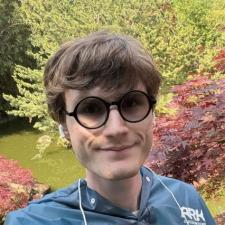
I am a junior undergraduate student at New York University, pursuing a double major in philosophy and mathematics. Over the past four years, I have gained substantial experience as a tutor across both disciplines. Three of those years have been spent as a teaching fellow at NYU, where I have led both group sessions and one on one instruction, primarily with students ages 16 to 22. This has given me direct experience navigating a range of learning styles, mathematical backgrounds, and levels...
I am a junior undergraduate student at New York University, pursuing a double major in philosophy and mathematics. Over the past four years, I have gained substantial experience as a tutor across both disciplines. Three of those years have been spent as a teaching fellow at NYU, where I have led both group sessions and one on one instruction, primarily with students ages 16 to 22. This has given me direct experience navigating a range of learning styles, mathematical backgrounds, and levels of philosophical preparation.
My approach to tutoring is diagnostic before it is instructional. In an initial session, I prioritize identifying precisely where a student's understanding breaks down rather than reviewing material indiscriminately. For math, this typically means working through foundational reasoning together before direct problem solving; a student who understands why a technique works retains it far more reliably than one who has only memorized its application. For philosophy and logic, I focus on argument reconstruction: helping students learn to identify premises, evaluate inferential moves, and articulate objections clearly. Strong philosophical writing, in my experience, follows directly from this kind of structured analytical work.
Rather than lecturing, I use a 'Socratic Method' of active questioning to keep students reasoning through problems themselves, guiding the student along the way. My goal in every session is to leave the student more capable of independent work than they were before.