Search
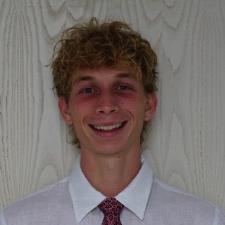
Andreas S.'s Photo

Biomedical Sciences Grad | 519 MCAT | Math & Science Tutor
Andreas S.

Your first lesson is backed by our Good Fit Guarantee

Hourly Rate: $45

About Andreas


Bio

I graduated from the University of Central Florida in December 2023 with a B.S. in Biomedical Sciences (3.62 GPA), after earning my A.S. at Seminole State College. I scored a 519 on the MCAT. My coursework covers the full science sequence: Biology I and II, General and Organic Chemistry I and II, Physics I and II, Biochemistry, Microbiology, Genetics, Anatomy, Physiology, Immunology, and Neurobiology. I am CPR certified.

I have been teaching since 2020. For the past year I have tutored...

I graduated from the University of Central Florida in December 2023 with a B.S. in Biomedical Sciences (3.62 GPA), after earning my A.S. at Seminole State College. I scored a 519 on the MCAT. My coursework covers the full science sequence: Biology I and II, General and Organic Chemistry I and II, Physics I and II, Biochemistry, Microbiology, Genetics, Anatomy, Physiology, Immunology, and Neurobiology. I am CPR certified.

I have been teaching since 2020. For the past year I have tutored Chicago high school students one-on-one in math and science. I also coach tennis, in Orlando from 2020 to 2023 and now at Tennis on the Lake, with students aged 4 to 75. Six years of coaching taught me that a concept has to be explained three or four ways before it lands, and that the explanation gets built around the student, not the subject.

I spent 100 hours as an assistant coach with Love Serving Autism, teaching children on the spectrum to play tennis, and several of my current tutoring students are on the spectrum. That work shaped how I run sessions: predictable routines, one idea at a time, frequent checks for understanding, and no rush.

A typical session starts with finding the real gap, which is usually two or three concepts before the homework the student is stuck on. We rebuild from there and work problems together, with me reasoning out loud first and then handing over the pencil. I plan each session ahead and assign small amounts of targeted practice rather than a lot of general practice. The goal is for the student to explain the concept back to me in their own words.

I also bring research and clinical experience: Type 1 diabetes research at the Helmholtz Institute in Munich, genomics research at UCF, and five months as a nursing assistant in trauma and orthopedic surgery at a Munich teaching hospital. When a student asks why a concept matters, I can say where it shows up in practice.

I am a native English and Spanish speaker with C1 German, and can tutor in any of the three.

Education

University of Central Florida
Biomedical Sciences

Policies


Schedule

Loading...

Sun

Mon

Tue

Wed

Thu

Fri

Sat

Andreas hasn’t set a schedule.

We’re having trouble loading this schedule right now. Please try again later.


Approved Subjects

Algebra 1

Algebra 1

I completed College Algebra, Trigonometry and Precalculus, and Calculus as part of my B.S. in Biomedical Sciences at the University of Central Florida, and I currently tutor high school students in mathematics through the precalculus level. Teaching the later courses is what makes me effective at Algebra 1, because I see every week which early gaps come back to cause trouble: shaky factoring, uncertainty with negative and fractional exponents, or never having understood what a function actually is will quietly undermine a student two or three courses later. Algebra 1 is also where many students first decide they are not a math person, and that conclusion is almost always the result of one unclosed gap rather than any real limit on what they can do. I teach it by making sure a student can explain why a step works before we move on, because rules memorized without reasons are exactly what falls apart on a test.
Biochemistry

Biochemistry

I hold a B.S. in Biomedical Sciences from the University of Central Florida, where I completed Biochemistry along with Organic Chemistry I and II, Molecular Biology I and II, and Genetics. I am currently applying to medical school and scored a 519 on the MCAT, in the top four percent, on an exam where biochemistry is one of the most heavily weighted subjects and is tested by application rather than recall. I have also worked with this material at the bench, preparing buffers, antibody dilutions, and master mixes for immunohistochemistry on human pancreatic tissue during a Type 1 diabetes research position at the Helmholtz Institute in Munich. Alongside that, I have spent the past year tutoring students in the sciences one-on-one, and I prepare for every session by reviewing the student's own course material beforehand.
Biology

Biology

I earned a B.S. in Biomedical Sciences from the University of Central Florida, where my coursework ran from General Biology I and II through Molecular Biology I and II, Genetics, Microbiology, Immunology, Infectious Diseases, Neurobiology, Anatomy, Physiology, Genomics, and Biochemistry. Preparing for the MCAT meant holding all of that at once, because the exam does not test biology as isolated facts but as systems that connect, expecting you to move from a mutation in a gene to a misfolded protein to a failing organ within a single question, and to read an unfamiliar research paper and reason through its data. I scored a 519, which demanded exactly that kind of integrated understanding rather than memorization, and I have since done the work at the bench myself, running immunohistochemistry on human pancreatic tissue for Type 1 diabetes research at the Helmholtz Institute in Munich and RNA transcriptomic analysis at UCF. I teach biology the way I had to learn it, building the mechanism first so the terminology has something to attach to, which is what makes it stick for an exam instead of falling apart a week later.
Chemistry

Chemistry

My B.S. in Biomedical Sciences from the University of Central Florida included General Chemistry I and II, Organic Chemistry I and II, and Biochemistry, along with the full laboratory sequence that accompanies them. The MCAT tests chemistry harder than most students expect, because two of its four sections depend on it: one demands acid-base equilibria, thermodynamics, kinetics, and solution chemistry, while the other demands enzyme mechanisms, amino acid chemistry, and reaction logic, all applied to experimental passages you have never seen before. I scored a 519, and I then spent a summer doing research at the Helmholtz Institute in Munich where that chemistry was the daily work, preparing master mixes, antibody dilutions, and preservation buffers for immunohistochemistry on human pancreatic tissue. I teach chemistry by pushing students to reason from the mechanism rather than memorize the reaction, because organic chemistry in particular falls apart the moment it becomes a list of arrows to recall.
Genetics

Genetics

My B.S. in Biomedical Sciences from the University of Central Florida included Genetics I, Molecular Biology I and II, Genomics, and Biochemistry, which together cover the subject from Mendelian inheritance through transcriptional regulation and modern sequencing. Genetics is one of the densest areas on the MCAT and almost never appears as straight recall: the exam hands you a pedigree, a knockout experiment, or a gene expression dataset and asks what the result means, which requires holding inheritance, mutation, and regulation together as one connected system. I scored a 519, and I have done genetics as research rather than only as coursework, running RNA transcriptomic analysis under Dr. Anna Savage at UCF on the skin of American bullfrogs infected with chytridiomycosis, and later writing Python scripts to analyze tissue data for Type 1 diabetes research in Munich. I teach genetics by starting at the molecule and working outward, because once a student sees why a single mutation changes a protein, Punnett squares and pedigrees stop being rules to memorize and become outcomes they can predict.
Microbiology

Microbiology

I took Microbiology, Immunology, Infectious Diseases, and Molecular Biology I and II as part of my B.S. in Biomedical Sciences at the University of Central Florida, and I scored a 519 on the MCAT, an exam that leans heavily on microbial genetics, host-pathogen interaction, and immune response. Microbiology is the course where students most often try to memorize their way through, since it arrives as an enormous list of organisms, structures, pathways, and drug classes, and that approach tends to collapse right around the exam. It holds together far better when the organism is treated as something solving a problem: how it gets in, how it takes what it needs, how it evades the immune system, and where a drug can interrupt any of that. I have also worked with microbiology outside the classroom, running immunohistochemistry on human tissue for Type 1 diabetes research in Munich and spending five months in a teaching hospital where infection control and antibiotic administration were part of my daily work, so I can show students where the material actually lands.
Algebra 2
Andreas S.'s Photo

Questions? Contact Andreas before you book.

Still have questions?

Hourly Rate: $45
Contact Andreas