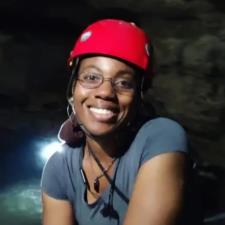
I hold a PhD in Microbiology and Cell Science, as well as bachelor’s and master’s degrees in medical microbiology. Before beginning my doctoral research, I spent five years working in clinical laboratory science, giving me both academic and practical experience in microbiology, infectious disease, laboratory methods, and the biological sciences. During my PhD, my research focused on microbial ecology and geomicrobiology, including the study of microorganisms in groundwater and subsurface...
I hold a PhD in Microbiology and Cell Science, as well as bachelor’s and master’s degrees in medical microbiology. Before beginning my doctoral research, I spent five years working in clinical laboratory science, giving me both academic and practical experience in microbiology, infectious disease, laboratory methods, and the biological sciences. During my PhD, my research focused on microbial ecology and geomicrobiology, including the study of microorganisms in groundwater and subsurface environments.
I have experience teaching and mentoring college students ages 20 and older in both classroom and research settings. I spent one year as a Graduate Teaching Assistant in a laboratory-based course, where I helped students understand scientific concepts while developing hands-on laboratory skills. Throughout my PhD, I also mentored several undergraduate researchers individually in the laboratory. This included teaching laboratory techniques, explaining microbiological concepts, helping students troubleshoot experiments, and developing their ability to interpret results and think critically about scientific questions.
My teaching philosophy is centered on meeting students where they are and finding the approach that allows the material to click. I take differences in learning style and neurodiversity seriously, and I do not believe there are “stupid questions” or students who simply cannot learn a subject. When someone is struggling, I focus on identifying what is blocking understanding and approaching the concept from another direction. I prefer clear, direct instruction over making students guess their way to an answer: first, I make sure you have the information you need, and then we work together on connecting, applying, and integrating it. My goal is not simply to help students memorize microbiology, but to give them enough understanding to reason through it confidently.