Search
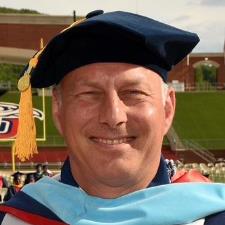
Mark R.'s Photo

Tutor since the 1990s -- AP Exams & the National Counselor Exam (NCE)
Mark R.

239 hours tutoring

Your first lesson is backed by our Good Fit Guarantee

Hourly Rate: $55
Response time: 28 minutes

About Mark


Bio

Dr. R. is an accomplished scholar, retired military, and a published author. When Dr. R. teaches, he emphasizes the Trivium - that is, grammar, logic, and rhetoric. Dr. R. is an interdisciplinary thinker, who enjoys teaching history and philosophy, theology and psychology; English Literature, academic writing; Greek and Latin grammar; Biblical Studies, and the National Counselor Examination (NCE). Above all, Dr. R. edits research papers, whether a collegiate essay, a masters-level thesis, or...

Dr. R. is an accomplished scholar, retired military, and a published author. When Dr. R. teaches, he emphasizes the Trivium - that is, grammar, logic, and rhetoric. Dr. R. is an interdisciplinary thinker, who enjoys teaching history and philosophy, theology and psychology; English Literature, academic writing; Greek and Latin grammar; Biblical Studies, and the National Counselor Examination (NCE). Above all, Dr. R. edits research papers, whether a collegiate essay, a masters-level thesis, or a doctoral dissertation.

His book, available on Amazon, advocates empirically supported treatments for posttraumatic stress disorder (PTSD).

As a professor with a Doctorate in Education, Dr. Mark R. teaches Advanced Placement (AP) Classes. Specifically, he teaches ten (10) AP classes. These AP Classes include

AP Latin - Units 1, 2, 3, and 4
AP US History
AP World History
AP European History
AP English Language
AP English Literature
AP Human Geography
AP Psychology
AP Seminar
AP Research

As a clinician, Dr. R. specializes in crisis intervention, trauma pastoral care, critical incident stress management (CISM), psychological first aid (PFA), and mass casualty (MASCAL) response.

On a personal note, Dr. R. is a combat veteran, who receives a disability pension from the Veterans Administration (VA), plus combat-related special compensation (CRSC) from the Department of Defense (DoD).

Not only does Dr. R. counsel disabled combat veterans, who have been diagnosed with posttraumatic stress disorder (PTSD) - he also teaches these veterans, academically, as these veterans are transitioning from military to civilian life, as these veterans are exploring educational opportunities funded by the Post-911 GI Bill, Vocational Rehabilitation, and the Dependents Educational Assistance (DEA) program.


Education

Washington & Lee University
Business Admin
Regent College
Masters
Liberty University
EdD
  • Licensed teacher

Policies


Schedule

Loading...

Sun

Mon

Tue

Wed

Thu

Fri

Sat

Mark hasn’t set a schedule.

We’re having trouble loading this schedule right now. Please try again later.


Approved Subjects

ACT English

ACT English

ACT English Since 2021, Dr. Robertson has been teaching the English section of the American College Test (ACT English). For this test, Dr. Robertson maintains a digital archive of more than 1,000 practice questions. With his students, Dr. Robertson shares these study questions. Over the years, Dr. Robertson has tutored more than 250 students, as they have studied to pass Advanced Placement (AP) Exams. ACT English is a standardized test. The test assess knowledge of English grammar, punctuation, and rhetorical devices. ACT English is a timed test, lasting 35 minutes. The test has 75 multiple-choice questions. Content categories include Conventions of Standard English (52-55%): These questions test knowledge of sentence structure, punctation (especially commas, semicolons, and colons), as well as the rules of grammar, such as subject-verb agreement, syntactical structures, pronoun usage. Production of Writing (29-32%): These questions test the clarity, the cogency, and the coherence of English composition, which topic development, organization of a essay, and effective transitions between paragraphs. Knowledge of Language (15-17%): These questions test vocabulary, word order, consistency of style, and proper tone. As a proofreader, Dr. Robertson edits research papers and academic essays. He understands the mechanics of editing APA citations and MLA footnotes. Finally, Dr. Robertson is certified to teach English as a Second Language (ESL). Dr. Robertson is an accomplished scholar who earned: Doctor of Education in Community Care and Counseling, Master of Science in Clinical Psychology Master of Divinity with a concentration in New Testament Studies Bachelor of Science in Business Administration As a scholar, Dr. Robertson reads Biblical Greek and Ecclesiastical Latin, so his knowledge of grammar is very precise, whether reading Greek prose, Latin poetry, or English literature. On a personal note, Dr. Robertson published a 60,000 word doctoral dissertation, entitled “Emergency Room Chaplain
American History

American History

American History Advanced Placement United States History (APUSH) is a challenging, college-level class. APUSH teaches American history from 1491 to the present. The course emphasizes critical thinking, document analysis, and historical argumentation. APUSH is a timed test, which lasts 3 hours and 15 minutes. The test has 55 multiple-choice questions (MCQs). In addition, APUSH asks several essay questions, called free-response questions (FRQs). Specifically, the FRQs include short-answer questions (SAQs), document-based questions (DBQs), and the long essay question (LEQ). Course Framework 1491 to 1607: Pre-Columbian Society and Early Colonization 1754 to 1800: American Revolution and Early Republic 1848 to 1877: Slavery, Civil War, and Southern Reconstruction 1890 to 1945: Industrialization, Progressive Politics, and World Wars 1945 to present: Cold War and Globalization in the Modern Era Since 2021, Dr. Robertson has been teaching APUSH online. He has digitized several study guides — Barrons, Kaplan, McGraw Hill, and Princeton Review. For this test, Dr. Robertson maintains a digital archive of more than 2,000 practice questions. With his students, Dr. Robertson shares these study questions. Over the years, Dr. Robertson has tutored more than 250 students, as they have studied to pass Advanced Placement (AP) Exams. Dr. Robertson is an accomplished scholar who earned: Doctor of Education in Community Care and Counseling, Master of Science in Clinical Psychology Master of Divinity with a concentration in New Testament Studies Bachelor of Science in Business Administration As a classical scholar, Dr. Robertson reads Biblical Greek and Ecclesiastical Latin, so his working knowledge of grammar is very precise, whether reading Greek prose, Latin poetry, or English literature. As a proofreader, Dr. Robertson edits research papers and academic essays. He understands the mechanics of APA citations and MLA footnotes. Dr. Robertson is certified to teach English as a Second Language (ESL). O
Bible Studies

Bible Studies

As a Biblical scholar, I can teach individual book studies, as well as the biblical languages -- Greek, Hebrew, and Latin. As a Bible College professor, I have taught biblical interpretation, both exegesis and hermeneutics. As mentioned, I teach how to read Biblical (Koine) Greek and Ecclesiastical Latin. Plus, I can teach how to complete a word study, using a Hebrew lexical tools. In addition, I can teach text criticism, literary analysis, and theological interpretation -- from the Protestant and Roman Catholic perspective. As a Protestant minister, I am an Evangelical theologian. I believe God's Word is God's Word. God's Word is inspired, inerrant, infallible, and thus divinely authoritative. God's Word is "useful for teaching and encouraging, for correcting and training in righteousness" (2 Tim 3:16-17) . As a Bible scholar, I teach seekers, Christian believers, seminary students, and ordained ministers.
Classics

Classics

Knowledge of Greek and Latin can be confirmed by course work on my seminary transcript, where I earned a Master of Divinity degree. Since 2021, I have been teaching Greek and Latin literature through Varsity Tutors. While teaching the Greek New Testament, I use the grammar, New Testament Greek for Beginners by J. Gresham Machen. While teaching Classical and Ecclesiastical Latin, I use the following grammars -- Cambridge Latin Course, Units 1, 2, and 3; A Primer of Ecclesiastical Latin by John F. Collins; Latin Alive Series, Books 1, 2, and 3 by Dr. Karen Moore and Gaylan DuBose; Wheelock's Latin, 7th edition, by Dr. Fredrick M. Wheelock
College Counseling

College Counseling

As a retired counselor, Dr. Robertson has more than 50,000 hours of clinical experience responding to traumatic events. Such traumatic events include Suicide attempts Psychotic breaks Gunshot wounds Blast injuries Terminal illness Car crashes Drug overdose Heart attacks Traumatic amputations Sexual assaults Industrial accidents Line of duty deaths (e.g. police officers, firefighters, U.S. military) Organ donation decisions Funeral planning Morgue viewings Dignified transfer of human remains Dr. Robertson is a National Certified Counselor (NCC), a Certified Trauma Treatment Specialist (CTTS), and a Diplomate in the College of Pastoral Supervision and Psychotherapy (CPSP). Before military retirement, he was a Board Certified Chaplain (BCC).
English

English

AP English Language Advanced Placement English Language and Composition (AP Lang) is a challenging, college-level class. AP Lang teaches grammar, rhetoric, and logic. In AP Lang, students are required to read speeches, letters, and essays. Afterwards, they must write about their reading. AP Lang is a timed test, which lasts 3 hours and 15 minutes. The test has 45 multiple-choice questions (MCQs). In addition, there are three essay questions, called free-response questions (FRQs). The first essay requires synthesis; the second, rhetorical analysis; the third, persuasive argumentation. For this test, Dr. Robertson maintains a digital archive of more than 1,000 practice questions. With his students, Dr. Robertson shares these study questions. Over the years, Dr. Robertson has tutored more than 250 students, as they have studied to pass Advanced Placement (AP) Exams. Dr. Robertson is an accomplished scholar who earned: Doctor of Education in Community Care and Counseling, Master of Science in Clinical Psychology Master of Divinity with a concentration in New Testament Studies Bachelor of Science in Business Administration As a classical scholar, Dr. Robertson reads Biblical Greek and Ecclesiastical Latin, so his working knowledge of grammar is very precise, whether reading Greek prose, Latin poetry, or English literature. As a proofreader, Dr. Robertson edits research papers and academic essays. He understands the mechanics of editing APA citations and MLA footnotes. Dr. Robertson is certified to teach English as a Second Language (ESL). On a personal note, Dr. Robertson published a 60,000 word doctoral dissertation, entitled “Emergency Room Chaplain: Crisis Response and Clinical Care for First Responders and Combat Veterans.” The dissertation passed peer-review on its first defense. The dissertation synthesized more than 100 academic articles, along with 20+ years of field research. The research was funded, in part, by grants from the National Institutes of Health (NIH). Most sincerely, Dr
ESL/ESOL

ESL/ESOL

English as a Second Language (ESL) In 2015, Dr. Robertson was certified to teach English as a Second Language (ESL).   Dr. Robertson is an interdisciplinary thinker, who enjoys teaching Western Literature and English Composition, World History and Existential Philosophy, Christian Theology and Clinical Psychology. Furthermore, Dr. Robertson teaches study skills for standardized tests, whether those tests are Advanced Placement (AP) subject tests, the American College Test (ACT), the Scholastic Attitude Test (SAT), the National Counselor Exam (NCE), or the Counselor Preparation Comprehensive Exam (CPCE).  Dr. Robertson is an accomplished scholar who earned: Doctor of Education in Community Care and Counseling, Master of Science in Clinical Psychology Master of Divinity with a concentration in New Testament Studies Bachelor of Science in Business Administration As a classical scholar, Dr. Robertson reads Biblical Greek and Ecclesiastical Latin, so his knowledge of grammar is very precise, whether reading Greek prose, Latin poetry, or English literature. As a proofreader, Dr. Robertson edits research papers and academic essays. He understands the mechanics of editing APA citations and MLA footnotes. Dr. Robertson is certified to teach English as a Second Language (ESL). On a personal note, Dr. Robertson published a 60,000 word doctoral dissertation, entitled “Emergency Room Chaplain: Crisis Response and Clinical Care for First Responders and Combat Veterans.” The dissertation passed peer-review on its first defense. The dissertation synthesized more than 100 academic articles, along with 20+ years of field research. The research was funded, in part, by grants from the National Institutes of Health (NIH). Most sincerely, Dr. Mark Robertson, EdD, MS, MDiv., USAF (retired)
Essay Writing

Essay Writing

In 2021, I defended my doctoral dissertation, which consisted of 60,000 words. This dissertation was approved without edits, without additions, or without the need for revisions -- approved by a panel of PhD readers, who praised the quality of scholarship as worthy of a doctoral degree in Community Care and Counseling, with a concentration in Traumatology. The bibliography, itself, contains 100+ peer-reviewed citations, catalogued by various academic libraries.
European History

European History

AP European History Since 2021, Dr. Robertson has been teaching Advanced Placement European History (AP Euro) online. He has digitized several study guides — Barrons, Kaplan, McGraw Hill, and Princeton Review. For this test, Dr. Robertson maintains a digital archive of more than 2,000 practice questions. With his students, Dr. Robertson shares these study questions. Over the years, Dr. Robertson has tutored more than 250 students, as they have studied to pass Advanced Placement (AP) Exams. Advanced Placement European History (AP Euro) is a challenging, college-level class. AP Euro teaches European history from 1450 to the present. The course emphasizes critical thinking, document analysis, and historical argumentation. AP Euro is a timed test, which lasts 3 hours and 15 minutes. The test has 55 multiple-choice questions (MCQs). In addition, AP Euro asks several essay questions, called free-response questions (FRQs). Specifically, the FRQs include short-answer questions (SAQs), document-based questions (DBQs), and the long essay question (LEQ). Course Framework Unit 1: Renaissance and Exploration (c. 1450 to 1648) Unit 2: Age of Reformation (c. 1450 to 1648) Unit 3: Absolutism and Constitutionalism (c. 1648 to 1815) Unit 4: Scientific, Philosophical, and Political Developments (c. 1648 to 1815) Unit 5: Conflict, Crisis, and Reaction in the Late 18th Century (c. 1648 to 1815) Unit 6: Industrialization and Its Effects (c. 1815 to 1914) Unit 7: 19th-Century Perspectives and Political Developments (c. 1815 to 1914) Unit 8: 20th-Century Global Conflicts (c. 1914 to present) Unit 9: Cold War and Contemporary Europe (c. 1945 to present) As a proofreader, Dr. Robertson edits research papers and academic essays. He understands the mechanics of APA citations and MLA footnotes. Dr. Robertson is certified to teach English as a Second Language (ESL). Dr. Robertson is an accomplished scholar who earned: Doctor of Education in Community Care and Counseling, Master of Science in Clinical Psychology Mas
Executive Functioning

Executive Functioning

As a tutor, who is also a National Certified Counselor (NCC), I can manage deficits in Executive Functioning, whether the diagnosis is restlessness, poor concentration, inattention, or a lack of impulse control. Since 2021, I have tutored about 70 students, who have struggled with issues of executive functioning, as they were seeking to master history, literature, and grammar, as well as the rudiments of academic writing.
Geography

Geography

AP Human Geography Since 2021, Dr. Robertson has been teaching Advanced Placement Human Geography (AP Geo) online. He has digitized several study guides — Barrons, Kaplan, McGraw Hill, and Princeton Review. For this test, Dr. Robertson maintains a digital archive of more than 2,000 practice questions. With his students, Dr. Robertson shares these study questions. Over the years, Dr. Robertson has tutored more than 250 students, as they have studied to pass Advanced Placement (AP) Exams. Advanced Placement Human Geography (AP Geo) is a challenging, college-level class. AP Geo teaches how people, from various climates and cultures, interact with their environment. AP Geo emphasizes critical thinking, map reading, and geographical thinking. AP Geo is a timed test, which lasts 2 hours and 15 minutes. The test has 60 multiple-choice questions (MCQs). Also, AP Geo assigns three (3) essay questions, called free-response questions (FRQs). Course Framework Unit 1: Thinking Geographically (8–10%) – “Spatial” tools are introduced, tools such as maps, GPS navigation, and Geographical Information Systems (GIS) Unit 2: Population and Migration (12–17%) – Population pyramids, demographic transition models, and migration push/pull factors Unit 3: Cultural Patterns and Processes (12–17%) – Cultural landscapes, diffusion of languages and religions Unit 4: Political Patterns and Processes (12–17%) – Boundaries, nation-states, and supranationalism Unit 5: Agriculture and Rural Land-Use (12–17%) – Thünen’s model, the Green Revolution, and sustainable farming Unit 6: Cities and Urban Land-Use (12–17%) – Urban zoning, gentrification, and megacities Unit 7: Industrial and Economic Development (12–17%) – The Human Development Index (HDI), Rostow’s stages of growth, and global value chains As a proofreader, Dr. Robertson edits research papers and academic essays. He understands the mechanics of editing APA citations and MLA footnotes. Dr. Robertson is certified to teach English as a Second Language (ESL). Dr. Rob
Government & Politics

Government & Politics

AP US Government & Politics Advanced Placement United States Government and Politics (AP Gov) is a challenging, college-level class. AP Gov analyzes government institutions, political beliefs, and civic participation. The course emphasizes critical thinking, document analysis, and legal argumentation. AP Gov is a timed test, which lasts 3 hours. The test has 55 multiple-choice questions (MCQs). Also, AP Gov assigns four (4) essay questions, called free-response questions (FRQs). The first essay is a concept application question (20 min). The second essay requires quantitative analysis (20 min). The third essay is a SCOTUS Comparison (20 min). Finally, there is an argument essay (40 min). Course Framework Unit 1: Foundations of American Democracy (15-22%) - Federalism, Constitution Unit 2: Interactions Among the Branches of Government (25-36%) - Congress, Presidency, Courts Unit 3: Civil Liberties & Civil Rights (13-18%) - Bill of Rights, 14th Amendment Unit 4: American Political Ideologies & Beliefs (10-15%) - Public Opinion, Public Policy Unit 5: Political Participation (20-27%) - Elections, Interests Groups, Media Since 2021, Dr. Robertson has been teaching AP Gov online. He has digitized several study guides — Barrons, Kaplan, McGraw Hill, and Princeton Review. For this test, Dr. Robertson maintains a digital archive of more than 2,000 practice questions. With his students, Dr. Robertson shares these study questions. Over the years, Dr. Robertson has tutored more than 250 students, as they have studied to pass Advanced Placement (AP) Exams. Dr. Robertson is an accomplished scholar who earned: Doctor of Education in Community Care and Counseling, Master of Science in Clinical Psychology Master of Divinity with a concentration in New Testament Studies Bachelor of Science in Business Administration As a scholar, Dr. Robertson reads Biblical Greek and Ecclesiastical Latin, so his working knowledge of grammar is very precise, whether reading Greek prose, Latin poetry, or English literatur
Grammar

Grammar

Grammar Dr. Robertson teaches the fundamentals of English grammar, Greek grammar, and Latin grammar. The fundamentals of grammar include: 1. Sentence Structure 2. Parts of Speech 3. Verb Tense & Aspect 4. Subject-Verb Agreement 5. Articles & Determiners 6. Punctuation & Capitalization 7. Connectors and Conjunctions 8. Syntax and Style Dr. Robertson is an accomplished scholar who earned: Doctor of Education in Community Care and Counseling, Master of Science in Clinical Psychology Master of Divinity with a concentration in New Testament Studies Bachelor of Science in Business Administration As a classical scholar, Dr. Robertson reads Biblical Greek and Ecclesiastical Latin, so his knowledge of grammar is very precise, whether reading Greek prose, Latin poetry, or English literature. As a proofreader, Dr. Robertson edits research papers and academic essays. He understands the mechanics of editing APA citations and MLA footnotes. Dr. Robertson is certified to teach English as a Second Language (ESL). On a personal note, Dr. Robertson published a 60,000 word doctoral dissertation, entitled “Emergency Room Chaplain: Crisis Response and Clinical Care for First Responders and Combat Veterans.” The dissertation passed peer-review on its first defense. The dissertation synthesized more than 100 academic articles, along with 20+ years of field research. The research was funded, in part, by grants from the National Institutes of Health (NIH). Most sincerely, Dr. Mark Robertson, EdD, MS, MDiv., USAF (retired)
Greek

Greek

Since 1993, I have been reading the Greek Testament -- daily. Plus, I completed five semester of Koine Greek as a seminary student, when I earned a Master of Divinity degree from Regent College, Vancouver, British Columbia, Canada.
Homeschool

Homeschool

In 1998, I was ordained as a minister, so I have been teaching Sunday School, as well as sermonizing since then. In 2007, I was credential as Pastoral Education or Supervisor for Clinical Pastoral Education, so I have been teaching seminary students and seminary graduation since that time. In 2003, I was commissioned as an officer in the US Air Force, and so I was teaching Airmen and other soldiers in a training environment. Since 2021, I have tutored online in excess of 400 students. My tutoring focus has been history, literature, and psychology.
Latin

Latin

Ecclesiastical Latin Since the 1990s, Dr. Robertson has been reading Biblical Greek and Ecclesiastical Latin, so his working knowledge of Scripture is very precise. The fundamentals of grammar include: 1. Sentence Structure 2. Parts of Speech 3. Verb Tense & Aspect 4. Subject-Verb Agreement 5. Articles & Determiners 6. Punctuation & Capitalization 7. Connectors and Conjunctions 8. Syntax and Style As a Bible college professor, Dr. Robertson has taught Biblical Interpretation, Church History, Systematic Theology, Old Testament Literature, New Testament Literature, and Clinical Pastoral Education (CPE). As a Protestant minister, Dr. Robertson is a Covenant theologian, who appreciates Evangelical preaching, Charismatic worship, and liturgical rituals. God’s Word is Divinely authoritative. God’s Word is inspired, inerrant, and infallible. The Apostle Paul writes, “All Scripture is God-breathed and useful for teaching and encouraging, for correcting and training in righteousness" (2 Tim 3:16-17). Dr. Robertson is an accomplished scholar who earned: Doctor of Education in Community Care and Counseling, Master of Science in Clinical Psychology Master of Divinity with a concentration in New Testament Studies Bachelor of Science in Business Administration As a chaplain, Dr. Robertson specializes in crisis intervention, trauma pastoral care, and mass casualty (MASCAL) response. As a proofreader, Dr. Robertson edits research papers and academic essays. He understands the mechanics of APA citations and MLA footnotes. Dr. Robertson is certified to teach English as a Second Language (ESL). On a personal note, Dr. Robertson published a 60,000 word doctoral dissertation, entitled “Emergency Room Chaplain: Crisis Response and Clinical Care for First Responders and Combat Veterans.” The dissertation passed peer-review on its first defense. The dissertation synthesized more than 100 academic articles, along with 20+ years of field research. The research was funded, in part, by grants from the National Institute
Literature

Literature

AP English Literature Advanced Placement English Literature and Composition (AP Lit) is a challenging, college-level class. AP Lit teaches the critical analysis of imaginative literature. Specifically, AP Lit invites the analysis of fiction, poetry, and drama. Also, students are expected to evaluate literary structure, literary style, and literary themes. AP Lit is a timed test, which lasts 3 hours. The test has 55 multiple-choice questions (MCQs). Plus, there are three (3) essay questions, called free-response questions (FRQs). The first essay requires poetry analysis; the second, prose fiction analysis; the third, literary argumentation. Content Categories Character: Explaining the function of characters and their relationships. Setting: Analyzing how setting influences a narrative. Structure: Explaining the function of plot, structure, and sequence. Narration: Evaluating the function and reliability of the narrator or speaker. Figurative Language: Identifying the function of word choice, imagery, symbols, metaphors, and allusions. Literary Argumentation: Developing a defensible claim (thesis) and supporting it with evidence and a clear line of reasoning. Since 2021, Dr. Robertson has been teaching AP Lit online. He has digitized several study guides — Barrons, Kaplan, McGraw Hill, and Princeton Review. For this test, Dr. Robertson maintains a digital archive of more than 2,000 practice questions. With his students, Dr. Robertson shares these study questions. Over the years, Dr. Robertson has tutored more than 250 students, as they have studied to pass Advanced Placement (AP) Exams. Dr. Robertson is an accomplished scholar who earned: Doctor of Education in Community Care and Counseling, Master of Science in Clinical Psychology Master of Divinity with a concentration in New Testament Studies Bachelor of Science in Business Administration As a classical scholar, Dr. Robertson reads Biblical Greek and Ecclesiastical Latin, so his working knowledge of grammar is very precise, whether reading Gr
Personal Statements

Personal Statements

As ordained clergy and a retired military officers, I have had to oversee the writing of countless personal statements, whether they be military bios, introducing the command responsibilities of soldiers; plus, I have gathered personal statements from family members, in order to write obituaries that would be published in the newspaper, or read as a part of the funeral service. Finally, while working as an online tutor, I have interviewed high school students, and thus organized their life experiences into personal statements, which they used to apply for college, as well to secure as college scholarships.
Philosophy

Philosophy

Philosophy As a tutor for Philosophy, Dr. Robertson teaches Metaphysics, Epistemology, and Ethics. Likewise, he teaches Ancient, Medieval, and Modern Philosophy. Metaphysical questions include: “Does life have meaning?” “Does God exist?” Discuss the mind-body problem. Epistemological questions include: “What are the different sources of knowledge?” “What can be known conclusively?” Distinguish between rationalism and empiricism; induction, deduction, and skepticism. Ethical questions include: “What are the rules of moral conduct?” “Do we have free will?’ “To what extent are we responsible for our actions?” Distinguish between relativism and absolutism. Ancient Philosophy explores the ideas of Socrates, Plato, and Aristotle. “Is wrongdoing the result of ignorance?” “What is reality— abstract ideas or physical objects?” Medieval Philosophy is dominated by Thomistic thinking — that is, the harmony of faith and reason. Modern Philosophy embraces empiricism and existentialism, Enlightenment ideals and Marx’s dialectical materialism. Modern philosophers suggest, “We think, therefore, we are. Or rather, we become what we habitually do.” Dr. Robertson is an accomplished scholar who earned: Doctor of Education in Community Care and Counseling, Master of Science in Clinical Psychology Master of Divinity with a concentration in New Testament Studies Bachelor of Science in Business Administration As a classical scholar, Dr. Robertson reads Biblical Greek and Ecclesiastical Latin, so his knowledge of grammar is very precise, whether reading Greek prose, Latin poetry, or English literature. As a proofreader, Dr. Robertson edits research papers and academic essays. He understands the mechanics of editing APA citations and MLA footnotes. Dr. Robertson is certified to teach English as a Second Language (ESL). On a personal note, Dr. Robertson published a 60,000 word doctoral dissertation, entitled “Emergency Room Chaplain: Crisis Response and Clinical Care for First Responders and Combat Veterans.” The
Political Science

Political Science

Political Science As a tutor for Political Science, Dr. Robertson teaches the three branches of Federal government (legislative, executive, judicial); how a bill becomes a law, the laws and levels of war, the complexities of globalism; and finally, the evolution of the international system, with its state and non-state actors, with its governmental and non-governmental organizations. The international system divides itself economically — from less developed to more developed countries. Developed countries have industrialized and therefore are wealthy, democratic, and capitalistic. Less developed countries tended to be communistic, not capitalistic; dictatorial, not democratic; impoverished, and therefore not affluent. Likewise, the international system divides itself politically — First World, Second World, and Third World. During the Cold War (1946-1989), First World countries aligned themselves with the United States and its allies. In contrast, Second World countries aligned themselves with the Soviet Union. Originally, Third World countries were nonaligned countries. Third World countries, such as those in Africa, Asia, and South America — did not align themselves with either the United States or the Soviet Union. Globalism discusses the integration, interconnectedness, and interdependence of the modern world — specifically, how civilizations clash with one another and conform. For example, Confucian China clashed with Buddhist Mongolia; Hindu India distrusts Islamic Pakistan; Slavic Russia has opposed Western hegemony. When civilizations clash, war often ensues. “War,” wrote Clausewitz, “is the continuation of politics by other means.” The means of war include just war, total war, and limited war; along with civil war, asymmetrical war; conventional war, nuclear war, and state-sponsored terrorism. Dr. Robertson is an accomplished scholar who earned: Doctor of Education in Community Care and Counseling, Master of Science in Clinical Psychology Master of Divinity with a concentration in New
Proofreading

Proofreading

Proofreading Dr. Robertson teaches academic writing, as he proofreads academic papers. This includes editing essays, researching papers, and revising doctoral dissertations. For each writing assignment, Dr. Robertson can suggest a topic, formulate a tentative thesis, search (in an online academic library) for primary and peer-reviewed sources, and then evaluate those sources, before drafting the paper. Dr. Robertson is an accomplished scholar who earned: Doctor of Education in Community Care and Counseling, Master of Science in Clinical Psychology Master of Divinity with a concentration in New Testament Studies Bachelor of Science in Business Administration As a classical scholar, Dr. Robertson reads Biblical Greek and Ecclesiastical Latin, so his working knowledge of English grammar is very precise. As a proofreader, Dr. Robertson understands the mechanics of APA citations and MLA footnotes. Dr. Robertson is certified to teach English as a Second Language (ESL). On a personal note, Dr. Robertson published a 60,000 word doctoral dissertation, entitled “Emergency Room Chaplain: Crisis Response and Clinical Care for First Responders and Combat Veterans.” The dissertation passed peer-review on its first defense. The dissertation synthesized more than 100 academic articles, along with 20+ years of field research. The research was funded, in part, by grants from the National Institutes of Health (NIH). Most sincerely, Dr. Mark Robertson, EdD, MS, MDiv., USAF (retired)
Psychology

Psychology

National Counselor Exam (NCE) Since 2021, Dr. Robertson has been teaching the National Counselors Exam (NCE), as well as the Counselor Preparation Comprehensive Exam (CPCE).  For these tests, Dr. Robertson maintains a digital archive of more than 3,000 practice questions. With this students, Dr. Robertson shares these study questions.  Over the years, Dr. Robertson has tutored more than 250 students, as they have studied to become a licensed professional counselor (LPC).   The NCE is a timed test, which lasts 3 hours and 45 minutes.  The NCE asks 200 multiple-choice questions. Content categories include  Counseling Skills and Interventions (30%): Techniques, interventions, and theoretical approaches. Areas of Clinical Focus (29%): Specific mental health issues, diagnoses, and client populations. Professional Practice and Ethics (12%): Ethical codes, counselor roles, and legal issues. Intake, Assessment, and Diagnosis (12%): Case conceptualization, testing, and diagnostic criteria. Core Counseling Attributes (8%): Essential counseling skills, such as empathy and rapport building. Treatment Planning (9%): Goal setting and intervention planning. Dr. Robertson is an accomplished scholar who earned: Doctor of Education in Community Care and Counseling,  Master of Science in Clinical Psychology Master of Divinity with a concentration in New Testament Studies Bachelor of Science in Business Administration As a clinician, Dr. Robertson specializes in crisis intervention, trauma pastoral care, and mass casualty (MASCAL) response.  As a proofreader, Dr. Robertson edits research papers and academic essays. He understands the mechanics of APA citations and MLA footnotes. Dr. Robertson is certified to teach English as a Second Language (ESL).   On a personal note, Dr. Robertson published a 60,000 word doctoral dissertation, entitled “Emergency Room Chaplain: Crisis Response and Clinical Care for First Responders and Combat Veterans.” The dissertation passed peer-review on its first defense. The dissertation s
Reading

Reading

I read English, Greek, and Latin.
Religion

Religion

In 1998, I was ordained as a non-denominational pastor. For 20 years, I worked as an Emergency Room Chaplain in Level One Trauma Centers, both stateside and in combat. In 2014, I retired from the active duty component of the US Air Force, where I served as a chaplain. In 2005, I retired from Grady Memorial Hospital, where I served as an Emergency Room Chaplain. Finally, I published a book, entitled "Emergency Room Chaplain: Crisis Response and Clinical Care for First Responders and Combat Veterans." In 1996, I earned a Master of Divinity degree -- with a concentration in New Testament Greek, Biblical Studies, and Church History. I have been tutoring religion since the 1990s.
SAT Writing

SAT Writing

SAT Writing Since 2021, Dr. Robertson has been teaching the writing section of the Scholastic Aptitude Test (SAT Writing) online. He has digitized several study guides — Barrons, Kaplan, McGraw Hill, and Princeton Review. For this test, Dr. Robertson maintains a digital archive of more than 1,000 practice questions. With his students, Dr. Robertson shares these study questions. Over the years, Dr. Robertson has tutored more than 250 students, as they have studied to pass Advanced Placement (AP) Exams. SAT writing evaluates the student’s editorial decisions, when asked to improve the grammar, the style, and the organization of non-fiction writing. The test is 64 minutes. The test has 54 multiple-choice questions. Types of questions include Standard English Conventions — editing syntax, sentence structure, and punctuation 2. Revising a sentence for clarity, while improving the strength of an argument 3. Data interpretation by evaluating how information is conveyed in a graph, chart, or table 4. Improving the flow of a paragraph by deciding where to add or to delete sentences 5. Identifying common grammar rules, such as parallel structure, subject-term agreement; and the correct usage of commas, semicolons, colons, and periods to separate the phrases and clauses of a sentence. As a proofreader, Dr. Robertson edits research papers and academic essays. He understands the mechanics of APA citations and MLA footnotes. Dr. Robertson is certified to teach English as a Second Language (ESL). Dr. Robertson is an accomplished scholar who earned: Doctor of Education in Community Care and Counseling, Master of Science in Clinical Psychology Master of Divinity with a concentration in New Testament Studies Bachelor of Science in Business Administration As a classical scholar, Dr. Robertson reads Biblical Greek and Ecclesiastical Latin, so his working knowledge of grammar is very precise, whether reading Greek prose, Latin poetry, or English literature. On a personal note, Dr. Robertson published
Social Studies

Social Studies

Social Studies As a tutor for Social Studies, Dr. Robertson teaches theory and practice, social change and collective behavior, conformity and deviance, crime and punishment, stratification and stigmatization, social institutions and sociological research, racism vs. ethnocentrism, male-female interactions, patriarchy and gender inequality, in-groups vs. out-groups, social learning and social control. Social Studies uses the scientific method to develop theories. The scientific method is a systematic, step-by-step process. First, the scientific method states the problem — What will be studied? Second, it reviews the literature— What do researchers and scholars already know about the problem? Third, the scientific method develops a working hypothesis — What do we expect to find? Or, what do researchers want to know? Fourth, it chooses a research design, either qualitative vs. qualitative, case study or quasi-experiment, ethnographic interview or participant observation. Fifth, he scientific method collects data — What information can be gathered and collected? Sixth, the scientific method analyzes and interprets data — What does the information mean? Seventh, it develops and confirms conclusions — What did we learn? Finally, the scientific method identifies gaps in knowledge and thus poses new research questions — such as, “What new questions have emerged, as a result of this research, that could be studied scientifically? Major social theories include Structural Functionalism — How do social institutions (e.g. family and religion, government and the economy) work together and thus synergistically improve the overall wellbeing of a society? Conflict and Cohesion — How do diverse interest groups compete for scare resources and thus cause alienation, exploitation; or perhaps the “invisible hand” of unplanned social organization, such as the price signals of a free-market economy. Symbolic Interaction — when people define a particular situation as either real or unreal, as helpful or hurtful; as
Thesis Writing

Thesis Writing

My doctoral dissertation was an N-4 case study designed. It summarized 20 years of field research as a crisis counselor, using 100+ academic sources to advance an evidence-based argument. This was a qualitative dissertation that was not merely phenomenological in character, but also the dissertation advanced a theoretical framework, which explained how posttraumatic stress can be transformed into posttraumatic growth. When I defended this thesis, it passed the first time -- without the Dissertation Review Committee requesting any edits or revisions. The structure of a dissertation have 5 parts -- namely, Introduction, Literature Review, Methodology, Findings, and Discussion. The introduction poses research questions; the literature review identifies gaps in research; the methods section proposes how those gaps will be filled by data collection, then there is empirical findings, as well as philosophical discussion about the implications of future research. My dissertation is available for purchase on Amazon for $25. So far, I have sold about 400 copies of the dissertation.
United States History

United States History

Since 2021, I have been teaching the AP exams for U.S. History, European History, and World History. In the 1990s, I taught Church History from primary source documents that dated from the Patristic Period, the Dark Ages, the Middle Ages, the Renaissance, the Protestant Reformation, the Catholic Counter Reformation; the First, Second, and Third Great Awakenings; plus 19th Century British Evangelicalism, and the Charismatic Movement in the 20th Century, beginning with the Azusa Street Revival in 1908.
World History

World History

AP World History Since 2021, Dr. Robertson has been teaching Advanced Placement World History (AP World) online. He has digitized several study guides — Barrons, Kaplan, McGraw Hill, and Princeton Review. For this test, Dr. Robertson maintains a digital archive of more than 2,000 practice questions. With his students, Dr. Robertson shares these study questions. Over the years, Dr. Robertson has tutored more than 250 students, as they have studied to pass Advanced Placement (AP) Exams. Advanced Placement World History (AP World) is a challenging, college-level class. AP World teaches global history from 1200 to the present. The course emphasizes critical thinking, document analysis, and historical argumentation. AP World is a timed test, which lasts 3 hours and 15 minutes. The test has 55 multiple-choice questions (MCQs). In addition, AP World asks several essay questions, called free-response questions (FRQs). Specifically, the FRQs include short-answer questions (SAQs), document-based questions (DBQs), and the long essay question (LEQ). Course Framework Units 1-2 (circa 1200 to 1450): The Global Tapestry and Networks of Exchange Units 3-4 (circa 1450 to 1750): Land-Based Empires and Transoceanic Interconnections Units 5-6 (circa 1750 to 1900): Revolutions and Consequences of Industrialization Units 7-8 (circa 1900 to present): Global Conflict, Cold War & Decolonization, and Globalization As a proofreader, Dr. Robertson edits research papers and academic essays. He understands the mechanics of APA citations and MLA footnotes. Dr. Robertson is certified to teach English as a Second Language (ESL). Dr. Robertson is an accomplished scholar who earned: Doctor of Education in Community Care and Counseling, Master of Science in Clinical Psychology Master of Divinity with a concentration in New Testament Studies Bachelor of Science in Business Administration As a classical scholar, Dr. Robertson reads Biblical Greek and Ecclesiastical Latin, so his working knowledge of grammar is very precise,
Writing

Writing

Writing Dr. Robertson teaches academic writing. This includes editing essays, researching papers, and revising doctoral dissertations. For each writing assignment, Dr. Robertson can suggest a topic, formulate a tentative thesis, search (in an online academic library) for primary and peer-reviewed sources, and then evaluate those sources, before drafting the paper. Dr. Robertson is an accomplished scholar who earned: Doctor of Education in Community Care and Counseling, Master of Science in Clinical Psychology Master of Divinity with a concentration in New Testament Studies Bachelor of Science in Business Administration As a classical scholar, Dr. Robertson reads Biblical Greek and Ecclesiastical Latin, so his working knowledge of English grammar is very precise. As a proofreader, Dr. Robertson understands the mechanics of APA citations and MLA footnotes. Dr. Robertson is certified to teach English as a Second Language (ESL). On a personal note, Dr. Robertson published a 60,000 word doctoral dissertation, entitled “Emergency Room Chaplain: Crisis Response and Clinical Care for First Responders and Combat Veterans.” The dissertation passed peer-review on its first defense. The dissertation synthesized more than 100 academic articles, along with 20+ years of field research. The research was funded, in part, by grants from the National Institutes of Health (NIH). Most sincerely, Dr. Mark Robertson, EdD, MS, MDiv., USAF (retired)
PSAT
Vocabulary
Mark R.'s Photo

Questions? Contact Mark before you book.

Still have questions?

Contact Mark
Response time: 28 minutes

Ratings and Reviews


Rating

4.9 (77 ratings)
5 star
(75)
4 star
(1)
3 star
(0)
2 star
(0)
1 star
(1)

Reviews

Exceptional Ecclesiastical Latin Tutor — Highly Recommended

I have been studying Ecclesiastical Latin with Dr. Robertson for over a year and a half, and I have genuinely enjoyed every minute of it. His command of both Latin and Ancient Greek has been invaluable throughout my studies, particularly in deepening my understanding of Latin grammar as it relates to Sacred Scripture and the Roman Liturgy. Beyond his linguistic expertise, Dr. Robertson brings a remarkable knowledge of history into each session, which consistently enriches the learning experience. He has a gift for situating the language within its historical development, making Latin come alive as a language formed and refined over centuries rather than merely a subject to be mastered. Studying with Dr. Robertson is not only intellectually rewarding but truly enjoyable. His tutoring is well worth both the time and the investment, and I cannot recommend him highly enough to anyone seeking serious, engaging, and rewarding instruction in Latin.

Steven, 19 lessons with Mark

Knowledgeable and Patient Tutor

My daughter has been struggling in AP Seminar due to not understanding the AP assignments given by the teacher. Dr. R was very patient and communicated effectively to thoroughly explain the assignment but also explaining fundamental skills that she has found to already help her in her other classes.

Nara, 5 lessons with Mark
Hourly Rate: $55
Response time: 28 minutes
Contact Mark