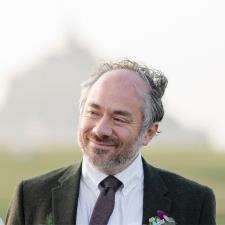
Hi, I'm Mike. I'm excited to work with you! I am a Ph.D. physicist who has been working in physics education for 10 years, most recently at the University of Colorado Boulder. I started tutoring in high school (over 20 years ago!) and worked as a TA throughout college and into grad school. After I defended my Ph.D. in 2016 I got a job at University of Colorado as a physics education researcher. This means that, in addition to teaching students in and outside of the classroom, I performed...
Hi, I'm Mike. I'm excited to work with you! I am a Ph.D. physicist who has been working in physics education for 10 years, most recently at the University of Colorado Boulder. I started tutoring in high school (over 20 years ago!) and worked as a TA throughout college and into grad school. After I defended my Ph.D. in 2016 I got a job at University of Colorado as a physics education researcher. This means that, in addition to teaching students in and outside of the classroom, I performed research on HOW people teach and learn physics, and developed a strong understanding of effective, research-based teaching methods.
In addition to these responsibilities, I led the development of courses that are still used in the physics department as well as programs working with both K12 students and students in two-year colleges in the Denver-Boulder area. One of the things I've come to really believe about science learning is that understanding concepts is only one of several important factors. "Affect" -- that is, how a student feels about and relates to the subject material -- is crucially important to student success. My teaching and tutoring strategy and methods therefore focus not just on making sure students understand the material, but on helping students develop confidence in their ability to function as young scientists and mathematicians. Students who see themselves as scientists are more likely to succeed as scientists!
In a one-on-one or classroom tutoring environment, I typically strive to make sure students are able to take full ownership of their learning. This means that, rather than simply trying to "explain things well," I help students co-construct their own knowledge. Building their own models, deriving their own understanding of concepts, and creating their own conceptual connections helps students not only better understand the material but also gain the confidence needed to succeed -- that kind of success is more important to me than simply achieving good grades.