Search
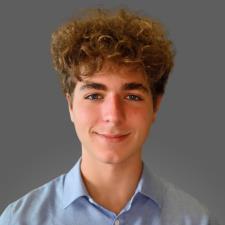
Marek S.'s Photo

Math & Coding Tutor | 790 SAT Math | 5 AP Calc BC | Cal Poly CS 4.0
Marek S.

35 hours tutoring

Your first lesson is backed by our Good Fit Guarantee

Instant Book

Hourly rate: $60

Claim a session with Marek S. that fits your schedule

See more options

About Marek


Bio

I tutor high school math, from Algebra 1 through AP Calculus and SAT Math, and programming in Java and Python. I scored 790 on SAT Math and a 5 on AP Calc BC, and I'm a Computer Science major at Cal Poly San Luis Obispo with a 4.0 GPA.

Every lesson works from your student's actual homework, tests, or practice exams. I find where the misunderstanding starts, rebuild that one idea, then have them solve the next problem out loud so I know it stuck. Parents get a short written recap after each...

I tutor high school math, from Algebra 1 through AP Calculus and SAT Math, and programming in Java and Python. I scored 790 on SAT Math and a 5 on AP Calc BC, and I'm a Computer Science major at Cal Poly San Luis Obispo with a 4.0 GPA.

Every lesson works from your student's actual homework, tests, or practice exams. I find where the misunderstanding starts, rebuild that one idea, then have them solve the next problem out loud so I know it stuck. Parents get a short written recap after each lesson.

For SAT Math, I start with a timed practice section to find which question types are costing points. Between lessons, students take practice exams, and we go through every missed question until they can explain why the right answer is right.


Education

California Polytechnic State University
Computer Science

Policies

  • Hourly Rate: $60
  • Rate details: $60 for one student, $90 for two. SAT Math: $80 for one student, $120 for two.
  • Lesson cancellation: 12 hours notice required
  • Background check passed on 8/21/2026

  • Your first lesson is backed by our Good Fit Guarantee

Schedule

Loading...

Sun

Mon

Tue

Wed

Thu

Fri

Sat

Marek hasn’t set a schedule.

We’re having trouble loading this schedule right now. Please try again later.


Approved Subjects

Algebra 1

Algebra 1

Algebra 1 is where math either becomes a system a student can use or a pile of rules they memorize and forget by June. Nearly every struggle I see later in Algebra 2, Precalculus, and Calculus traces back to something in Algebra 1 that never got solid. I scored a 790 on SAT Math and a 5 on the AP Calculus BC exam, and I'm a Computer Science major at Cal Poly San Luis Obispo, so I use these fundamentals constantly. I cover the full course: solving linear equations and inequalities, slope and graphing lines, systems of equations, exponent rules, polynomials, factoring, quadratics by factoring, completing the square, and the quadratic formula, radicals, and an introduction to functions and function notation. I focus heavily on the errors that quietly cost students points: sign mistakes when distributing, dropping a negative across an inequality, misapplying exponent rules, and losing solutions by dividing out a variable. We fix the process, not just the one problem in front of us. I've tutored 47 students across 6 countries in math and test prep. My approach is to turn each problem type into a repeatable set of steps a student can run without me, then take the scaffolding away as they speed up.
Algebra 2

Algebra 2

Algebra 2 is one of the most important foundation courses for higher-level math, including Precalculus, Calculus, and the SAT. As a Cal Poly Computer Science major, I use these concepts daily in advanced problem-solving and programming. I help students master quadratics, polynomials, logarithms, rational expressions, and function analysis by breaking problems into clear, repeatable systems. My focus is on eliminating common mistakes, strengthening algebra fundamentals, and building confidence. Whether your student is trying to raise a grade, prepare for an exam, or build a stronger foundation for future math courses, I provide structured, results-focused support.
Calculus

Calculus

I earned a 5 on the AP Calculus BC exam and specialize in helping students master both AP Calculus (AB/BC) and college-level Calculus I. Calculus becomes much easier when students understand the structure behind derivatives and integrals rather than memorizing rules. I focus on helping students deeply understand limits, derivative rules, applications of derivatives, integration techniques, and fundamental theorem concepts. My sessions emphasize: • Clear conceptual explanations • Step-by-step problem-solving systems • Identifying and correcting common mistakes • Preparing for AP exams and unit tests Whether your student is working through AP Calculus or college-level Calculus I, I help them build confidence and long-term mastery of the material.
Chemistry

Chemistry

I completed the general chemistry sequence at Cal Poly San Luis Obispo with A's in every course, and as a CS major, I use that same quantitative problem-solving daily. I'm strongest on the topics that break students early: stoichiometry and limiting reagents, unit conversions and dimensional analysis, gas laws, thermochemistry, equilibrium, acid-base, and balancing redox reactions. I've tutored 46 students in math and test prep, which taught me to find where a student's understanding actually broke down rather than just re-explaining the textbook to them. I work with high school chemistry, AP Chemistry, and first-year college general chemistry.
Computer Programming

Computer Programming

I'm a Computer Science major at Cal Poly San Luis Obispo with a 4.0 GPA, and I write code every day outside of class, not just for assignments. Where the Computer Science listing is about coursework and theory, this one is about actually writing programs. I work in Python, Java, TypeScript and JavaScript, and SQL, and I cover the practical stack around the code too: using Git and GitHub properly, setting up an environment that isn't fighting you, structuring a project across multiple files, reading documentation, and writing tests so you know your code works instead of hoping. Common places students get stuck, and what I do about them: Blank-file paralysis. We start from the problem statement and work down to a plan before touching syntax. Code that runs but nobody knows why. I have students trace execution by hand until the machine stops being a black box. Bugs treated as bad luck. Reading a stack trace, forming a hypothesis, and isolating the failing line is a learnable process, and it's the highest-leverage thing I teach. Projects that die halfway. Scoping something small enough to finish beats abandoning something ambitious. I've shipped real work: a deployed full-stack web app (React/TypeScript front end, Node/Express API, PostgreSQL database) with 51 automated tests and a CI/CD pipeline, plus a cloud AI project built on AWS at a hackathon where I led the backend. If you're building a personal project or a portfolio piece, I've been through the whole cycle from empty repo to deployed. I work with beginners, high school and AP-level students, first-year college programmers, career switchers, and self-taught learners.
Computer Science

Computer Science

I'm a Computer Science major at Cal Poly San Luis Obispo with a 4.0 GPA. I've completed the intro programming sequence and Data Structures, and I'm currently in Intro to Computer Systems and System Software Mechanics. I tutor intro and AP-level CS: variables and types, control flow, functions and scope, arrays and lists, objects and classes, inheritance and polymorphism, recursion, sorting and searching, and Big-O reasoning. I work primarily in Java and Python, and I can also help with JavaScript/TypeScript and SQL for students in web or database courses. Most students get stuck in one of two places. Either they can read code but freeze in front of a blank file, or their program runs and they have no idea why. I teach debugging as an actual skill: tracing execution by hand, reading a stack trace as information instead of noise, and isolating the failing line before changing anything. Outside of coursework I build and ship real applications, including a deployed full-stack React/TypeScript and Node/PostgreSQL app with automated testing and CI/CD, plus a cloud project on AWS. That's useful for students working on a portfolio project or a class assignment bigger than one file. Across 46 students in math and test prep, the biggest thing I learned is that re-explaining the lecture rarely works. The fix is finding the exact step where the logic broke.
Data Structures

Data Structures

I completed Data Structures at Cal Poly San Luis Obispo, where I'm a CS major with a 4.0 GPA, and I've kept working the material well past the class. Coursework coverage: arrays and dynamic arrays, linked lists, stacks and queues, hash tables and hashing strategy, trees (BST, balanced trees, heaps), graphs with BFS and DFS, sorting algorithms and why you'd pick one over another, recursion, and Big-O analysis of both time and auxiliary space. I can work in Java or Python. I also tutor the interview-prep side, which is a different skill from passing the class. I've worked through the standard problem sets myself using spaced repetition, and I'm mid-cycle on technical interview prep for software internships right now. That means I'm teaching pattern recognition from current practice, not from memory of a class I took years ago. The thing most students actually need help with isn't the data structure itself. It's looking at an unfamiliar problem and knowing which one to reach for. Two pointers or a stack? Is this secretly binary search? That recognition is trainable, and I teach it explicitly: what signals in a problem statement point to which pattern, and how to check your guess before committing 20 minutes to it. My session structure for problem-solving mirrors what interviewers actually want: restate the problem, ask clarifying questions, get a brute force out with its complexity, find the redundant work, then optimize. Students who learn that sequence stop freezing when they don't immediately see the answer. Good fit for college Data Structures courses, AP CS A students going beyond the syllabus, and anyone preparing for technical interviews.
Elementary Math

Elementary Math

I scored a 790 on SAT Math and a 5 on AP Calculus BC, and I'm a Computer Science major at Cal Poly San Luis Obispo. But the useful part of that for an elementary student isn't the scores. It's that I've tutored 46 older students in math and test prep, and I've watched over and over how a shaky elementary foundation turns into a wall years later. Fraction sense, place value, and the meaning of multiplication and division are the three that come back to haunt students in Algebra 1 and again on the SAT. I teach them so they hold. What I cover: addition and subtraction with regrouping, multiplication and division facts and strategies, place value, fractions and decimals and percents (including converting between them), ratios, basic geometry and measurement, word problems, order of operations, and introduction to variables and pre-algebra. How I work with younger students: I find where understanding actually broke, rather than re-teaching the lesson louder I ask students to explain their thinking, because a wrong answer with good reasoning is a different problem than a wrong answer from a guess I use concrete representations before symbols, so the procedure has something underneath it Short, focused sessions with visible wins, because a nine year old's attention is a real constraint and not a character flaw I'm also a good fit for kids who find a standard classroom hard to learn in. I have ADHD and I'm autistic, and I've done one-on-one daily care for a camper with complex medical needs at RAD Camp, where I was selected as one of 150 counselors from over 400 applicants. Patience with a student who needs the same thing explained a fourth way is not something I have to fake.
Environmental Science

Environmental Science

I earned a 5 on the AP Environmental Science exam, received an A both semesters of the course, and was given my school's Award of Excellence in AP Environmental Science. APES has a reputation as an easy AP, which is exactly why students get surprised by it. The content is broad rather than deep, so the failure mode is coverage gaps and sloppy exam technique, not conceptual difficulty. Content I cover: ecosystems and energy flow, biogeochemical cycles (carbon, nitrogen, phosphorus, hydrologic), biodiversity and population dynamics, land and water use, agriculture and soil, energy resources both conventional and renewable, air and water pollution, solid waste, atmospheric science, climate change, and the major environmental legislation and treaties that students always underprepare for. Where I put the most emphasis: The quantitative free response questions. This is where scores get made or lost. Dimensional analysis, unit conversions, percent change, and showing work in a form that earns the point are all trainable, and most students never practice them deliberately. The legislation and treaties. Clean Air Act, Clean Water Act, CERCLA, RCRA, Montreal Protocol, and the rest are pure recall, so I set students up with a system for retaining them rather than cramming the week before. FRQ structure. Knowing what a "describe" prompt wants versus "explain" versus "propose a solution" is worth several points on its own. As a CS major I'm comfortable on the math side of the course, which is the part students most often want help with and the part a lot of tutors gloss over. I work with AP Environmental Science, high school environmental science, and introductory college courses.
General Computer

General Computer

I'm a Computer Science major at Cal Poly San Luis Obispo with a 4.0 GPA. I build software, I've built and repaired my own computers, and I can explain any of it without the jargon. That last part matters more than the credentials here. Most people who need computer help have already been made to feel stupid by someone who talked too fast and clicked through the steps before they could follow. I don't do that. I go at your pace, I let you drive the mouse, and I explain what we're doing and why so the next time something similar happens you have a chance of solving it yourself. What I cover: Getting comfortable with Windows: files and folders, where things actually save, search, settings, keyboard shortcuts Microsoft Office and Google Workspace: Word and Docs, Excel and Sheets (from basic formulas up through sorting, filtering, and charts), PowerPoint and Slides Email: organizing an inbox, attachments, contacts, calendar invites Internet safety: strong passwords and password managers, recognizing phishing and scam messages, what's safe to click, what a browser popup actually is Backups and cloud storage, so a lost laptop isn't a lost life Everyday troubleshooting: slow computers, wifi and printer problems, installing and updating software, freeing up storage Video calls, screen sharing, and moving photos and files between a phone and a computer I work with adults and seniors starting from scratch, people who need specific job skills like Excel, parents trying to keep up with what their kids are doing, and students who need computer basics for school. I'm strongest on Windows. I can help with the basics on Mac and Chromebook too, and the underlying concepts transfer either way. There are no dumb questions in these sessions. Ask me the same thing three times if you need to.
Java

Java

I earned a 5 on the AP Computer Science A exam, an A both semesters of the course, and my school's Award of Excellence in AP Computer Science A. I'm now a Computer Science major at Cal Poly San Luis Obispo with a 4.0 GPA. What I cover: Java fundamentals: types, operators, control flow, methods, scope, and the boilerplate that confuses beginners before it makes sense Object-oriented programming, which is where most students stall: classes and objects, constructors, encapsulation, inheritance, polymorphism, interfaces, and abstract classes. The goal is understanding why the language is organized this way, not memorizing which keyword goes where Arrays, 2D arrays, ArrayLists, and the Java Collections framework String manipulation and the String methods AP loves Recursion, sorting and searching algorithms, and Big-O analysis Exceptions, generics, and file input/output Data structures in Java: linked lists, stacks, queues, trees, and hash maps. My college data structures coursework was in Python, so I teach these as language-independent ideas first and then implement them in Java, which is the framing that actually makes them stick instead of turning into memorized syntax For AP CS A specifically, the free response section is worth half the exam and it's the most trainable part of it. There's a consistent format to those four questions, a set of rubric conventions readers apply every year, and a short list of mistakes that cost points on every administration. I teach students to write to that rubric. The other thing I teach hard is debugging. Reading a stack trace, forming a hypothesis about what's wrong, and isolating the failing line is a repeatable process, and students who learn it stop treating bugs as bad luck. That skill outlasts the class. Good fit for AP Computer Science A, high school Java courses, first-year college CS in Java, and students moving into Java from Python.
Linear Algebra

Linear Algebra

I completed Linear Algebra I at Cal Poly San Luis Obispo, where I'm a Computer Science major with a 4.0 GPA, and I'm currently in the department's transition-to-proofs course. Linear algebra is where a lot of strong students hit their first real wall, and it usually isn't the arithmetic. Row reduction is mechanical and most students get it fine. The wall shows up at span, linear independence, basis, and vector spaces, because that's the point where the course stops asking you to compute and starts asking you to reason about structure. If your grade dropped somewhere around that chapter, that's not a coincidence and it's not a sign you can't do this. Content I cover: systems of linear equations, Gaussian elimination and reduced row echelon form, matrix operations and inverses, determinants, vector spaces and subspaces, span and linear independence, basis and dimension, rank and nullity and the rank-nullity theorem, linear transformations and their matrix representations, change of basis, eigenvalues and eigenvectors, diagonalization, orthogonality, projections, Gram-Schmidt, and least squares. Two things I bring that a pure math tutor often doesn't. First, I can show you what these objects actually do, since linear algebra is the machinery underneath computer graphics, machine learning, and data analysis, and seeing a matrix as a transformation rather than a grid of numbers makes the theory land. Second, I'm currently being trained in proof writing, so I can help with the early proof-based problems that show up in a first linear algebra course rather than skipping them because they're not computational. I work with college linear algebra courses, students in engineering and CS taking it as a requirement, and self-studiers preparing for machine learning coursework.
Prealgebra

Prealgebra

I scored a 790 on SAT Math and a 5 on AP Calculus BC, and I'm a Computer Science major at Cal Poly San Luis Obispo with a 4.0 GPA. I've tutored 46 students across 6 countries in math and test prep. Prealgebra is the course where math stops being arithmetic and starts being abstract, and it's the single most common place a student decides they're "bad at math." Letters start standing in for numbers, and a student who was doing fine suddenly isn't. That's a transition problem, not an ability problem, and it's fixable. Content: integers and negative numbers, order of operations, fractions, decimals, and percents including conversions between them, ratios and proportions, exponents and roots, variables and algebraic expressions, combining like terms, the distributive property, one-step and two-step equations, inequalities, the coordinate plane, basic geometry with area, perimeter, surface area and volume, and word problems. The two things that determine whether Algebra 1 goes well next year are fraction fluency and comfort with negative numbers. Nearly every "I don't get algebra" problem I've seen in older students traces back to one of those two, so I don't move past them quickly even when a student can technically get the right answer. How I work: I find where the understanding broke instead of re-teaching the whole lesson I ask students to explain their reasoning, since a wrong answer from sound thinking needs a different fix than a wrong answer from a guess Concrete meaning before symbolic procedure, so the steps have something underneath them Attacking the specific error patterns that quietly cost points: sign mistakes, dropping a negative, and misreading what a word problem is asking for Good fit for middle school prealgebra, students preparing for Algebra 1, and older students who need to repair foundations before moving forward.
Precalculus

Precalculus

Precalculus is the bridge between Algebra 2 and Calculus, and strong mastery here makes advanced math significantly easier. I earned an A in Precalculus Honors and went on to score a 5 on the AP Calculus BC exam. I help students master trigonometry, exponential and logarithmic functions, transformations, and function analysis with a strong emphasis on conceptual clarity. Instead of memorizing identities, students learn why they work and how to apply them efficiently. My goal is to prepare students not just to pass Precalculus, but to enter Calculus confident and well-prepared.
Python

Python

Python is the language I learned first and the one I still reach for most. I'm a CS major at Cal Poly San Luis Obispo with a 4.0 GPA. For beginners I cover the fundamentals in order, without skipping steps: variables and types, conditionals, loops, functions and scope, lists and dictionaries, string manipulation, file input/output, error handling, and classes. For students past that stage I work on recursion, data structures, algorithm complexity, and structuring a program so it stays readable as it grows. I also tutor the applied side. I built a stock market trend analyzer that scraped and normalized over 2,000 entries using BeautifulSoup, Pandas, and NumPy, then visualized momentum trends with Matplotlib. If you're working with DataFrames, web scraping, plotting, or pulling data from an API, that's work I've done end to end. The most common beginner problem I see is copying syntax without a mental model of what the machine is doing line by line. I have students trace their own code out loud before running it, which turns most bugs into something they can find themselves. I work with high school intro programming, AP Computer Science Principles, first-year college Python courses, and self-taught learners.
SAT Math

SAT Math

I scored a 790 on the SAT Math section and specialize in helping students significantly improve their SAT Math performance. I have experience tutoring high school students and focus on high-yield concepts, pattern recognition, and time management strategy. My sessions emphasize: • Efficient problem-solving methods • Recognizing common SAT traps • Calculator and no-calculator strategies • Building consistency under time pressure The SAT Math section is highly pattern-based, and I teach students how to approach it systematically rather than relying on guesswork or memorization. My goal is measurable score improvement and strong test-day confidence.
United States History

United States History

I earned a 5 on the AP United States History exam and an A both semesters of the course. APUSH punishes students who study it as a pile of facts. The exam rewards students who can hold a few big arguments in their head and reach for the right evidence to support them. That's the shift I teach. Content: all nine periods from pre-contact through the present, plus the thematic throughlines the exam actually tests. American national identity, work and exchange, migration and settlement, politics and power, America in the world, geography and environment, and social structures. Knowing how a topic connects across periods is worth more than knowing it in isolation. Where students gain the most points: The DBQ. Sourcing a document (HIPP), grouping documents into an argument instead of narrating them one by one, and bringing in outside evidence. Most students lose the same predictable points here every time. The LEQ. Building a thesis that takes a real position rather than restating the prompt, and structuring body paragraphs so the evidence is doing argumentative work. Contextualization and complexity, which are the two rubric points students most often skip entirely without realizing there were points on the table. Short answer questions, which are fast and formulaic once you know the shape. Retention. There's a real memorization layer here, and I set students up with a spaced repetition system so it survives past the unit test to May. I work with AP US History, regular and honors high school US History, and introductory college survey courses. I'm also happy to help with essays for any of them.
World History

World History

I earned a 5 on the AP World History exam and an A both semesters of the course. The core difficulty in World History isn't any single topic. It's scope. Students are asked to hold roughly eight centuries across every inhabited region, and the natural response is to study it as disconnected chunks that never assemble into anything. The fix is a framework, and that's what I build with students. Content: the full sequence from around 1200 CE forward, covering state building and empires across Afro-Eurasia and the Americas, trade networks (Silk Roads, Indian Ocean, trans-Saharan), maritime expansion and the Columbian Exchange, land-based and maritime empires, the Atlantic world and slavery, revolutions and industrialization, imperialism and its consequences, global conflict in the twentieth century, decolonization, and globalization. Where I focus: Comparison. This is the skill that separates a 3 from a 5, and it means explaining why two regions diverged, not listing what each one did. Causation and continuity over time. Students describe change constantly and explain it almost never, which is exactly where rubric points live. The DBQ and LEQ, including thesis construction, document sourcing, grouping, outside evidence, and complexity. Avoiding the default Eurocentric narrative, which matters both because it's more accurate and because the exam explicitly tests regions students under-study, particularly African, Islamic, South Asian, and East Asian history. A retention system for the volume, since spaced repetition beats cramming on a course this wide. I work with AP World History: Modern, regular and honors high school world history, and introductory college courses.
Marek S.'s Photo

Questions? Contact Marek before you book.

Still have questions?

Contact Marek
Response time: 24 minutes

Ratings and Reviews


Rating

5.0 (11 ratings)
5 star
(11)
4 star
(0)
3 star
(0)
2 star
(0)
1 star
(0)

Reviews

Great Tutor!

Marek has been tutoring my daughter in Honors Precalculus for the past month, and we have seen a significant improvement in both her test scores and her understanding of the material. He has a talent for breaking down challenging concepts and explaining them in a clear, easy-to-understand way. Marek is also flexible and accommodating when it comes to scheduling or rescheduling sessions. I highly recommend him as a math tutor. Thank you, Marek!

Sofia, 8 lessons with Marek

Great teacher, Super nice and patient

Marek was able to help me learn so much calc in only just an hour and explained everything in a way I was able to understand. Also goes through everything at a really good pace.

Rebecca, 1 lesson with Marek