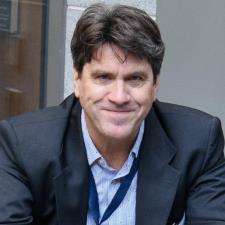
After a rewarding career as a mathematics professor, scientific researcher, and director of data and modeling at a technology startup, I've decided to semi-retire and return to one of the most fulfilling parts of my career: working one on one with students. Throughout my professional life, I've enjoyed mentoring undergraduate and graduate students, postdoctoral researchers, and junior colleagues. Tutoring gives me the opportunity to continue helping students build confidence, deepen their...
After a rewarding career as a mathematics professor, scientific researcher, and director of data and modeling at a technology startup, I've decided to semi-retire and return to one of the most fulfilling parts of my career: working one on one with students. Throughout my professional life, I've enjoyed mentoring undergraduate and graduate students, postdoctoral researchers, and junior colleagues. Tutoring gives me the opportunity to continue helping students build confidence, deepen their understanding, and discover the satisfaction that comes from mastering challenging mathematical ideas.
I earned my Ph.D. in Mathematics from UC Berkeley and completed a postdoctoral fellowship at the Courant Institute of Mathematical Sciences at NYU. I then spent 15 years as a faculty member in the Mathematics Department at UNC–Chapel Hill. After relocating to the Bay Area, I served as an Adjunct Professor at Stanford before becoming a staff scientist at Lawrence Berkeley National Laboratory. For the past four and a half years, I have worked in private industry, leading data science and mathematical modeling efforts.
Calculus, differential equations and linear algebra are the foundation of my research expertise in computational fluid dynamics, numerical methods, and high-performance computing. I've spent decades actually using this material to solve real problems, which shapes how I teach it: I focus on building genuine intuition, grounding abstract concepts in physical examples, rather than just walking through procedures. Students who work with me come away understanding why the math works, which makes the mechanics — and the exam problems — much easier to master.