Search
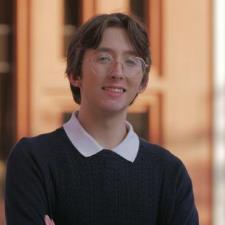
Ronan H.'s Photo

USC Grad | Neuroscience, Research Methods & RBT Exam Prep
Ronan H.

Your first lesson is backed by our Good Fit Guarantee

Hourly Rate: $70

About Ronan


Bio

I'm a USC graduate student finishing my M.S. in Neuroimaging & Informatics, with a B.S. in Neuroscience and three years of active research experience across labs at Keck School of Medicine and the Leonard Davis School of Gerontology. My day-to-day work involves MRI data processing, statistical analysis, and scientific programming in MATLAB and Python — so when I tutor these subjects, I'm teaching from what I actually do and what I have spent years building knowledge on.

I tutor across...

I'm a USC graduate student finishing my M.S. in Neuroimaging & Informatics, with a B.S. in Neuroscience and three years of active research experience across labs at Keck School of Medicine and the Leonard Davis School of Gerontology. My day-to-day work involves MRI data processing, statistical analysis, and scientific programming in MATLAB and Python — so when I tutor these subjects, I'm teaching from what I actually do and what I have spent years building knowledge on.

I tutor across neuroscience, biology, statistics, research methods, and scientific programming, as well as RBT exam prep. I'm a credentialed Registered Behavior Therapist currently working in the LA region, so that material is very much in my wheelhouse.

Sessions with me tend to be pretty relaxed. If something isn't clicking, I'd rather find a better way to work through the content than repeat myself. Usually that means connecting the concept to something concrete and relatable to the student.

Education

University of Southern California
BS Neuroscience
Keck School of Medicine, USC
Masters

Policies


Schedule

Ronan hasn’t set a schedule.


Approved Subjects

Biochemistry

Biochemistry

I completed Molecular Biochemistry (BISC 312) at USC as part of my B.S. in Neuroscience, building on a full year each of General and Organic Chemistry. Biochemistry has remained central to my training since: my coursework and research in neuroscience regularly draw on protein structure and function, enzyme kinetics, metabolism, and cell signaling, particularly in neurochemistry and pharmacology contexts. I can support students through the standard one-semester or two-semester biochemistry sequence, including amino acids and protein folding, enzyme mechanisms and kinetics, glycolysis and metabolic pathways, and molecular biology fundamentals. I focus on helping students see the logic connecting pathways rather than treating each one as a memorization exercise, which makes the material far more manageable come exam time.
Biology

Biology

I hold a B.S. in Neuroscience and an M.S. from USC's Keck School of Medicine, with coursework spanning cellular and molecular biology, neurobiology, genetics, and physiology. Beyond the classroom, I've spent over two years doing hands-on laboratory biology in a Parkinson's disease mouse model, including genotyping, qPCR, Western blotting, tissue processing, and animal husbandry across a multi-cohort study, so I can explain concepts like gene expression and protein signaling in terms of what actually happens at the bench rather than just what the textbook diagram shows. I'm most useful for the topics students tend to lose the thread on — the central dogma and its exceptions, cell signaling cascades, metabolic pathways, Mendelian and molecular genetics, and neurophysiology. Whether you're in high school biology, an undergraduate major course, or preparing for the MCAT, I can adjust the depth to match where you are and focus on understanding mechanisms instead of memorizing lists.
Biostatistics

Biostatistics

I use biostatistics daily as a neuroimaging researcher, analyzing clinical data from studies of Parkinson's disease and Alzheimer's disease, so I teach these methods as tools for answering real research questions rather than as formulas to memorize. My working knowledge covers general linear models, ANOVA and ANCOVA, linear mixed-effects and repeated-measures designs for longitudinal data, nonparametric alternatives like Wilcoxon rank-sum and Kruskal-Wallis, effect sizes, and multiple-comparison correction using FDR and family-wise error methods. I hold a B.S. in Neuroscience and an M.S. in Neuroimaging and Informatics from USC's Keck School of Medicine, and I run these analyses in R, SPSS, MATLAB, and Python. I'm especially good at the questions that trip students up in biostatistics specifically: choosing a test that matches your study design, handling repeated measurements on the same subjects, knowing what to do when your data violate normality assumptions, and interpreting output in language that holds up in a write-up.
Chemistry

Chemistry

I completed the full chemistry sequence at USC as part of my B.S. in Neuroscience: a year of General Chemistry with lab (CHEM 105A/B), a year of Organic Chemistry with lab (CHEM 322A/B), and Molecular Biochemistry (BISC 312). My graduate coursework and research in neuroscience built directly on this foundation, particularly in neurochemistry and pharmacology. I can support students in general chemistry (stoichiometry, equilibrium, acid-base, thermodynamics, kinetics), organic chemistry (mechanisms, synthesis, spectroscopy), and biochemistry. My approach emphasizes problem-solving strategies and understanding why reactions work rather than memorization, which is where most students get stuck.
Data Analysis

Data Analysis

I work as a neuroimaging researcher, which means data analysis is the job: I've taken raw datasets from messy original files through cleaning, quality control, statistical modeling, and final figures on studies of Parkinson's disease, Alzheimer's disease, and neuron morphology. I analyze data in R, Python, MATLAB, and SPSS, and I'm fluent in the methods most courses and projects actually require — general linear models, ANCOVA, mixed-effects and repeated-measures designs, nonparametric tests, PCA, clustering, bootstrap resampling, effect sizes, and multiple-comparison correction. Most of the difficulty in real analysis isn't the test itself but the decisions around it, so I focus on the questions students get stuck on: which method fits your design, what your data actually violate, how to handle missing values and outliers defensibly, and how to read your own output rather than guessing at it. I can work in whatever software your course or project uses, start from your own dataset, and help you write up results in language a reader will trust.
MATLAB

MATLAB

I've programmed in MATLAB for years as a neuroimaging researcher, using it daily for statistical analysis, image processing, and building automated pipelines that take raw data all the way through to publication figures. My work has involved writing custom parsing functions for scientific file formats, running SPM and CAT12 for brain image analysis, implementing PCA and hierarchical clustering on multivariate datasets, and scheduling batch jobs on a high-performance computing cluster. I know where MATLAB actually trips people up: vectorization versus loops, indexing errors that run silently and give you wrong answers, struct and cell array handling, and debugging with breakpoints instead of scattering disp statements everywhere. I've helped classmates and lab members untangle their own scripts many times, which is a genuinely different skill from writing code yourself, and I'm happy to work directly in your project rather than only in textbook exercises.
Neuroscience

Neuroscience

I hold a B.S. in Neuroscience and an M.S. in Neuroimaging and Informatics from USC, where my coursework spanned cellular and molecular neuroscience, neurobiology, cognitive neuroscience, neuropharmacology, and neuroanatomy. I've worked in four research labs across four years, studying Parkinson's disease using structural MRI in patients, functional MRI in an Alzheimer's clinical trial, and neuron morphology in mouse models, so I can connect textbook material to how the research is actually done. I've tutored and mentored undergraduates through directed research, co-founded a student science magazine, and completed a graduate course in science communication focused on explaining technical work to non-specialists. Whether you're preparing for an exam, working through a problem set, or trying to understand a paper for the first time, I can meet you at whatever level you're starting from.
R

R

I hold an M.S. in Neuroimaging and Informatics from USC's Keck School of Medicine and have used R extensively in coursework and research, including formal training in statistical programming (Practical Analysis of Biological Data in R) and applied work with regression, ANOVA, logistic regression, and general linear models on biomedical datasets. I can support students in introductory through intermediate R coursework: data structures and indexing, factors and data cleaning, writing functions and loops, the apply family, base plotting and ggplot2, and running and interpreting statistical tests. Intro R courses tend to move quickly past the fundamentals that everything else depends on so I focus on solidifying those, which is usually what makes the difference between fighting the language and using it.
Psychology
Statistics
Ronan H.'s Photo

Questions? Contact Ronan before you book.

Still have questions?

Hourly Rate: $70
Contact Ronan